If you’ve ever spent time researching solar panels as a homeowner, business owner, or anyone looking to make a switch to renewable energy, you’ve likely come across the term “MPPT” more times than you can count. At first glance, it sounds like a piece of jargon reserved for engineers and lab coat types—but trust me, it’s one of the most important parts of your solar system, and as a solar panels supplier who’s worked with thousands of customers over the last decade, I’ve seen firsthand how misunderstanding MPPT can leave people leaving money on the table. Solar Panels
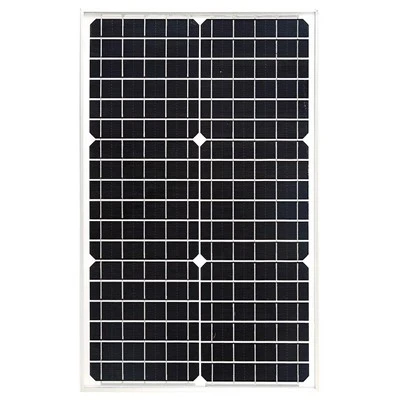
Let’s start with the basics: solar panels don’t produce a constant amount of power. Most people assume a 300W panel will put out exactly 300 watts every single minute it’s in the sun, but that couldn’t be further from the truth. Variables like the angle of the sun (think midday summer vs. early morning winter), temperature, even cloud cover or dust on the panel all change how much electricity a panel generates. The sweet spot, the exact voltage and current combination that lets a panel produce its absolute maximum power at any given moment, is called the Maximum Power Point (MPP). The device that tracks that point 24/7 and adjusts your system to hit it is the Maximum Power Point Tracker, or MPPT.
A few years back, I had a customer named Mike from a small business in Phoenix. He installed a set of cheap solar panels with a basic PWM (Pulse Width Modulation) charge controller, thinking that would work just fine. After six months, he reached out frustrated because his energy production was 18% lower than the manufacturer’s quoted estimate. I asked him to pull his system data, and the issue was obvious: his PWM controller couldn’t keep up with Arizona’s rapid temperature swings, and it was leaving as much as 20% of his panel’s potential on the table during peak sun hours. When we swapped in an MPPT charge controller, his production jumped right up to where it should have been. That’s the moment I realized how many people don’t understand what MPPT actually does, and why it’s not a “nice-to-have” upgrade—it’s a critical component of a solar system that’s meant to save you money.
Let’s break this down a little more scientifically, but in plain language, no equations that’ll make your eyes glaze over. Every solar panel has what’s called an I-V (Current-Voltage) curve. This curve plots how much current a panel produces at different voltages, and there’s a single point on that curve where the product of voltage and current (that’s watts, by the way) is the highest possible number. That’s your MPP. When you connect a panel to a battery or your home’s electrical system, if the system’s voltage is higher or lower than that MPP voltage, you’re not getting maximum power.
PWM controllers, the older, less expensive option, work by basically “switching” the flow of power on and off quickly to match the battery’s voltage. They work okay when the sun is steady and the panel’s MPP voltage is very close to the battery’s voltage, but they’re terrible at adjusting when conditions change. If your panel’s MPP is at 38V at noon, and your battery is only at 24V, a PWM controller will only pass a fraction of the panel’s available power to the battery.
MPPT controllers, on the other hand, act like a smart middleman. They constantly measure the panel’s output every few milliseconds, check where the MPP is at that exact moment, and then adjust the system’s voltage to match. So if the panel’s MPP drops to 36V on a cooler day, or rises to 39V on a hot day (yes, solar panels get less efficient as they heat up—that’s a whole other topic, but it plays into this), the MPPT will adjust to make sure you’re drawing the exact amount of power the panel can give. The result? On average, MPPT controllers make solar systems 20-30% more efficient than similar systems with PWM controllers. That’s thousands of extra dollars in energy savings over the lifespan of your solar panels.
I know what some of you are thinking: “But my solar panel comes with an MPPT built in, right?” Not exactly. Some smaller portable solar setups or budget panels do have built-in MPPT, but when we’re talking about full grid-tied or off-grid systems, the MPPT is often part of the inverter or a separate charge controller. And not all MPPT controllers are created equal, either. That’s where our experience as a solar supplier comes in—we don’t just sell panels, we pair our panels with the right MPPT for your specific setup, whether you’re powering a tiny off-grid cabin or a 10,000 square foot commercial building.
Another common misconception is that MPPT is only important for off-grid systems. That’s just not true. For grid-tied systems, which are the most common for residential and commercial use, the MPPT is part of the inverter, and it’s still working non-stop to adjust your panel output to match grid standards. A high-quality MPPT inverter will also account for shading—if one part of your roof is shaded by a tree or a chimney, the MPPT can handle mismatched panel strings, something PWM controllers can’t do at all. We had a customer in Portland last year whose roof had a large oak tree that shaded a third of his panels for part of the afternoon. Without an MPPT, that shaded section would have dragged down the production of the entire panel string. With an MPPT, each string of panels is optimized individually, so the shaded sections only lose their own power, not the whole system’s. That saved him an estimated $1,200 a year in energy costs.
Let’s talk about how MPPT works in real-world terms, not just on paper. On a clear summer day, a 350W solar panel will see its MPP shift slightly every hour. At 8 a.m., when the sun is low, the panel’s MPP might be at 28V, producing 250W. By noon, when the sun is highest, the MPP might jump to 36V, and the panel hits 350W. By 4 p.m., as the sun starts to dip, the MPP drops back down to 30V, and the panel produces around 275W. A PWM controller would lock in at a fixed voltage (say, 24V for a 24V battery bank) and only capture whatever power lines up with that fixed point. An MPPT will adjust its target voltage every few milliseconds to follow that MPP curve, so it’s capturing the 250W at 8 a.m., the full 350W at noon, and the 275W at 4 p.m. That adds up over the day.
Temperature is another big factor. Solar panels are rated at their standard test conditions (STC), which are 25°C (77°F) and 1000W/m² of sunlight. But in the real world, panels often run 30-50°C above ambient temperature, especially in hot climates like Texas, Arizona, or Florida. For every 1°C rise in panel temperature, the output drops by about 0.5%. That might not sound like much, but over 100°F days, that’s a 10-15% drop in output from heat alone. An MPPT controller can adjust for this temperature shift, pushing the panel closer to its rated power even when it’s hot, whereas a PWM controller can’t account for that change in real time.
Now, I want to be honest with you—MPPT isn’t magic, and it’s not a fix for a bad solar panel. If you buy a low-quality panel that’s only 80% efficient, no MPPT will turn it into a high-efficiency panel. But pairing a high-quality solar panel with a good MPPT controller is like putting a high-performance engine in a well-tuned car: it delivers the maximum possible performance. That’s why, as a solar panels supplier, we always recommend MPPT-based systems for every customer, no matter their size or location.
We recently worked with a small farm in Iowa that had an older solar system installed 10 years ago with a PWM controller. They were complaining that their system wasn’t keeping up with their energy needs for milking equipment and irrigation. When we inspected their setup, we found that their 20-panel system was producing about 4.2 kW of power during peak sun. After replacing their PWM controller with a 60A MPPT charge controller, their peak production jumped to 5.1 kW— that’s almost 1kW extra, every single day. For a farm, that means less time running the backup generator, lower fuel costs, and more energy to sell back to the grid. The MPPT paid for itself in less than a year.
So what should you look for when you’re choosing an MPPT for your system? First, make sure the MPPT’s voltage range matches your panel array. If you have a 24V battery bank, you’ll want an MPPT that can handle the panel array’s open-circuit voltage (the maximum voltage a panel produces when not connected to anything) without damage. For off-grid systems, a 60A MPPT is usually enough for most residential setups, while larger commercial systems might need 100A or more. For grid-tied systems, the MPPT is built into the inverter, so you’ll want to choose an inverter with a good reputation for MPPT technology—don’t just go for the cheapest inverter, because a low-quality MPPT can erase the savings you get from high-quality panels.
I’ve also had customers ask if they need multiple MPPT controllers if they have panels on different parts of their roof. For example, if you have panels on the south-facing part of your roof and others on the west-facing part. The answer is yes, especially if one side is shaded or oriented differently. An MPPT can optimize each string of panels separately, so you don’t lose power from mismatched orientations. That’s a common mistake we see with customers who try to save money by not adding extra MPPTs, and they end up losing more in production than they saved on the controller.
At the end of the day, the goal of any solar system is to get as much usable power from your panels as possible, for as long as possible, to offset your energy costs. MPPT is the technology that makes that happen. It’s not a fancy feature that only experts care about—it’s the reason your solar system works as hard as it can for you, whether you’re powering a small home or a large business.

If you’re in the market for solar panels and want to make sure you’re getting a system that’s optimized for maximum power, we’re here to help. We work with homeowners, businesses, and farms to design solar systems that include high-quality MPPT technology tailored to your specific needs. Whether you’re just starting to research solar and have questions about MPPT, or you’re ready to get a quote for a new system or upgrade your existing one, our team can walk you through every step. Don’t leave money on the table by skipping out on the technology that makes your solar system work its best—reach out to us today to discuss your solar project.
Monocrystalline Solar Panels REFERENCES
- Solar Energy Technologies Office. (2022). Maximum Power Point Tracking for Solar Photovoltaic Systems. U.S. Department of Energy.
- F then, F., & Xia, L. (2020). A Review of Maximum Power Point Tracking Techniques for Photovoltaic Systems. Renewable and Sustainable Energy Reviews.
- Evans, J. (2019). Off-Grid Solar Power Handbook. Green Energy Press.
Dongguan MylAn International Trade Co., Ltd.
As one of the most professional solar panels manufacturers and suppliers in China, we’re featured by quality products and good price. Please rest assured to buy advanced solar panels in stock here from our factory. Welcome to contact us for pricelist.
Address: Room 401, Building 5, No.7, Machong Section, Shuixiang Avenue, Machong Town, Dongguan City, Guangdong Province
E-mail: salee@mylansolar.com
WebSite: https://www.mylansolar.com/
