If you’ve ever stood in front of a secure door latched with a magnetic lock, watching it hold fast against a sudden push or even a sharp jolt, you know how critical that holding force is. But if you’re a facility manager, electrician, or fellow supplier in the access control space, you’ve probably wondered at some point: can I adjust that force? As someone who’s spent the last 12 years building, testing, and troubleshooting magnetic lock bodies for a living, I’m here to break this down—not with industry jargon, but with the hands-on experience of someone who’s seen every trick and misstep in this space. Magnetic Lock Body

First, let’s get the basics straight so we’re all on the same page. A magnetic lock body, often called a maglock, works on the principle of electromagnetism: when power flows through the coils inside the lock body, it creates a magnetic field that pulls against a matching metal plate (called an armature) mounted on the door frame. The holding force, measured in pounds or Newtons, is the amount of pull required to separate the lock from the armature. Most standard maglocks we supply as a manufacturer are rated for 280 lbs (1255 N) for indoor use, 1200 lbs (5338 N) for heavy-duty industrial or exterior doors, and even higher for specialized applications like vaults or high-security government buildings.
Now, the core question: can you adjust that force? The short answer isn’t a simple yes or no. It depends on why you want to adjust it, and whether you’re modifying the lock itself or fixing other factors that make it seem like the force is off. Let’s start with what you can and can’t actually adjust on the lock body itself, because that’s where most people get confused.
Early in my career, a client from a busy hospital chain called me in a panic. They’d installed new maglocks on their emergency exit doors, and the 1200-lb rated locks were so strong that maintenance teams couldn’t pry doors open fast enough during fire drills. They thought I’d brought a special tool to tweak the lock’s holding force down to a safer level. Turns out, that’s not as easy as it sounds. Most off-the-shelf maglock bodies are built with fixed core components: the number of copper coils, the size of the magnet, and the gap between the lock and armature are engineered at the factory to deliver a specific, consistent holding force. You can’t just twist a knob or turn a screw on the lock body to dial the force up or down—those adjustments aren’t built into standard models. That said, there are workarounds that let you modify the effective holding force of a maglock setup, and that’s what most people actually need when they ask about adjusting force.
Let’s talk about the gap first, because that’s the single biggest factor that affects a maglock’s performance, and it’s something installers or end users can adjust without modifying the lock body. The gap between the magnetic lock body and the armature plate is critical: even a 1/32 of an inch gap can reduce holding force by 20% or more, per the Underwriters Laboratories (UL) standards we test all our locks against. If you’re noticing that your maglock seems weak or too strong, check the gap first. If you need a lower force, you can widen the gap slightly by adding thin shims between the armature plate and the door frame. For example, in that hospital emergency exit case, we added 1/16-inch shims to each door’s armature. That dropped the effective holding force from ~1000 lbs to ~700 lbs—still strong enough to prevent unauthorized entry, but light enough for staff to open quickly during drills. We had to test the setup to make sure it met local fire codes, of course, and adjusted the shim thickness incrementally until we found the sweet spot.
What about if you need higher holding force, not lower? Again, you’re not adjusting the lock body, but you can modify the setup to boost performance. Most people don’t know that you can pair two maglocks on a single door—two 280-lb standard locks give you an effective holding force of 560 lbs, not double, because they work in tandem. But if you pair a larger 1200-lb lock with a shim that brings its gap down to factory specs, you can get closer to its full rated force. Another trick we use for industrial clients: if a door holds a lot of weight, like a warehouse loading bay door, you can mount a backup magnetic latch alongside the main maglock. That adds redundant holding force without modifying the core lock body’s own specs.
Wait, but are there any maglock bodies where you can actually adjust the built-in holding force? Yes, but these are specialized models, not the standard residential or light commercial locks most people use. We make a line of adjustable maglock bodies for controlled environments where access needs to change frequently, like data centers or research labs. These models have a small, sealed adjustment screw on the back of the lock that lets you tweak the number of active coils inside the magnet, which changes the strength of the magnetic field. The lock still has a rated maximum force, but you can dial it down to as low as 30% of that maximum for areas where less security is needed, then crank it back up for high-security zones. These models are more expensive than standard locks, but they save facilities from having to swap out entire locks every time their security needs change. I should add a word of caution here: adjustable coil models require calibration, because if you set the force too low, you risk unauthorized entry, and too high can strain the door frame or wiring. That’s why we include a free calibration guide with every adjustable lock we ship, and we offer on-site support for large clients who need help setting them up.
Another common misconception: people think adjusting holding force is just about making the magnet stronger or weaker, but power supply plays a huge role here. A maglock runs on DC power, usually 12V or 24V. If your power supply is underpowered—say, a 12V supply connected to a lock rated for 24V—you’ll get 50% less holding force than the lock can deliver. Conversely, if you have a surplus power supply, you can use a power booster to push extra current to the lock, boosting force by up to 15% for short periods, like during peak hours. But don’t overdo it: running a maglock at more than its rated voltage for long periods will burn out the coils, so that’s only a temporary fix. I once had a retail client who was getting shoplifting incidents at their front doors; we swapped their underpowered 12V supplies for 24V ones, which bumped the holding force of their existing 280-lb locks to over 350 lbs, enough to deter casual thieves without needing to replace the locks. That was a $200 fix that solved their problem, no lock modification needed.
Let’s also talk about when you shouldn’t adjust holding force. UL, the leading safety certification body for access control devices, has strict rules about modifying maglock setups. If you’re shimming a lock to lower its force below the manufacturer’s rated minimum, you void the warranty, and you could be in violation of building codes for fire and life safety. For example, emergency exit doors are required to open with a force of no more than 15 lbs, per NFPA 101, the Life Safety Code. You can’t use a 1200-lb maglock and shim it to have 10 lbs of holding force and call it code-compliant—you’d need to use a lower-rated lock in the first place. We see this mistake all the time: installers who try to cut corners by modifying a heavy-duty lock instead of matching the lock’s rating to the door’s need. That’s not only bad for the client, it’s dangerous, which is why we always emphasize matching lock force to use case during our sales conversations.
As a supplier, I’ve seen too many clients waste time and money trying to adjust their maglock’s force by taking the lock body apart. I can’t stress enough that modifying the internal components of a standard maglock body will break it. The coils are precision-wound to exact specifications, and opening the lock will expose the wiring to dust, moisture, and physical damage, which reduces its lifespan by half or more. We’ve had clients send us locks that they tried to take apart to adjust force, and 9 out of 10 of those locks can’t be repaired—we have to replace them at a discount if they’re under warranty, which is a loss for both the client and our business. The takeaway here is: if you need to adjust holding force, work with the setup around the lock, not the lock body itself, unless you’re using a specialized adjustable model designed for that.
Let me wrap this up with a real example from a client I worked with last year. A small college campus had 10 classroom doors that they wanted to secure after hours, but they also needed to let faculty prop the doors open during the day for air flow. The standard fixed maglocks they had installed for the main entrance were too strong to prop open, and they didn’t want to swap out every lock when they needed to switch modes. We suggested our adjustable maglock bodies, rated for 500 lbs of holding force, paired with a low-force release module that lets faculty prop doors open without triggering the full lock. We calibrated each lock to 100 lbs of holding force during the day, enough to keep the door closed but light enough to move, then cranked it up to 450 lbs after hours, enough to prevent tailgating and forced entry. They paid a bit more upfront, but they saved thousands in lock replacement costs over two years, and they haven’t had any security breaches since.
So to circle back to the original question: yes, you can adjust the holding force of a magnetic lock body, but only in specific, safe ways. Standard fixed-lock bodies can’t be modified internally to change force, but you can adjust the gap between the lock and armature, swap power supplies, or pair locks with backups to alter effective force. Specialized adjustable maglock bodies let you dial the force up or down to match your needs, but they’re not for every use case. The worst thing you can do is take a standard lock apart to tweak its force—it will break, void warranties, and put your security at risk.
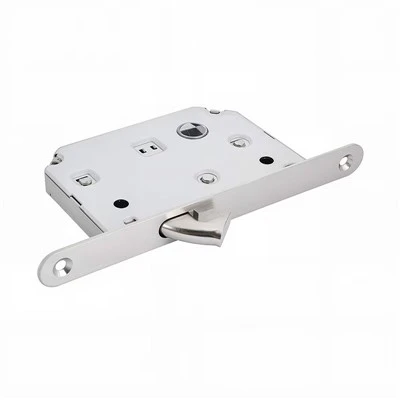
If you’re unsure what setup is right for your space—whether you need to lower force for emergency exits, boost it for high-traffic areas, or adjust it for variable security needs—our team can help. We test every maglock body we manufacture to meet UL standards, and we work with clients of all sizes, from small businesses to large industrial facilities, to find the right solution for their access control needs. Don’t risk cutting corners on security or door functionality; reach out to discuss your requirements today.
Door Lock References
UL 294: Standard for Access Control Systems and Components
NFPA 101: Life Safety Code, 2021 Edition
Magnetic Lock Performance Testing Procedures, Electronic Security Association (ESA) 2022
Jiangsu Wenzhong Lock Industry Co., Ltd.
As one of the most experienced magnetic lock body manufacturers and suppliers in China, we also support customized service. We warmly welcome you to wholesale bulk cheap magnetic lock body in stock here from our factory. If you have any enquiry about pricelist, please feel free to email us.
Address: Xiaoliang Industrial Park, Danyang City, Jiangsu Province
E-mail: Rongoo7@163.com
WebSite: https://www.wenzhonglocks.com/
