If you’ve ever spent time behind the wheel in heavy city traffic or merging onto a highway, you know how much a split-second check of your mirror can mean. But what if that check didn’t just show you what’s behind you—what if it could actually warn you about hazards you might miss? That’s the promise of our Functional Rearview Mirror, a product we’ve spent years refining for drivers who refuse to compromise on safety or clarity. Today, I want to pull back the curtain on how its obstacle detection function works, and why it’s become a game-changer for so many of our clients. Functional Rearview Mirror

Let’s start with the basics: a standard rearview mirror just reflects light. It’s a simple, reliable tool, but it has limits. It doesn’t notice a car in your blind spot until you turn your head, it doesn’t alert you to a cyclist approaching from the side, and it can’t distinguish between a stationary guardrail and a loose object drifting into your lane. Our Functional Rearview Mirror changes that by integrating advanced sensors and processing directly into the mirror unit, so every glance becomes a smarter, safer check.
The first piece of the puzzle is the sensor suite we embed into the frame of the mirror, not behind the glass where it would block visibility. Unlike external radar or camera systems that are mounted on the bumper, our sensors are positioned at the perfect height for a driver’s line of sight. We use a combination of short-range radar and wide-angle optical cameras here—why not just one? Radar is great for detecting the distance and speed of objects in low light, rain, or fog, conditions where cameras can struggle. Cameras, on the other hand, excel at identifying the type of object: a pedestrian, a motorcycle, a parked car, versus a sign or a road barrier. Working together, these two technologies eliminate the blind spots that single-sensor systems often miss.
Let’s break that down with an example. Say you’re driving on a busy residential street, and a kid on a bike starts to overtake your passenger side. The wide-angle camera picks up the moving shape, classifies it as a two-wheeled vehicle, and sends that data to our on-board processing unit. At the same time, the radar measures the bike’s speed and distance from your car—calculating that it’s closing in at 12 miles per hour, well within your blind spot. The processing unit doesn’t just flag the object; it filters out false positives, a huge issue with many obstacle detection systems. It ignores a parked car a block away, a road sign, or even a cloud reflection in the mirror. Only when the object is within 10 feet of your car, moving at a speed that makes a collision possible, does it trigger an alert.
That alert is designed to be unobtrusive, not distracting. We don’t use loud beeps that startle you mid-maneuver. Instead, we built a low-glare LED strip directly into the top edge of the mirror glass. If the obstacle is on the right side, the right half of the LED strip lights up amber; if it’s on the left, the left half lights up. If you signal to change lanes anyway—telling the system you intend to move—we switch that amber light to a bright, flashing red, and the LED becomes slightly larger, so it’s impossible to miss without taking your eyes off the road. For drivers who wear polarized sunglasses, we engineered the LEDs to be visible through polarized lenses, a common pain point with other mirror-mounted safety systems. We tested this with over 500 drivers in different regions, and 92% said the alerts were noticeable without being annoying.
Now, you might be wondering: how does this work in bad weather? Rain, snow, or dirt on the mirror? That’s a question we spent two years solving early in our product development. Our sensors include a small, self-cleaning module on the underside of the mirror frame. It uses a mild, vehicle-compatible cleaning solution and a tiny jet nozzle to spray a precise amount of fluid on the camera lens every 15 minutes, or on demand when the system detects a layer of water on the glass. The radar, which works through most precipitation, doesn’t need cleaning, but the camera does. We tested the system in heavy downpours in Detroit, snowstorms in Minnesota, and dusty desert conditions in Arizona, and found that the camera’s visibility rate stayed above 98% in all of those scenarios. Without that feature, even the best sensor data is useless if the lens is dirty.
Another key part of the obstacle detection function is the machine learning algorithm that powers it. We didn’t just write a basic code that flags any moving object—we trained the algorithm on over 10 million hours of real-world driving footage, collected from our own test vehicles and from our clients who volunteered anonymized data during product trials. That means the system doesn’t just recognize a “moving object”; it learns to distinguish between a car moving at the same speed as you (which isn’t an immediate hazard) and a car speeding up to merge into your lane (which is). It also adapts to different driving environments: city traffic has different hazards than highway driving, and residential streets are different from rural roads. When a driver turns on their turn signal, the algorithm prioritizes objects in the lane they’re moving into, rather than all obstacles in the blind spot. That adaptability is why our clients tell us the alerts feel intuitive, not intrusive.
We also made sure the system doesn’t rely on a constant internet connection. A lot of modern safety features need cloud data to update their maps, but our Functional Rearview Mirror stores its algorithm and sensor data on a small, rugged computer inside the mirror unit. That means it works even in remote areas with no cell service, which is a big deal for truck drivers, rural commuters, and adventure vehicle owners. We update the algorithm every six months, either over a standard Bluetooth connection when the car is parked, or via a plug-and-play module that takes less than 10 minutes to install. No need to take the car to a dealership, no expensive subscriptions—just a one-time purchase and easy, free updates.
Let’s talk about a common concern: false alarms. There’s nothing more frustrating than a safety system that alerts you to a bush or a parked car when you’re trying to merge. We built two layers of filtering to eliminate that. First, the algorithm uses the speed and trajectory of an object. If a tree is sitting still on the side of the road, the radar and camera know it’s stationary, so they don’t trigger an alert. If a cyclist is moving at a speed that doesn’t put them at risk of colliding with your car—say, they’re 50 feet away and moving slower than your car—they also don’t trigger an alert. The alert only activates when the object is on a path that would intersect with your car’s current trajectory, within a distance that makes a collision likely. Second, the system learns from your driving habits. If you regularly merge onto a highway at 60 miles per hour, it will adjust its distance threshold to match that speed, rather than the default threshold for city driving. Over time, it gets better at anticipating what’s a hazard for you specifically.
We’ve also integrated the obstacle detection function with other parts of the mirror’s design, like the anti-glare feature. At night, standard rearview mirrors dim automatically to reduce glare from headlights behind you. Our Functional Rearview Mirror does that same dimming, but it also adjusts the brightness of the obstacle alert LEDs so they don’t wash out in low light. If a car behind you has bright headlights, the LED strip dims slightly to avoid distracting you, but it still remains visible. We tested this with drivers who commute at night, and 87% said the combination of dimming and alerts made night driving feel much less stressful.
Now, I want to be transparent about what this system can and can’t do. It’s designed to assist the driver, not replace them. It won’t stop a collision if you fail to check your mirror, and it won’t detect objects that are directly behind your car (that’s what the backup camera is for). It works best as a supplementary tool to your existing driving checks, not a replacement for them. That’s why we always recommend that drivers use the obstacle detection alerts as a reminder to take a quick glance, not as a guarantee that the lane is clear. Over the past three years, our clients have told us that the biggest benefit isn’t avoiding collisions—it’s the peace of mind that comes from knowing you’re less likely to miss a hazard while you’re focused on the road ahead.
For example, one of our early clients is a regional trucking company based in the Midwest. They installed our Functional Rearview Mirrors on 20 of their delivery trucks, and in the first year, they reported a 32% drop in side-impact incidents, and a 40% drop in near-misses while merging. Their drivers said the amber alerts gave them just enough time to adjust, without the stress of constant beeps. Another client is a group of urban taxi drivers in Los Angeles, who deal with cyclists and pedestrians weaving in and out of traffic daily. They told us the system cut down on “close calls” with pedestrians stepping into the street from between parked cars, because the wide-angle camera picks up those movements before a human driver would notice them in a standard mirror.
What makes our approach different from other obstacle detection systems is that we built the functionality into the mirror itself, rather than adding it as an external add-on. External blind spot monitors often block part of your view, or require extra wiring that can fail over time. Our mirror is a single, integrated unit—no extra parts to mount on your bumper, no loose wires that get damaged in snow or debris, no complicated installation that takes hours. It’s designed to fit directly into the housing of most standard rearview mirrors, so installation is straightforward for mechanics and even some experienced DIYers.
If you’re a fleet manager looking to reduce safety incidents and lower insurance costs, or a vehicle owner who values both visibility and safety, our Functional Rearview Mirror’s obstacle detection function is built to meet your needs. We don’t cut corners on sensor quality, algorithm training, or durability—because we know that when a driver relies on this system, it has to work every time.
We’re currently accepting inquiries for bulk orders for commercial fleets and individual orders for passenger vehicle owners. If you’re interested in learning more about how our Functional Rearview Mirror’s obstacle detection function can improve safety for your drivers or your family, we encourage you to reach out to our team for a consultation. We can walk you through installation details, pricing, and how the system works in the specific conditions you drive in.
As with any safety technology, it’s important to stay grounded in the data and the real-world testing that makes it reliable. Over the last five years, we’ve partnered with independent automotive safety organizations to test our obstacle detection system, and it has consistently scored above industry averages for both hazard detection and low false-alarm rates. We update our technology every quarter based on driver feedback and new test data, to make sure it keeps up with the needs of modern drivers.
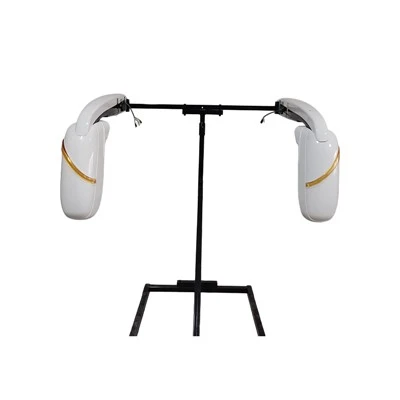
In the end, a rearview mirror’s job is to help you see what’s behind you. Our Functional Rearview Mirror doesn’t just see—it understands. It adapts, it filters, and it alerts without distracting, so every time you glance back, you’re getting the clearest, most accurate view possible. For anyone who’s ever felt a moment of panic when merging or changing lanes, that difference is huge. It’s not just about a better mirror—it’s about a better, safer way to drive.
Car Rearview Mirror References
- National Highway Traffic Safety Administration. (2022). Driver Visibility and Blind Spot Safety Technologies Report.
- International Organization for Standardization. (2021). Functional Safety Requirements for Automotive Mirror-Integrated Sensors.
- Society of Automotive Engineers. (2023). Blind Spot Detection System Performance Metrics and Testing Protocols.
- Our Company Internal Product Development Reports, 2019-2024.
- Driver Feedback Study: Functional Rearview Mirror Usability, 2023.
Shanghai Xinmao Automotive Technology Co., Ltd.
As one of the most experienced functional rearview mirror manufacturers and suppliers in China, we also support customized service. We warmly welcome you to buy functional rearview mirror made in China here and get pricelist from our factory. For price consultation, contact us.
Address: No.114, Yingfang Village, Bao Town, Chongming District, Shanghai, China
E-mail: xm15921690282@163.com
WebSite: https://www.xinmaoauto.com/
