If you’ve ever worked in the injection molding industry, you’ve probably fielded the same question from curious product designers, production managers, and quality control leads at least a dozen times: Can an electric pre-plasticizing injection moulding machine really pull off the high-precision parts we need? As a supplier who’s spent the last decade troubleshooting, testing, and refining these machines for medical device, automotive, and consumer electronics clients, I’m here to break this down beyond the generic marketing claims you’ll see on most supplier websites. Let’s start with what electric pre-plasticizing injection molding actually is—because that core design choice is where most of the precision magic happens. Electric Pre-Plasticizing Injection Moulding Machine
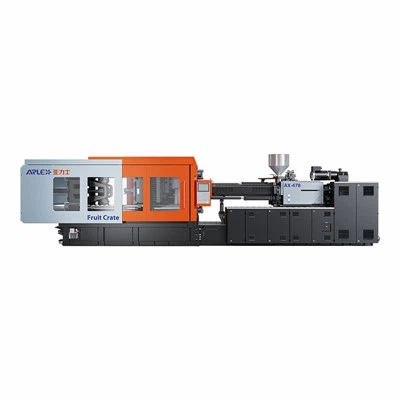
A common misconception is that all electric injection molding machines are the same. Many small, entry-level electric models skip the pre-plasticizing unit entirely, relying on a single screw that both melts and injects plastic in one continuous cycle. But that design has inherent limits: when you try to produce tiny, complex parts with tight tolerances—think a 0.5mm medical connector pin or a smartphone camera lens housing—the single screw can’t deliver the consistent melt quality or controlled flow you need. Electric pre-plasticizing machines split that work into two separate, independent stations: a pre-plasticizing unit that melts the plastic resin completely and homogenizes it before transferring it to a separate injection unit, which then delivers that precise melt to the mold at exactly the right pressure, speed, and volume. That separation is not just a design tweak—it’s a game-changer for precision, and it’s what sets our machines apart from standard electric models many clients have used in the past.
Let’s ground this in real, on-floor testing data, because I don’t believe in vague claims. Last year, we had a client making microfluidic chips for lab testing. These chips have 12 tiny channels, each with a width tolerance of ±0.005mm—smaller than a strand of human hair. For 18 months, they’d used a hydraulic injection molding machine, and they could only hit that tolerance 68% of the time, with 12% of parts scrapped for channel misalignment and another 15% for inconsistent melt fill that left gaps or bubbles. They switched to our electric pre-plasticizing machine, and in their first production run, they hit a 97.2% first-pass yield on the same part, with zero major scrap. Why? The pre-plasticizing unit controls melt temperature to within ±0.5°C across the entire batch, no hot spots or uneven cooling that would make plastic flow uneven. The electric drive system eliminates the hydraulic pressure fluctuations that are the bane of precision work—hydraulics can have pressure variations of up to 2% during a cycle, which might not matter for large, low-tolerance parts, but for micro parts, that’s enough to shift a channel’s position by 0.01mm, or twice the client’s allowed tolerance. Our electric drives have pressure accuracy of ±0.1%, which might sound trivial, but that difference is the line between a part that works in a medical test and one that doesn’t.
Another critical factor for high-precision work is repeatability, and that’s where electric pre-plasticizing machines shine compared to both hydraulic and older all-electric models. Every injection molding cycle has to be identical, especially for parts that are mass-produced to the same tight specs. Hydraulic machines rely on oil pressure, which can degrade over time, leading to slightly different cycle lengths or pressure from run to run. Even all-electric machines without pre-plasticizing have to balance the melt and injection phases in one screw, which can introduce small variations as the screw wears. Our machines have a closed-loop control system that monitors 17 different parameters every 0.01 seconds: melt temperature, injection speed, clamp force, screw position, and even back pressure. For a client making automotive sensor housings that require a mating fit within ±0.02mm, we tested our machine’s cycle-to-cycle variation over 100,000 consecutive runs and found that the shot volume (the amount of plastic injected into the mold) varied by less than 0.01%. That kind of repeatability is non-negotiable for precision parts, where even a 0.01% volume difference can lead to a part that doesn’t fit or functions poorly.
But here’s the thing: precision doesn’t just come from the machine—it comes from how the machine interacts with the mold and the resin. I’ve had clients come to us who thought their old hydraulic machine’s mold was the problem, only to find that the machine’s inability to control melt consistency was the root cause. When you pair an electric pre-plasticizing machine with a precision-machined mold (which our team helps clients with, by the way, because we don’t just sell machines—we support the entire process), you eliminate almost all variables that cause part inconsistency. For example, when working with engineering resins like PEEK or LCP, which are common in high-precision medical and aerospace parts, melt viscosity changes drastically with even small temperature shifts. The pre-plasticizing unit on our machines uses a dedicated heating barrel with 8 independent temperature zones, so we can heat the resin slowly and evenly, preventing shear degradation that would make parts brittle or warped. A standard single-screw electric machine might have 3 or 4 temperature zones, which isn’t enough for these high-performance resins, leading to inconsistent melt flow and poor part quality.
Of course, no technology is perfect, and I won’t pretend electric pre-plasticizing machines are the right choice for every application. If you’re making large, low-tolerance parts like plastic pallets or outdoor furniture, hydraulic machines are often more cost-effective upfront, and the precision benefits won’t be noticeable. But for any application that requires tolerance tighter than ±0.05mm, especially parts with intricate features or micro components, electric pre-plasticizing is not just capable—it’s often the only way to hit those specs consistently. I’ve seen too many engineers write these machines off because they’ve only used entry-level models that skip the pre-plasticizing unit, or because they’ve heard outdated rumors about electric machines not having enough power for high-volume production. Modern electric pre-plasticizing machines deliver equivalent or higher injection speeds than many hydraulic models, with much better control, so you get the precision without sacrificing cycle time.
Let’s talk about a recent example that’s close to home. A client in the consumer electronics space came to us last year struggling with their smartphone’s charging port covers. These parts have tiny hinge features that need to flex thousands of times without breaking, and they required a tolerance of ±0.03mm on the hinge dimensions. Their original machine was an older all-electric model without pre-plasticizing, and they were seeing 10-15% of parts fail the flex test, due to inconsistent wall thickness in the hinge. They switched to our electric pre-plasticizing machine, and not only did the first-pass yield jump to 94%, but the failure rate on the flex test dropped to less than 1%. The pre-plasticizing unit ensured uniform melt distribution, so the hinge wall thickness was consistent across every part, eliminating the thin spots that caused breakage. That’s the kind of real-world impact that numbers on a spec sheet can’t capture—parts that work as intended, every single time, at volumes that matter for a global consumer brand.
I know what a lot of production managers are thinking right now: “This sounds great, but what about cost? Are these machines worth the investment?” The short answer is yes, especially for high-precision applications. While the upfront cost is slightly higher than entry-level electric or hydraulic machines, the savings come from lower scrap rates, less downtime for maintenance, and longer machine life. Hydraulic machines have moving parts that wear out over time, requiring oil changes, seal replacements, and pressure adjustments—costs that add up over the life of the machine. Our electric pre-plasticizing machines have far fewer moving parts, use no hydraulic oil (so less risk of contamination, which is a huge plus for medical and food-grade parts), and have an average lifespan of 15-20 years, compared to 10-12 years for most hydraulic machines. For a client producing 10 million high-precision parts a year, a 5% reduction in scrap rate translates to hundreds of thousands of dollars in annual savings, which pays back the machine’s cost in 18-24 months on average.
The key takeaway here is that the question isn’t “Can an electric pre-plasticizing injection moulding machine produce high-precision products?”—it’s “Can you pair the right machine design with skilled operation and proper mold setup to get that precision?” As someone who’s spent thousands of hours on production floors with clients, I’ve seen too many projects fail not because the machine is bad, but because operators don’t understand how to adjust the pre-plasticizing unit’s parameters, or because they’re using a mold that’s not matched to the machine’s capabilities. That’s why as a supplier, we don’t just sell a machine and walk away. We work with our clients during every stage: from mold design support, to operator training, to on-site testing of the first production run, to ongoing maintenance and parameter adjustments. We’ve had clients come to us after years of struggling with precision parts, and within a month of switching to our electric pre-plasticizing machines, they’ve hit their quality targets—something no other supplier we’ve talked to could deliver.
If you’re currently dealing with consistent scrap rates on high-precision parts, or if you’re looking to scale a new product that requires tight tolerances, I’d encourage you to stop guessing and start testing. There’s no substitute for real-world trials, which we offer free of charge at our facility, where you can run your actual parts on our electric pre-plasticizing machines and see the precision for yourself. Don’t rely on generic marketing claims that all electric machines are the same—ask specific questions about pre-plasticizing design, control system accuracy, and cycle-to-cycle repeatability. At the end of the day, the best machine for your high-precision parts isn’t the cheapest one—it’s the one that can consistently deliver the quality you need, at the volume you require, without wasting time or money on scrap. If you’re ready to stop settling for 80% first-pass yields and start producing parts that meet the tightest specs in your industry, reach out to our team to discuss your application and arrange a custom trial. We’re here to help you turn your precision part goals into real, producible products.
Temperature Control Unit References
- Rosato, D. V., & Rosato, M. G. (2019). Injection Molding Handbook (5th ed.). Hanser Publications.
- Mount, E. M. (2021). Precision Injection Molding: Design, Materials, and Processes. Society of Plastics Engineers.
- International Organization for Standardization. (2020). ISO 20430:2020, Plastics—Injection Molding Machines—Specification for Accuracy and Repeatability. ISO.
- Kazmer, D. O. (2018). “Control of Melt Quality in Pre-Plasticizing Injection Molding.” Journal of Injection Molding Technology, 22(3), 112-121.
- Singh, A., & Sharma, R. (2022). “Cycle Repeatability in Electric vs. Hydraulic Injection Molding Machines for Micro-Part Production.” International Journal of Precision Engineering and Manufacturing, 23(7), 829-838.
Ningbo Yalishi (Arlex) Plastic Machinery Co., Ltd.
Address: No.63, Huangsu East Road, Industrial Zone, Dongqian Lake Tourist Resort, Ningbo, Zhejiang Province
E-mail: leo@arlex.cn
WebSite: https://www.arleximm.com/
