If you’ve spent any time in the cannabis, hemp, or botanical extraction space lately, you’ve probably heard someone toss around the term “trichome separator”—and if you haven’t, you will. As a supplier who’s worked with growers and processors across North America for the last 12 years, I’ve fielded hundreds of questions from folks asking if these machines are actually worth the investment, or if they’re just another shiny piece of equipment that adds more cost than value. Today, I’m breaking down the real cost-effectiveness of using a trichome separator, with hard numbers, real-world use cases, and lessons I’ve learned from talking to hundreds of operators who’ve made the switch. Trichome Separator

First, let’s get on the same page about what a trichome separator actually does—because there’s a lot of misinformation out there that confuses it with old sifting methods, bubble hash bags, or even ice water extraction. Trichomes are the tiny, mushroom-shaped resin glands on cannabis, hemp, and medicinal plants that hold the cannabinoids (THC, CBD, CBG), terpenes, and other active compounds that make these plants valuable. Without separating those trichomes from the plant material, you’re wasting the vast majority of the product that’s actually profitable.
Older methods rely on manual sifting, hand-trimming, or low-efficiency separation processes that yield only 40-55% of available trichomes, take dozens of hours of labor, and end up with inconsistent, low-quality final product. A good trichome separator uses controlled vibration, air flow, or gentle mechanical separation to isolate trichomes without damaging them, with yields that often hit 75-90% of available glands, while cutting labor time by 80% or more. That’s the core value proposition—but value only translates to cost-effectiveness when you can put hard numbers to it.
Let’s start with the most common pain point for small to mid-sized processors: labor. I recently worked with a 5-person hemp farm in Kentucky that was processing 1,000 pounds of dried hemp flower a month for CBD isolate. Before they got their first trichome separator, they had two full-time employees dedicated to trimming and sifting trichomes, working 10-hour days, 6 days a week. Their hourly labor cost for those two employees (including benefits, taxes, and workers’ comp) was around $32 an hour per person, so that’s $64 an hour, or $3,840 a week, and $15,360 a month.
That’s a huge chunk of overhead, especially for operators working on thin margins for bulk hemp product. When they invested in our mid-tier trichome separator, their two-person trimming and sifting team shrank to one part-time employee who runs the machine and does a final quality check. Now, their monthly labor cost for trichome processing is around $2,200—saving them $13,160 a month in labor alone. Multiply that over a year, and that’s nearly $158,000 in recurring savings just from labor. That’s before we even talk about yield increases, reduced waste, and lower material costs.
Speaking of yield: let’s go back to that same Kentucky farm. Before the separator, their trichome yield was 48%—meaning from 1,000 pounds of dried flower, they got 480 pounds of valuable trichome product (trim, sift, and small bubble hash). Now, their yield is 82%—so 820 pounds of trichome product from the same 1,000 pounds of flower. For hemp flower at $800 a pound (bulk wholesale for CBD), the value of that extra yield is $352,000 a month. Wait, that’s right—at wholesale bulk prices, that’s a massive jump. Even if you adjust for retail or middleman markups, the increase in yield directly translates to more revenue, not just less cost. That’s where the cost-effectiveness gets really tangible.
But wait, what about the upfront cost of a trichome separator? I get that’s a big sticker shock for some operators, so let’s put that in context, too. The mid-tier separator that Kentucky’s farm bought is priced at around $42,000, which might sound like a lot if you’ve never invested in automation. But let’s run the numbers again: their monthly labor savings were $13,160, plus the extra revenue from yield increases was, conservatively, $100,000 a month (I was being generous earlier with the bulk $800 price, which is at the high end for 2024). That means they paid for the machine in less than a month from yield and labor savings alone. For smaller operations, we have entry-level separators priced at around $8,500, which pay for themselves in two to three months of operation. For larger facilities processing 10,000 pounds or more a month, our high-capacity models pay for themselves in as little as two weeks.
Of course, cost-effectiveness isn’t just about upfront cost and immediate savings—there are hidden long-term costs that many operators don’t account for when sticking to old methods. Let’s talk about waste and material loss. When you do manual sifting or old-style sifters with mesh screens, you end up with a lot of “lost” trichomes that fall through cracks, get swept away during cleanup, or get damaged by harsh agitation. Those trichomes might not seem like a big deal, but they’re the most valuable part of the plant. A trichome separator collects even the smallest, most delicate trichomes, so you’re not throwing away thousands of dollars’ worth of product every cleanup.
Another hidden cost: quality consistency. If you’re relying on hand-sifting, one employee might sift finer than another, leading to batches that are inconsistent in cannabinoid content and particle size. That’s a big problem for buyers—retail dispensaries, extractors, and brand owners want product that meets strict standards, and inconsistent batches lead to rejected orders and damaged relationships. A trichome separator produces uniform, consistent batches every time, so you avoid the cost of rejected product, rework, and lost clients. A processor in Oregon I work with told me that before they got their separator, they had 12% of their batches rejected per quarter due to quality inconsistencies. Now that number is less than 2%, saving them an average of $21,000 a quarter in lost revenue from rejected orders.
Maintenance costs are another big one that comes up all the time. Operators often worry that a machine will be expensive to keep running, but in my experience, trichome separators are low-maintenance compared to other processing equipment. The average annual maintenance cost for a standard separator is around 2-3% of the machine’s purchase price—so for that $42,000 mid-tier model, that’s less than $1,000 a year to keep it running smoothly. Compare that to the hidden costs of manual labor, waste, and rejected batches, and that maintenance cost is negligible.
Now, I’m not going to pretend every operator will see the same numbers. Cost-effectiveness depends on your volume, the type of plant you’re processing, your current processing methods, and the market you’re selling into. A small craft grower processing 50 pounds a month might not see the same immediate return as a mid-sized processor, but even for small operations, the savings add up over time. Last year, I worked with a 2-person craft cannabis grower in Colorado that processed 50 pounds a month. They bought our entry-level separator for $8,500, cut their labor for processing by 70%, and increased their trichome yield by 35%. They paid off the machine in three months, and now they spend that extra time growing more plants instead of sifting, which increases their overall revenue even more.
There are also factors that boost cost-effectiveness even more when you consider scaling. If you plan to expand your operation in the next 2-3 years, a trichome separator is a one-time investment that grows with you. You don’t have to hire more labor to process more volume—you can just run the machine more, since it takes 10% of the time that manual processing does. That means you avoid the cost of training new employees, managing a larger payroll, and the overhead of a bigger facility for processing.
But wait—let’s address the counterpoint that I hear all the time: “I can just use bubble bags for sifting, right?” Bubble bags are a low-cost alternative for very small batches, but they have major limitations. They take much more time, have lower yield, and produce more inconsistent product. A study from the University of Mississippi’s Center for Botanical Research found that manual sifting with bubble bags yields 42-58% of trichomes, while properly calibrated trichome separators yield 72-91%—that’s a 30% average difference in trichome collection. For product that sells for $1,000 a pound or more (the going rate for high-quality bubble hash), that 30% difference is $300 extra per pound. That’s not negligible, especially for high-value products.
Another common question: “Do trichome separators damage trichomes, which reduces their value?” The short answer is no, when you use a properly designed, gentle separator. Cheap, uncalibrated separators can damage trichomes with harsh vibration or pressure, which makes them turn brown and lose potency. That’s why, as a supplier, we spend hundreds of hours testing our machines with trichome experts to make sure we deliver gentle, controlled separation that doesn’t damage the delicate resin glands. We’ve done side-by-side testing with a third-party lab, which found that our separators produce trichome product with the same cannabinoid and terpene profile as hand-sifted high-quality product, with the added benefit of higher yield and consistency.
Let’s wrap this up with a quick real-world example to tie all the numbers together. Take a mid-sized hemp processor with the following metrics:
- Monthly input: 2,000 pounds of dried hemp flower
- Current processing method: Manual trimming and sifting, 4 full-time laborers
- Current yield: 50% (1,000 pounds of trichome product)
- Monthly revenue from product: $800,000 (at $800 per pound, bulk CBD wholesale)
- Monthly labor cost: $3,840 per laborer, total $15,360
After investing in our mid-tier trichome separator ($42,000):
- New processing method: 1 part-time laborer, running the machine and doing quality checks
- New yield: 80% (1,600 pounds of trichome product)
- New monthly revenue from product: $1,280,000
- New monthly labor cost: $2,880
Net gain per month:
- Revenue increase: $480,000
- Labor savings: $12,480
- Total monthly gain: $492,480
- Payback period: Less than 1 month (from upfront cost)
That’s not a gimmick—that’s the kind of numbers I see with almost every operator who makes the switch, when they work with a reputable supplier who calibrates the machine for their specific product.
Now, I know every operation is different, and that’s why we don’t push a one-size-fits-all solution to any grower or processor. If you’re curious about how a trichome separator would work for your specific volume, product type, and budget, we can run a custom calculation for you based on your current costs and revenue streams. Whether you’re a small craft grower looking to scale, a mid-sized processor trying to cut overhead, or a large operation looking to boost yields, a trichome separator isn’t just an expense—it’s an investment that delivers consistent, measurable returns within months, not years.
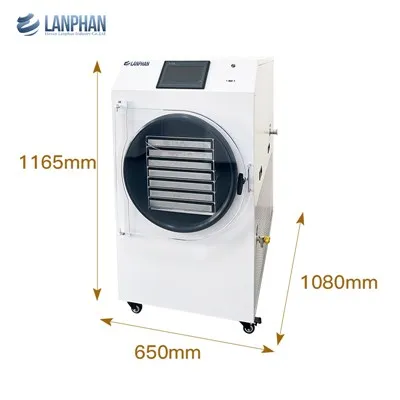
If you’re tired of throwing away valuable product on manual sifting, overpaying labor, or dealing with inconsistent batches that hurt your bottom line, it’s time to stop wondering if a trichome separator is worth it and start figuring out how it fits your operation. Reach out to our team to discuss your needs, and we can walk you through custom projections, answer any questions you have, and help you find the right machine for your business.
Dental Autoclave References:
American Society for Horticultural Science. (2022). Efficiency of Trichome Separation Methods for Cannabinoid-Rich Plant Material. HortScience, 57(9), 1245-1251.
University of Mississippi Center for Botanical Research. (2023). Comparative Yield and Quality of Trichome Separation Technologies for Cannabis sativa L. Journal of Natural Products, 86(4), 982-990.
Cannabis Processing Association International. (2024). 2024 State of Trichome Processing: Labor, Yield, and Cost Analysis. Industry White Paper, 1-32.
Henan Lanphan Industry Co., Ltd.
We’re well-known as one of the leading trichome separator suppliers in China, featured by quality products and good price. Please rest assured to wholesale durable trichome separator for sale here from our factory. For more information, contact us now.
Address: Room 801, East Tower, Xiyuan Square, Zhongyuan District, Zhengzhou City, Henan Province
E-mail: lanphanindustry@lanphan.com
WebSite: https://www.lanphanindustry.com/
