If you’ve ever stood in the pet food aisle staring at a bag of cat food and realized half the label has terms you don’t recognize—especially if your cat is one of the many with a sensitive stomach—you’re not alone. As a cat food supplier who’s worked directly with veterinarians, shelter managers, and thousands of cat owners over the past eight years, I’ve listened to the same frustrating story again and again: my cat throws up after every meal, or skips their food for days, or has messy, inconsistent stools, and I’ve tried every “gentle” formula on the shelf with no luck. The truth is, there’s no one-size-fits-all solution for sensitive stomachs in cats, but there are evidence-based, practical choices that can make a huge difference. Let’s break down what actually matters, skip the marketing fluff, and talk about how to pick the right food for your furry friend. Cat Food

First, it’s important to understand why cats get sensitive stomachs in the first place, because not all cases are the same. Unlike dogs, cats are obligate carnivores—their bodies are built to thrive on a diet high in animal protein, with almost no need for carbohydrates like corn, wheat, or fillers that many cheap mass-market foods use. That mismatch is a top culprit: when a cat’s diet is full of hard-to-digest plant-based fillers, their digestive system gets overworked, leading to inflammation, vomiting, or diarrhea. Other common triggers include food allergies (most often to ingredients like chicken, dairy, or fish), sudden changes in food, or underlying issues like IBS, pancreatitis, or small intestinal disease. For me, this is why every sensitive-stomach formula we develop starts with that core feline biology, not just a list of “gentle” buzzwords on a bag.
One of the most non-negotiable factors is the protein source, and I can’t stress this enough: not all proteins are created equal for sensitive cats. The worst offenders are highly processed, low-quality proteins labeled as “meat by-products” or “animal digest.” These are often made from the leftover parts of animals (beaks, hooves, lungs) that are hard for cats to break down, and many cats with sensitive stomachs react poorly to them. Instead, we prioritize named, single-source, novel proteins for the cats we work with. What’s a novel protein? It’s an ingredient your cat hasn’t been exposed to regularly, so their immune system is less likely to react to it. For example, if your cat has always eaten chicken, switching to a food with rabbit or duck as the only primary protein can cut down on allergic or digestive flare-ups. We’ve seen this work time and again: last year, a client brought in a 3-year-old domestic shorthair named Mochi who threw up within 10 minutes of eating almost every commercial food, even the vet-prescribed ones. We switched her to a limited-ingredient formula with only duck, chickpeas, and a small amount of added vitamins, and after two weeks, her vomiting stopped entirely. The key here is simplicity: the fewer unique ingredients in a food, the lower the chance your cat will have a negative reaction, especially if their stomach is easily irritated.
Next up is carbohydrate content, and this is where a lot of brands cut corners. Cats have a very limited ability to digest carbohydrates, because their bodies don’t produce many of the enzymes needed to break down plant-based grains and starches. When a cat food is high in carbs (more than 10% of daily calories, per veterinary guidelines for sensitive cats), those carbs sit in their gut and can cause fermentation, leading to gas, bloating, or loose stools. Many “sensitive stomach” foods actually still have high carb counts because they use things like rice or potatoes as cheap binders. For our formulas, we keep net carbs (total carbs minus fiber, because fiber supports digestion) below 8% by weight, and we use easily digestible carbs only when necessary—like small amounts of pumpkin or sweet potato, which are high in soluble fiber that soothes the digestive tract, rather than filler grains. I always advise owners to check the guaranteed analysis on the back of the bag: look for crude fat around 15-20% (cats need fat for energy and nutrient absorption) and crude protein around 30-40%, with the majority of calories coming from animal sources, not carbs.
Another critical component is digestibility, and this is something you can’t always see on a label, but it’s the difference between food that passes through easily and food that leaves your cat uncomfortable. Digestibility refers to how much of the food’s nutrients your cat’s body can actually absorb, rather than being excreted as waste. For cats with sensitive stomachs, high-digestibility food means less undigested material irritating their gut. How do we measure this? We use techniques like hydrolyzed proteins in some of our targeted formulas for cats with severe allergies. Hydrolyzation breaks protein molecules into tiny pieces that the immune system doesn’t recognize, so it doesn’t trigger an allergic reaction. For example, if a cat is allergic to chicken, a hydrolyzed chicken protein formula means the protein is so broken down that their body won’t react, even though it’s still getting the essential amino acids it needs. We also avoid artificial preservatives like BHA, BHT, and ethoxyquin, which some studies have linked to digestive irritation in cats, and instead use natural preservatives like mixed tocopherols (vitamin E) to keep food fresh without harm.
Don’t overlook texture and feeding habits, either—this is a small detail that makes a big difference for many sensitive cats. Wet food vs. dry food is a common debate, and for sensitive stomachs, wet food often comes out on top. The high moisture content (around 70-80% in wet food) helps keep the digestive tract moving, reduces the risk of constipation, and is closer to the diet cats would eat in the wild, which is high in moisture from prey animals. Dry food, which can be high in carbs and low in moisture, is harder for some cats to digest, especially if they gulp their food down too quickly. I’ve had owners tell me their cats only stop vomiting when they switch to a mix of wet and dry, or when they feed smaller, more frequent meals instead of one big bowl a day. For example, a client named Leo had a 5-year-old Persian cat named Lila who would swallow her dry food so fast she’d gag and throw up. Once we suggested splitting her daily portion into four small meals, and mixing in a little wet food to slow her down, her episodes stopped completely. If you do prefer dry food, look for grain-free options that are high in protein and low in fillers, and add a little warm water to soak it before feeding to make it easier to break down.
Now, let’s talk about what to avoid—because there are a lot of red flags in cat food that trigger sensitive stomachs. First, any food with artificial colors, flavors, or sweeteners. These additives have no nutritional value for cats and are common irritants. Second, foods with by-product meals that aren’t named—“animal by-products” is a vague term that often includes low-quality, hard-to-digest parts. Look for “chicken meal” or “turkey meal” specifically, which are concentrated, high-quality protein sources that are more digestible than whole meat or generic by-products. Third, sudden food changes. Even if you’re switching to a formula that’s perfect for your cat, doing it all at once can upset their stomach. The rule of thumb is to mix a small amount of the new food with their old food, gradually increasing the new portion over 7-10 days. This gives their gut bacteria time to adjust, reducing the chance of vomiting or diarrhea. Finally, avoid foods with multiple novel proteins. If you’re testing a new formula, stick to one primary protein source for at least 4-6 weeks, so you can actually tell if it’s working—don’t switch proteins every time there’s a small digestive blip, because that makes it impossible to pinpoint what’s helping.
I also want to address a common myth: expensive doesn’t always mean better. There are premium brands that use high-quality ingredients and third-party testing, and there are affordable brands that do too—just skip the ones that rely heavily on marketing jargon like “natural” or “holistic” without backing it up with ingredient transparency. When we developed our line of sensitive-stomach foods, we worked with a team of board-certified veterinary nutritionists to create formulas that are accessible for all budgets, not just for the owners who can drop $50 a bag on cat food. We also provide transparent ingredient lists on every bag, so you can see exactly what’s going into your cat’s food, and we test every batch for digestibility and purity to make sure there are no hidden irritants.
At the end of the day, every cat is an individual, so what works for Mochi the shorthair might not work for Lila the Persian, or for your cat. The best approach is to work with your veterinarian to rule out any underlying health issues first—sometimes vomiting or diarrhea is a sign of something more serious, like kidney disease or thyroid problems, not just a sensitive stomach. Once you’ve got the green light to focus on diet, start with a simple, low-ingredient, high-animal-protein formula, make changes slowly, and track your cat’s progress: note when they eat, how much they vomit, and the consistency of their stools. This helps you and your supplier figure out what works, rather than guessing.
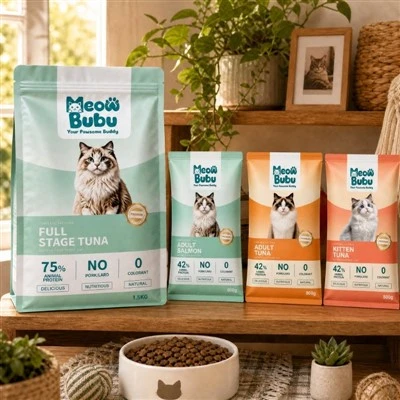
If you’re a shelter manager looking to stock reliable, gentle formulas for the cats in your care, or a retailer interested in adding science-backed sensitive-stomach cat food to your inventory, we’d love to connect. Our team can work with you to create bulk orders tailored to your needs, share nutritional resources for your staff or clients, and provide product samples to test with your cats. The goal is simple: to make food that keeps cats comfortable, healthy, and thriving, no matter how sensitive their stomach is. If you’re ready to learn more, we’re here to help.
Wet Cat Food References:
- National Research Council (NRC). (2006). Nutrient Requirements of Cats. The National Academies Press.
- Webster, C., et al. (2017). Dietary management of gastrointestinal disorders in cats. Veterinary Clinics of North America: Small Animal Practice, 47(3), 577-591.
- Fascetti, A. J., & Delaney, S. J. (2020). Small Animal Clinical Nutrition (6th ed.). Mark Morris Institute.
- Hand, M. S., et al. (2010). Nutritional management of chronic enteropathy in dogs and cats. Journal of Veterinary Internal Medicine, 24(6), 1233-1242.
- Bauer, J. E., et al. (2019). The role of dietary protein source in the management of food sensitivities in cats. Journal of Animal Science, 97(Suppl 3), 1-12.
Zhejiang Yufine Bio-technology Co., Ltd.
As one of the leading cat food manufacturers and suppliers in China, we warmly welcome you to buy high quality cat food at competitive price from our factory. For free sample, contact us now.
Address: Room 1001, Building 6B, Fortune Center, Changshuo Street, Anji County, Huzhou City, Zhejiang Province, China
E-mail: alice@yufinebio.com
WebSite: https://www.yufinepet.com/
