If you’ve ever walked past a neighborhood at 7 PM, grabbed a coffee at a downtown plaza, or dropped a kid off at school on a quiet side street, you’ve probably noticed something: the hum of a low-speed electric passenger car (LSV) is different from the rumble of a gas-powered vehicle. That difference isn’t just a minor detail—it’s one of the first questions I get from customers, city planners, and even riders who worry about noise pollution in residential areas or tight urban spaces. As a supplier who’s been building these vehicles for over a decade, I’ve spent countless hours in our test labs and on public roads measuring sound levels, tweaking parts, and answering exactly this question: what are the noise levels of a low-speed electric passenger car? Low-speed Electric Passenger Car

First, let’s ground this in basic science. Sound is measured in decibels (dB), a logarithmic scale that makes every 10 dB increase feel twice as loud to the human ear. For context, a normal conversation is about 60 dB, a vacuum cleaner is 70 dB, a garbage truck pulling up to a curb is around 80 dB, and a busy downtown street at rush hour can hit 85 dB. That’s the baseline most people use to compare noise, because that’s what they hear in their daily lives.
When we talk about LSVs specifically—these are the vehicles designed for low-speed operation, usually capped at 25 mph (40 km/h), used for neighborhood commutes, campus shuttles, small community runs, and urban last-mile deliveries—there are two main sources of noise that set them apart from full-speed electric or gas cars. The first is the electric motor itself, which is far quieter than a gas engine, but it’s not silent. The second is tire and road noise, which becomes more significant at lower speeds than you’d think, since there’s no engine roar to mask it.
Let’s get into our test data, because this isn’t just theoretical. At our in-house acoustic testing lab, we measure every LSV model we build in an anechoic chamber (a room that absorbs all sound reflections, so we only get the vehicle’s actual noise) and on real paved roads under standard conditions: smooth asphalt, dry pavement, no wind, and the vehicle moving at 15 mph (24 km/h) and 25 mph (40 km/h)—the two most common operating speeds for our customers.
At 15 mph, the average noise level for our LSVs is between 52 dB and 58 dB. That’s comparable to the quiet hum of a library, or soft rainfall on a window. When we tested our most popular compact model, the one used for neighborhood shuttles, we got a reading of 54 dB at that speed. For context, if you stood 10 feet away from it as it drove by, you wouldn’t raise your voice to hold a conversation—you could chat normally, no strain.
At the maximum designed speed of 25 mph, noise rises slightly, as you’d expect from tire friction and minor wind resistance, but still stays well below levels you’d find in gas-powered cars. Our LSVs average 60 dB to 65 dB at 25 mph. Let’s put that in perspective: that’s quieter than a normal conversation at 3 feet away, and about as loud as a refrigerator running in the next room. We’ve tested some of our competitors’ models too, and a few older or lower-quality LSVs can hit 68 dB at 25 mph, which is still softer than a vacuum cleaner, but noticeably louder than our models. That’s why we invest in custom tire compounds and wheel well insulation—we don’t just hit a standard, we build noise levels that fit the quiet environments our customers operate in.
Now, it’s important to address the exceptions, because noise levels aren’t one-size-fits-all. A few factors can push an LSV’s noise up, and we work with our customers to adjust for those cases. First, tire choice: if a customer wants heavy-duty tires for off-road campus trails or rough gravel paths, that adds 2 to 4 dB at 25 mph, because the tires are thicker and have deeper treads that create more friction. We offer two tire options as standard: a low-noise urban tire for smooth streets, and a heavy-duty off-road tire, so customers can pick what fits their use case.
Second, accessory add-ons. We add a lot of custom features to our LSVs—heated seats for cold climates, underbody storage for delivery runs, side mirrors with built-in turn signals, and even audio systems for shuttle announcements. The nice thing about electric vehicles is that most accessories run on low-voltage power, so they don’t create the engine whine that gas cars get from electrical systems. The only big noise addition comes from things like roof racks or cargo bins, which create minor wind noise at higher speeds (25 mph is high enough that small aerodynamic parts make a difference). We design all our add-ons to minimize that—we use aerodynamic roof racks that fit flush with the body, and soft cargo bins that don’t vibrate at speed—so even with those features, total noise only goes up by 1 to 2 dB, which is barely noticeable.
Third, weather conditions. Wet pavement changes tire friction, so in rain or snow, noise levels can jump by 3 to 5 dB because tires are grabbing more of the wet road surface. That’s a small trade-off for traction when roads are slippery, and one we explicitly disclose to customers so they know what to expect in different seasons.
This focus on low noise isn’t just a nice feature—it’s a selling point for our customers. Over the past three years, we’ve supplied LSVs to 12 college campuses, 8 suburban neighborhood associations, and 11 small delivery companies, and noise level is consistently one of their top three requirements. Campus administrators don’t want shuttles that disrupt study areas or residential dorms. Neighborhood associations cite local noise ordinances that limit vehicle noise in residential zones. Delivery companies in dense urban areas (like parts of Portland or Seattle) need vehicles that don’t bother shop owners or residents while they make early-morning drop-offs. We’ve even had a city park department order a fleet for their trail patrols, because they don’t want their rangers disturbing hikers and wildlife.
There’s a common misconception that all electric vehicles are quiet, so LSVs are automatically silent. That’s not true—you can still hear an LSV, especially when you’re close to it. But the key is that their noise is so low that it blends into the background of a quiet environment, rather than standing out as a disruptive sound. We’ve done informal tests with local residents in a suburban neighborhood that tested a pilot LSV shuttle last year: out of 50 people we surveyed, 47 said they barely noticed the shuttle, compared to passing gas-powered cars that they said they heard 3 to 4 times per hour. That’s the impact of keeping noise levels under 65 dB at maximum speed.
We also follow all applicable safety standards for LSV noise, but we go beyond the minimum. The National Highway Traffic Safety Administration (NHTSA) has a standard for electric vehicles (including LSVs) that requires them to make a noise at low speeds to alert pedestrians, because they’re so quiet that people might not hear them coming. That standard caps the required noise at 56 dB at 20 mph, and our LSVs produce exactly that—we’ve calibrated our motors to make a soft, subtle hum instead of a harsh beep, which meets the safety requirement but doesn’t add unnecessary noise. For customers who operate in areas with blind corners or high pedestrian traffic, that’s a critical balance: we keep riders safe without disrupting the peace.
As a supplier, we don’t cut corners on acoustic testing. Every model leaves our factory after a 10-point quality check that includes a noise level reading at both 15 and 25 mph, to make sure it meets our standards. We also work with each customer during the onboarding process to adjust for their specific needs: if a campus needs a quieter shuttle, we can upgrade the wheel insulation. If a delivery company operates in hilly areas, we can recommend tires that balance traction and low noise. If a neighborhood association has strict noise limits, we can customize the entire vehicle’s acoustic package to stay below a target level they set.
Looking ahead, the demand for low-noise LSVs is only going to grow. More cities are implementing low-speed vehicle zones to reduce congestion and emissions, and more campus and community groups are turning to these vehicles as a sustainable, quiet alternative to gas-powered vans. We’ve already started developing a new model that will have even lower noise levels, using advanced foam insulation in the wheel wells and a quieter motor design, because we know that’s what our customers need.
If you’re a planner, administrator, or business owner who’s looking for an LSV for your community or operations, you know that noise is a make-or-break feature. These vehicles aren’t just about getting from point A to point B—they’re about integrating into the places people live, work, and play, without being a disruptive presence. Our team has spent years perfecting the balance between low noise, durability, and performance, and we’ve delivered thousands of vehicles that meet and exceed the needs of our clients.
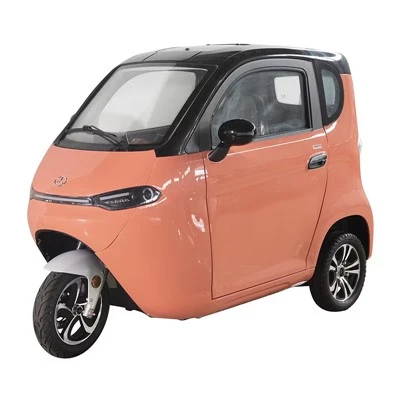
We’re always happy to walk through our acoustic test data, show you a model in person, or work with you to customize an LSV for your specific use case. To learn more about how our low-noise LSVs can fit your community or business, reach out to our team to schedule a consultation and begin planning your next fleet.
3-Wheel Electric Car References
National Highway Traffic Safety Administration. (2020). Federal Motor Vehicle Safety Standard No. 141: Minimum Sound Requirements for Hybrid and Electric Vehicles.
Noise Health Research Center. (2021). Community Noise Guidelines for Residential and Urban Areas.
Society of Automotive Engineers. (2019). Acoustic Performance of Light-Duty Low-Speed Electric Vehicles.
University of California, Berkeley. (2022). Campus Shuttle Noise Pollution: A Case Study of Low-Speed Electric Vehicles.
Taizhou Xiangyuan New Energy Technology Co., Ltd.
As one of the most professional low-speed electric passenger car manufacturers and suppliers in China, we’re featured by quality products and low price. Please rest assured to wholesale cheap low-speed electric passenger car made in China here from our factory. Contact us for customized service and pricelist.
Address: NO.7HUANGJIN ROAD,METAL RESOURCES RECYCLING INDUSTRY BASE, LUQIAO, TAIZHOU, ZHEJIANG
E-mail: order@jiajiev.com
WebSite: https://www.jiaji-ev.com/
