If you’ve ever walked a manufacturing floor, worked on a automotive repair, or even dealt with a leaky garden hose that just won’t hold up to the chemicals it’s carrying, you’ve probably run into NBR hose. As someone who’s been supplying NBR hoses for over a decade, I can tell you this material is one of the most misunderstood workhorses in fluid transfer—especially when it comes to chemical resistance. A lot of buyers ask me, “Is NBR hose right for my application?” and the short answer is: it depends on what chemicals you’re moving, how long, and under what conditions. Today, I’m breaking down exactly what NBR’s chemical resistance means, what it’s good for, where it falls short, and how to pick the right hose for your needs. NBR Hose
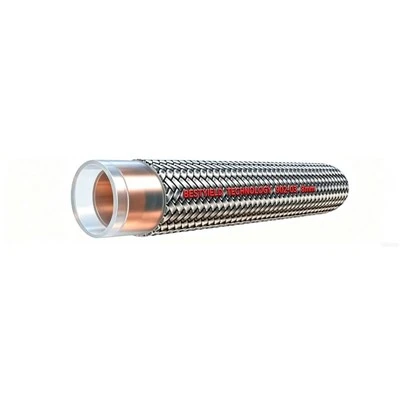
First, let’s get back to basics for anyone who might not be deep in rubber chemistry. NBR stands for Acrylonitrile Butadiene Rubber, and it’s a synthetic rubber made by polymerizing acrylonitrile and butadiene. The key to its performance—especially its chemical resistance—comes down to the acrylonitrile (ACN) content, which ranges from about 18% to 50% in most commercial NBR grades. The higher the ACN percentage, the better the rubber resists oil, fuels, and non-polar chemicals, but the stiffer and less flexible it gets in cold temperatures. Lower ACN grades are more pliable in cold weather, but they wear faster when exposed to oil. That balance is why we carry a range of NBR hoses, not just one standard grade.
Now, let’s talk about the core question: chemical resistance. Unlike some specialized polymers that only handle a handful of chemicals, NBR is a versatile elastomer that excels in environments where natural rubber or cheaper synthetic rubbers (like neoprene) fall apart. But it’s not invincible, and that’s where most mistakes happen—specifying an NBR hose for a chemical it can’t handle, or assuming all NBR is the same.
Let’s start with what NBR hoses are famous for: resistance to oils, fuels, and aliphatic hydrocarbons. If you’re moving gasoline, diesel, hydraulic fluid, lubricating oils, or vegetable-based oils (like those used in food processing or restaurant kitchens), NBR is often the first call. I’ve supplied hoses to automotive parts plants that transfer motor oil on assembly lines, to agricultural cooperatives that move diesel fuel for farm equipment, and to food manufacturers that use NBR hoses to carry vegetable shortening for baking lines. In these applications, high-ACN NBR is ideal because the polar acrylonitrile molecules repel non-polar oil molecules, preventing the rubber from swelling, softening, or breaking down over time. I once had a customer test a standard EPDM hose (which is good for weather but bad for oil) in their hydraulic line; it swelled so much in two weeks that it burst, costing them $15,000 in lost production. Swapping to our high-ACN NBR hose fixed the issue, and they’ve been a repeat customer ever since.
But that’s not all NBR is good for. It also has decent resistance to many aqueous solutions, like dilute acids, alkalis, and saltwater. For example, NBR hoses work well transferring 10% sulfuric acid solutions, mild cleaning agents, and even brine used in food processing or marine applications. That’s why you’ll find NBR hoses on boats for washing down decks or transferring small amounts of water-based fluids, and in janitorial supplies for carrying cleaning chemicals. Again, the ACN grade matters here: higher ACN gives slightly better resistance to aqueous chemicals and reduces the chance of chemical degradation over long exposure.
Now, the parts where NBR falls short—this is critical to get right, because specifying the wrong hose here leads to failures, safety hazards, and downtime. First, NBR is not resistant to polar solvents like ketones, esters, or chlorinated hydrocarbons. Think acetone, methanol, toluene, brake fluid (some brake fluids, specifically glycol-based ones, are particularly bad for NBR), or trichloroethylene. Exposing NBR to these chemicals will cause it to swell rapidly, soften, or even dissolve completely. I had a small parts manufacturer call me in a panic a few years ago; they were using an NBR hose to carry a cleaning solvent made of isopropyl alcohol and acetone for degreasing metal parts. Within three days, the hose had developed three pinhole leaks, spilling solvent all over their floor and nearly causing a slip-and-fall injury. Swapping to a Viton hose fixed that, but it’s a mistake I see all the time—buyers assume because NBR works for oil, it works for all chemicals.
Another weak point: NBR hoses are not designed for extreme temperatures, and that impacts their chemical resistance too. Most NBR grades work best in temperatures from -40°F to 212°F (-40°C to 100°C). If you go above that upper limit, the rubber starts to break down chemically, even when exposed to chemicals it would normally resist. For example, if you’re moving hot hydraulic fluid at 220°F, a standard NBR hose might degrade in weeks, even though it would hold up for years at 150°F. Cold temperatures are also an issue: below -40°F, low-ACN NBR becomes brittle and cracks, while high-ACN NBR gets stiff and less flexible, making it prone to kinking and failure in cold environments. I always advise customers to share the full operating temperature range of their application, not just the chemicals, so I can match them to the right grade.
Also, constant exposure to ozone or UV light will degrade NBR over time, even if it’s not exposed to harsh chemicals. If you’re using an NBR hose outdoors, it will crack and break down much faster than EPDM or polyurethane hoses. That’s why all the NBR hoses we supply for outdoor or sun-exposed applications are reinforced with a protective outer layer, usually a synthetic rubber that resists UV and ozone. It’s a small extra step that adds a few dollars to the cost, but it saves customers from having to replace hoses every few months.
Wait, there’s another nuance I need to mention: the difference between a “static” and “dynamic” chemical exposure. If you’re holding a hose full of chemical in a stationary line, NBR might hold up fine even to a chemical that would cause swelling in a moving application. But if the hose is flexing, moving, or under pressure, even a small amount of chemical degradation can lead to a crack or leak. For example, a stationary NBR tank liner might work for dilute bleach, but a portable NBR hose for spraying dilute bleach will fail much faster because of the constant flexing and pressure. I always ask customers if their hose will be in a static or dynamic application, and what the pressure rating is, because that changes the chemical resistance calculation.
Over the years, I’ve seen buyers make three common mistakes with NBR hose chemical resistance, so let me spell those out clearly to help you avoid them. First, assuming all NBR is the same. As I mentioned earlier, ACN content varies, and so does the construction of the hose. Reinforced NBR hoses (with polyester or steel braid) have better pressure resistance and can handle slightly more chemical exposure than unreinforced ones. Second, not testing the chemical compatibility before full deployment. I always recommend to customers: if you’re unsure, run a small test. Cut a small piece of the NBR hose, submerge it in the chemical you’re using for 72 hours, and check for swelling, softening, or cracking. If it swells more than 10% in diameter, or feels mushy, it’s not the right hose. Third, ignoring temperature and environmental factors. A hose that works in a 70°F factory might fail in a 120°F outdoor application, even with the same chemical.
Now, as a supplier, how do I match customers to the right NBR hose? It’s not just a one-size-fits-all process. When a buyer reaches out to me, I ask four key questions: 1. What specific chemicals will the hose be transferring? 2. What is the operating temperature range? 3. Is the application static or dynamic, and what is the maximum pressure? 4. Will the hose be exposed to UV, ozone, or other environmental factors? Once I have those answers, I can point them to the right grade of NBR—whether that’s a low-ACN grade for cold oil applications, a high-ACN grade for hot hydraulic fluid, or a UV-resistant reinforced grade for outdoor fuel lines.
For example, let’s say a customer from a construction company needs a hose to transfer diesel fuel to portable generators, which will sit outdoors in temperatures ranging from 20°F in winter to 110°F in summer, and the hose will be moved around regularly. I’d recommend our medium-ACN reinforced NBR hose, which balances cold flexibility, oil resistance, and UV protection. If another customer is a food processing plant moving hot vegetable oil at 180°F in a stationary line, I’d suggest our high-ACN food-grade NBR hose, which meets FDA standards for food contact and has extra resistance to hot oils. And if a customer needs a hose for a marine application, moving saltwater and occasional fuel, I’d point them to our corrosion-resistant NBR hose that’s reinforced to handle salt exposure.

At the end of the day, NBR hose is still one of the most cost-effective, versatile elastomers for chemical-resistant fluid transfer, but only if you use it for the right application. It’s not a universal solution, but when matched correctly, it outperforms more expensive polymers like Viton or polyurethane in many cases. Over my time in this business, I’ve found that the best customer relationships come from being honest about what NBR can and can’t do, instead of selling a hose that’s not a good fit just to make a quick sale. If you’re tired of hoses failing prematurely, spilling chemicals, or costing you downtime, I’d be happy to walk through your application with you and help you find the right NBR hose for your needs. Whether you’re a small business with a single application or a large manufacturer with a full fleet of hoses, I can provide samples, compatibility testing, and bulk orders that fit your timeline and budget. Don’t let chemical compatibility issues hold your operations back—reach out to us today to discuss your requirements.
UPE Hose References
- Marks’ Standard Handbook for Mechanical Engineers, 11th Edition, McGraw-Hill, 2007
- Rubber Technology: Compounding and Testing for Performance, 2nd Edition, Carl Hanser Verlag, 2017
- Society of Automotive Engineers (SAE) J200, Rubber Hose and Tubing for Automotive Applications, 2021
- Food and Drug Administration (FDA), CFR Title 21, Part 177.2600, Rubber Articles for Food Contact, 2022
- Environmental Protection Agency (EPA), Chemical Compatibility Guidelines for Industrial Hose Applications, 2019
BESTYIELD Technology (Huizhou) Co., Ltd.
BESTYIELD Technology (Huizhou) Co., Ltd. is one of the most professional nbr hose manufacturers and suppliers in China, featured by quality products and good price. Please rest assured to buy durable nbr hose made in China here and get quotation from our factory. Customized orders are welcome.
Address: Yinshan Industrial Zone, Liangjing Town, Huiyang District, Huizhou City, Guangdong Province
E-mail: rick@bestyield.net
WebSite: https://www.bestyield.org/
