If you’ve ever used nasal snoring strips to get a better night’s sleep, you know the feeling: that quick, sticky application when you climb into bed, followed by hours of unobstructed breathing—until morning, when you’re faced with the dreaded task of peeling that strip off. It’s that sharp, stinging pull that makes you hesitate, right? As someone who’s been supplying nasal snoring strips to people who need a little sleep relief, I’ve heard this complaint more times than I can count. “They hurt so bad when I take them off,” or “I end up with redness on my nose for hours.” Today, I’m breaking down the science behind that pain, the mistakes most people make when removing strips, and the gentle, effective methods I’ve learned to share with customers to make this process way easier. No more wincing at 7 a.m.—promise. Nasal Snoring Strips

First, let’s talk about why nasal snoring strips stick in the first place, because understanding that is the key to removing them without pain. The adhesive we use on our strips isn’t just random sticky stuff. It’s a medical-grade acrylic pressure-sensitive adhesive (PSA) designed to be strong enough to stay in place through tossing, turning, and even light sweating overnight. That same strength is what makes it so good at opening up your nasal passages—no slipping off mid-sleep, which would defeat the whole purpose. But acrylates, while safe for most skin, do have a tendency to grip tightly when they’ve had hours to set, especially on the slightly oily, warm skin of your nose and the bridge. The problem happens when you yank that adhesive off in one quick, harsh pull. That’s not just discomfort; it’s trauma. Your skin’s outermost layer (the stratum corneum) is thin and delicate, especially around the nose where there’s less fatty tissue to cushion it. A sudden pull can tear those cells, leading to redness, irritation, or even tiny micro-teeth that make your nose feel raw for hours. For people with sensitive skin, this is even more common—so taking it slow and smart is non-negotiable.
I used to struggle with this myself, back when I first started testing different strip methods. I’d peel mine off fast while groggy, never thinking twice, and end up rubbing my nose with lotion just to soothe the stinging. Then I started asking customers for feedback, and a lot of them mentioned similar frustrations. One guy told me he’d started skipping the strips on work nights because he didn’t want to deal with the redness that showed up in morning Zoom calls. That’s when I knew I needed to dig deeper into the right way to remove these strips, and figure out what works best for regular use.
Let’s start with the basics: timing. This is one of the biggest mistakes people make. You shouldn’t remove a nasal strip as soon as you wake up. Wait at least 10 to 15 minutes after you get out of bed, and ideally, after you’ve washed your face. Why? Because when you sleep, your skin naturally produces sebum, and if you’ve been sweating (even a little, from sleeping under blankets), that mixes with the adhesive. Letting some of that sebum build up overnight actually helps loosen the bond between the PSA and your skin. Rushing in while your skin is still warm and full of that overnight oil? The adhesive is at its stickiest, so peeling it then is way more painful. I always tell customers to make it part of their morning routine: brush your teeth, splash some cold water on your face, then go for the strip. It sounds small, but it makes a huge difference.
Next, the tools you use for removal matter more than you think. A lot of people use their fingernails to lift an edge, but that’s a bad idea. Fingernails can catch the adhesive, and if your nail is even a little long, you might accidentally dig into your skin too. Instead, use a gentle, blunt tool—something like the rounded end of a makeup spoolie, a plastic cuticle pusher, or even the edge of a credit card (the old plastic kind, not a new one that might snap). The key is to create a small, clean edge where the adhesive meets the skin. Gently slide that blunt tool under the edge, not too far, just enough to lift it slightly. You don’t want to pry; you want to separate the bond between the adhesive and skin. Once you have that tiny edge, you can start pulling, but here’s the next rule: pull parallel to your skin, not straight up. This is a technique used by medical professionals when removing adhesive bandages, and it’s a game-changer. When you pull at a 180-degree angle (parallel to the bridge of your nose), you’re stretching the adhesive along the surface of the skin, not yanking it off. That reduces the amount of force applied to any single spot, which means less pain and less irritation. If you pull straight up, you’re creating a lot of tension on a small area of skin—exactly what causes that stinging feeling.
For people with super sensitive skin, even that gentle pull might be too much. That’s when a little help from a natural oil comes in handy. The adhesive on our strips is water-resistant, but it doesn’t mix well with certain plant-based oils, like jojoba oil, coconut oil (unrefined, to avoid any extra additives), or even pure almond oil. I keep a small bottle of jojoba oil by my bed (and by my bathroom sink now, for morning removal) and use it when my skin feels extra sensitive. How does it work? Dip a cotton pad in a tiny bit of oil—you don’t need much, just enough to moisten the edge of the strip. Gently rub the edge of the strip for 10 to 15 seconds, letting the oil seep under the adhesive. The oil breaks down the bond between the acrylic and your skin, making it slide off almost effortlessly. After you remove the strip, just wash your face with mild soap to get rid of any leftover oil, and you’re good to go. I’ve had customers tell me this trick works even for people who get hives or rashes from adhesive bands—now they use our strips every night without a problem.
Wait, what about the area where the strip was attached? A lot of people notice redness right after removal, and they think that means they did something wrong. But a little temporary redness is normal, especially if you have sensitive skin. To soothe that, skip the harsh toners or scrubs after removal. Instead, use a gentle, fragrance-free moisturizer or aloe vera gel. Aloe is great because it’s anti-inflammatory and helps calm the skin without clogging pores. I always recommend looking for aloe that’s 100% pure, no added colors or alcohol—those can actually irritate more. If you have particularly dry skin, a thin layer of hypoallergenic lotion will lock in moisture and speed up the healing of any tiny micro-tears. Avoid using products with retinoids or exfoliants right after removing the strip, too—your skin is a little more fragile, so give it a break for a few hours.
Let’s also talk about what not to do, because I’ve seen so many people make these mistakes. First, don’t pull the strip off in one quick jerk, no matter how groggy you are. That’s the number one cause of pain. Second, don’t use rubbing alcohol or other harsh solvents to remove the strip. These can strip your skin’s natural oils, leading to dryness, flaking, and even more irritation down the line. Third, don’t reposition the strip multiple times if you realize you put it on wrong. Each time you peel it off and stick it back on, the adhesive loses some of its strength, but it also creates more friction on your skin, which is bad news for pain and irritation. If you mess up the application, just peel it off gently and toss it—better to use a new one than risk damaging your skin.
As someone who works with these strips every day, I’ve tested all these methods myself, and I can tell you they work. A while back, I had a customer named Lisa who wrote to me saying she’d been using snoring strips for six months, but she’d stopped because removing them made her nose red for 24 hours. She tried the oil method I suggested, and a few weeks later, she emailed me a photo—her nose was totally normal in the morning, no redness, no stinging. That’s the kind of feedback that makes me love my job, because it means people can get the sleep they need without sacrificing their skin health.
Let’s also circle back to why these methods work, from a scientific standpoint, just to make sure we’re not just guessing. The adhesive on nasal snoring strips is a pressure-sensitive acrylic that forms van der Waals forces—weak molecular bonds—with the skin’s surface. Those bonds strengthen over time as the adhesive interacts with skin oils and moisture. When you pull at a right angle, you apply a concentrated force that breaks those bonds abruptly, leading to skin damage. When you pull parallel, you spread that force out over a longer area, breaking the bonds more gradually. Oils work because acrylic adhesives are hydrophobic, so non-polar oil molecules disrupt the van der Waals forces between the adhesive and skin, weakening the bond enough to slide off easily. That’s not a trick—it’s basic chemistry, and it’s why these methods are effective and safe.
I know that for a lot of people, sleep issues are frustrating enough without adding skin irritation to the mix. Nasal snoring strips are designed to be a simple, non-invasive solution for better breathing at night, so the removal process shouldn’t be a headache. The key is to take your time, use gentle tools, pull parallel to your skin, and use a little oil if you have sensitive skin. All of these steps are easy to add to your morning routine, and they make a huge difference.
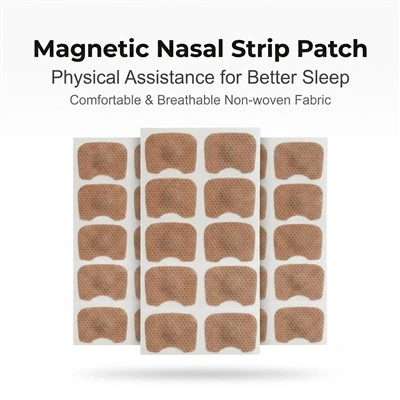
If you’re someone who’s been dealing with painful strip removal, or if you’re looking for a high-quality nasal snoring strip that’s easy to use from start to finish, I’d love to chat. We’ve spent years refining our adhesive and our strip design to balance strong hold, comfortable application, and gentle removal, and we’re always happy to answer questions about how to use our products effectively. Whether you’re shopping for personal use or for your business, we’re here to help you find the right solution for your sleep needs. Don’t let snoring strips keep you up (or make your mornings painful)—reach out, and let’s talk about how we can work together.
Muscle Tape References
- American Academy of Dermatology. Adhesive Removal Tips for Sensitive Skin.
- Journal of Clinical Sleep Medicine. Nasal Dilator Effectiveness for Obstructive Sleep Apnea and Snoring.
- International Journal of Cosmetic Science. Effects of Pressure-Sensitive Adhesives on Stratum Corneum Integrity.
- Skin Pharmacology and Physiology. Gentle Methods for Removing Medical Adhesives to Reduce Skin Irritation.
- Sleep Medicine Reviews. Patient Barriers to Adherence with Nasal Therapy for Sleep-Disordered Breathing.
Dongguan Jieyan Biotechnology Co., Ltd.
With abundant experience, we are one of the most professional nasal snoring strips manufacturers in China. We warmly welcome you to wholesale bulk customized nasal snoring strips made in China here from our factory. If you have any enquiry about free sample, please feel free to email us.
Address: Room 801, Building 2, Huazhi Changshen Zhihui Industrial Park, No.636 Changdong Road, Changping Town, Dongguan City, Guangdong Province
E-mail: Jyswkj666@163.com
WebSite: https://www.jieyansw.com/
