Hey there, if you’ve ever worked with fiberglass yarn—whether you’re molding boat hulls, wrapping pipes, or reinforcing concrete—you’ve probably heard someone mention “elongation” at some point. Maybe you wrote it off as a random technical term, like those random specs on a product sheet that sound important but don’t actually mean much for your work. But as a fiberglass yarn supplier who’s been in this game for over a decade, I’m here to tell you elongation isn’t just a box to check—it’s one of the most underrated specs that can make or break your project. Let’s break this down, no stuffy textbook jargon, just straight talk about what elongation of fiberglass yarn actually is, why it matters, and how we tweak it to fit what you need. Fiberglass Yarn
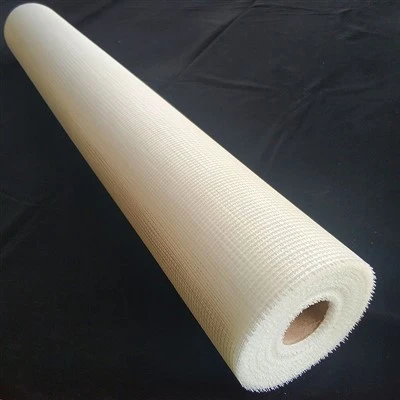
First, let’s keep it simple: elongation is just how much something stretches before it breaks. For fiberglass yarn, that’s a tiny number, like, super tiny. We’re talking 2 to 5 percent max for most standard yarns, compared to something like cotton which can stretch 7 percent or more when wet, or rubber bands that go way past 100 percent. But don’t let the small percentage fool you—fiberglass’s low elongation is exactly why it’s so reliable, and why getting the right number for your project is make-or-break. Think of it this way: if you’re pulling yarn tight to weave a fabric for a wind turbine blade, you don’t want it stretching mid-weave and throwing off your tension, right? Too much stretch, and your fabric is loose, uneven, and weak. Too little, and it snaps when you’re handling it during lamination, wasting time and material.
Wait, let’s get into the nitty-gritty a bit, but still keep it real. Fiberglass yarn isn’t just solid glass. It’s made of hundreds (sometimes thousands) of tiny individual glass filaments, twisted or bundled together to make a single strand. Those filaments themselves have almost no elongation—like 1 to 2 percent max. So where does that tiny extra stretch (up to 5 percent) come from? It’s mostly from how we process the yarn: the twist level, the sizing we coat it with, and how we draw it during production. Twist, for example: if you twist the filaments tighter, they act more like a rope, so the gaps between filaments close up before they stretch, giving a little more elongation. Too little twist, and the filaments slide around, but they’re more likely to snap on their own. Sizing? That’s the thin coating we put on every strand to protect the glass from breaking during handling, and to help it bond with resin later. Different sizing formulas add a tiny bit of flexibility, which can bump elongation up a percent or two. Draw tension, too—if we pull the yarn too hard as it’s cooling, it gets stiffer, less stretchy. Loosen it up a little, and you get that little extra give you might need.
Now, why should you care as someone who’s picking fiberglass yarn for their project? Let’s run through a few common use cases to make this concrete (pun intended, since so many folks use fiberglass for concrete reinforcement). If you’re a composites guy making surfboards or small boat parts, you’re probably using woven roving or chopped strand mat. Elongation here matters because when you lay the mat or weave onto the mold and pull it tight, you need just enough stretch to conform to curved shapes without snapping. Too little elongation, and when you go around a tight radius (like the curve of a boat’s hull), the yarn will break, leaving gaps in your laminate that cause it to crack later. I’ve seen this happen first-hand: a customer once bought a cheap generic yarn because it was $0.10 cheaper a pound, and his boat deck kept delaminating at the edges. Turned out that generic yarn had 1.8 percent elongation—way too low for the tight curves he was molding. Once he switched to our yarn with 3.2 percent elongation, his defects dropped by 80 percent. That’s not a small win, that’s money back in his pocket.
Another example: pipe wrapping for oil and gas or plumbing. Those pipes get transported, right? They’re jostled around on trucks, maybe dropped a little, so the fiberglass wrapping needs to have enough elongation to absorb that impact without cracking. If the yarn’s too stiff, it’ll snap on impact, and the pipe is left unprotected from corrosion. For this use, we usually spec 3.5 to 4.5 percent elongation. We had a plumbing contractor last year who was using a yarn with 2.2 percent elongation for gas line wraps, and his installers kept having to re-wrap pipes because the fiberglass would crack during handling. After switching to our custom blend, he told me his rework time went from 2 hours a job to 15 minutes. That’s a huge difference for his bottom line.
Wait, what about the cases where low elongation is actually a good thing? Oh right—sometimes you don’t want stretch at all. If you’re making a tension fabric for a stadium canopy or a concrete reinforcement grid, you want the fiberglass to stay rigid under load. Too much elongation, and the fabric will sag over time, or the concrete will crack as it shifts. For those applications, we can dial elongation way down, to 2.2 to 2.8 percent, with a stiff sizing that resists stretching. I talked to a civil engineer last month who was working on a high-rise foundation, and he needed exactly that—he said if the rebar replacement yarn stretched even 3 percent, the concrete would warp in the summer heat. We tailored a yarn for him that hit 2.5 percent, and he’s been raving about it ever since.
A lot of folks mix up elongation with tensile strength, too, and that’s a mistake. Tensile strength is how much force it takes to break the yarn—important, but elongation is how it behaves before that break. A yarn can have super high tensile strength (say, 300 ksi) but 2 percent elongation, or lower strength (250 ksi) but 4 percent elongation. Which is better? It depends. If you’re making something that needs to take a sudden impact, go for the higher elongation. If you’re making something that needs to stay rigid under constant load, go for lower. Don’t just chase tensile strength—those numbers don’t tell the whole story. We see this all the time: customers come to us asking for “high strength yarn” and end up with something that’s great for pulling a truck out of mud, but terrible for molding a custom kayak because it snaps on curve. That’s why we always ask a ton of questions about the project before we suggest a yarn—specific use, molding method, expected loads, environment. Elongation is a huge part of that, but only if you know what you need it for.
Now, a quick reality check: not all elongation numbers are created equal. Some suppliers will throw a number on a spec sheet, but it might be for the individual filaments, not the finished yarn. Or they’ll test it at 20°C (room temp), but if you’re working in a hot shop (like 40°C), elongation can drop a little, or if you’re working in a cold environment, it might go up. We test all our yarn at both room temp and the temp our customers usually work in, so we can give you the real number you’ll actually see on your job site. No false advertising, no hidden gotchas. That’s the kind of supplier we are—we’d rather be transparent about what our yarn can and can’t do than sell you something that doesn’t work for you.
Wait, let’s talk about how we adjust elongation, just to give you an idea of why one yarn is different from another. Like I said earlier, twist is a big one. Higher twist means more stretch, but too much twist can make the yarn hard to wet out with resin, which defeats the purpose. Sizing: we have a general purpose sizing that gives ~3.2 percent elongation, a flexible sizing for composites that bumps it to ~4 percent, and a rigid sizing for concrete reinforcement that brings it down to ~2.5 percent. We can also adjust the filament count—more filaments mean they slide a little more, so higher elongation; fewer filaments are stiffer, lower elongation. It’s all a balancing act, and that’s what makes fiberglass yarn work for so many different projects.
A common myth I hear all the time: “Fiberglass is brittle, so it has no elongation.” No way, that’s just old info. Modern processing has come a long way—we can tweak the stretch to fit almost any need, as long as you don’t try to make it stretch like rubber (that’s not glass anymore). The key is matching the elongation to how the yarn will be used. If you’re laying it by hand into a complex mold, you need more give. If you’re weaving it into a fabric for a constant load application, you need less.
So, let’s wrap this up. Elongation of fiberglass yarn isn’t just a random tech spec. It’s the difference between a project that turns out perfect and one that’s full of rework, or even fails later. As a fiberglass yarn supplier who’s worked with everything from small boat builders to big civil contractors, I’ve seen first-hand how the right elongation can save you time, money, and headaches. If you’re not paying attention to this spec right now, you’re probably leaving performance on the table—or wasting money on a yarn that’s not right for your job.
I know, tech stuff can be confusing, and it’s easy to just go with whatever’s cheapest or what you used last time. But if you’ve got a project coming up, or you’ve been dealing with wonky fiberglass that snaps, delaminates, or sags, reach out. No sales pitch, no fancy jargon, just us talking through what you’re doing and what you need. We can help you find the right elongation, and the right yarn, to make your project go smooth.
Fiberglass Tissue References:
- Manufacturing Chemists Association. (2018). Fiberglass Sizing and Processing Guidelines.
- Composites Industry Association. (2021). Test Methods for Elongation of Glass Yarns and Fabrics.
- International Concrete Reinforcement Institute. (2020). Glass Fiber Reinforced Concrete (GFRC) Material Specifications.
Danyang Yonggu Building Materials Co., Ltd.
As one of the most professional fiberglass yarn manufacturers and suppliers in China, we have world-leading production equipment and strong manufacturing capabilities. Please feel free to wholesale customized fiberglass yarn made in China here from our factory. For price consultation, contact us.
Address: Danyang City, Jiangsu Province, P.R. China
E-mail: sales02@cnyongu.com
WebSite: https://www.ygfiberglasses.com/
