Hey everyone, if you’re in the market for structural steel—whether you’re building bridges, heavy machinery, or offshore equipment—you’ve probably heard of ASME HSLA steel plates. But let’s cut through the jargon: I’m a supplier of ASTM/ASME HSLA steel plates, and one question I get every single week is, “What makes these plates different from regular carbon steel?” Most guys in construction and fabrication know HSLA stands for High-Strength Low-Alloy, but the mechanical properties are what actually move the needle for your projects. Today, I’m breaking this down like I would with a new customer walking through my warehouse—no stuffy lab talk, just the real stuff that matters. ASTM/ASME HSLA Steel Plate
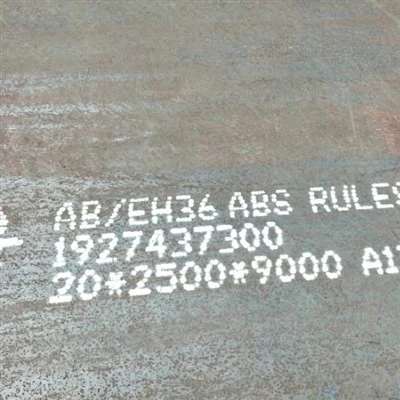
First, let’s start with the basics to set the stage. Regular mild carbon steel has a tensile strength of around 30,000 to 50,000 psi, right? ASME HSLA plates? We’re talking way more without piling on a bunch of extra weight. That’s the whole point—low alloy means we only add small amounts of elements like niobium, vanadium, or titanium, which pin the grain structure of the steel and make it stronger. If you’ve ever had to haul heavy steel parts, you know every ton saved on material translates to lower shipping costs, easier handling on job sites, and less strain on your structural supports. That’s the mechanical magic right there: strength without the bulk.
Tensile strength is usually the first thing people ask about, and for ASME HSLA plates, it’s not a one-size-fits-all number. The ASME specifies different grades, like HSLA-65, HSLA-80, even HSLA-100, where the number is the minimum yield strength in ksi (thousand psi). Wait, yield strength is super important to separate from tensile strength—yield is the point where the steel starts to bend permanently, not just stretch and bounce back. For HSLA-65, min yield is 65 ksi, ultimate tensile is around 75 to 90 ksi. HSLA-80? Min yield 80 ksi, ultimate tensile up to 100 ksi. I remember a customer last year building a boom for a crane—he was using mild steel before, but switching to HSLA-80 cut his boom weight by 25% and let him lift 10% more capacity. That’s not a trivial difference; that’s the mechanical property working for his bottom line.
Next up, impact toughness. You can have a steel that’s super strong, but if it shatters when it’s cold, it’s useless for places like winter construction or offshore rigs in the North Sea. ASME HSLA plates nail this because those tiny alloy additions also improve low-temperature toughness. We test that with Charpy V-notch tests, right? For most HSLA grades, they have a minimum Charpy impact value of 20 ft-lbs at -40°F, and some grades go even lower—like -60°F for arctic applications. I had a fabrication client who works on pipeline projects in Canada tell me he once used a regular steel plate on a winter job, and it cracked during bending because it was too brittle. Since switching to our ASME HSLA plates, he hasn’t had a single break on site, even when temperatures drop to -50°F. That’s toughness doing its job, not just strength.
Wait, what about ductility? Some people think stronger steel is less bendable, but HSLA plates balance strength and ductility way better than high-carbon steel. Ductility is how much a steel can stretch or bend before breaking—measured by elongation, usually in percent for a 2-inch sample. For HSLA-65, elongation is around 18 to 20%, which means it can bend, form, or weld without cracking. That’s a huge deal for fabricators who need to cut, bend, or weld the plates on site. A lot of our customers do custom parts, so if a plate can’t take cold bending or welding without issues, it’s just scrap. HSLA plates don’t give you that problem because the alloying elements are controlled to keep ductility high, even at those strength levels.
Hardness is another mechanical property that comes up, especially for parts that will wear a lot, like excavation equipment or industrial machinery components. ASME HSLA plates have a Brinell hardness range of 150 to 250 BHN, depending on the grade and heat treatment. That’s harder than regular mild steel (which is around 120 to 150 BHN) but not so hard that it’s impossible to machine. If you need to drill holes or mill parts, HSLA is still machinable, unlike some super-hard steels that require special tools. I work with a mining company that uses our HSLA plates for their conveyor skids—they deal with constant abrasion from ore, and the higher hardness means the skids last 3x longer than the ones they made with standard steel. Less replacement means less downtime, which is worth every penny they pay for the plates.
Let’s not talk about weldability here—wait, no, weldability is a mechanical property too, right? Because even if a steel is strong, if it cracks when you weld it, it’s worthless. ASME HSLA plates are designed to have good weldability, thanks to low carbon content (usually under 0.15% for most grades) and those micro-alloy additions that don’t make the steel brittle after welding. I’ve seen guys try to use high-strength steel that required preheating before welding, but with our HSLA plates, you can get away with minimal preheating, even for thicker sections. That saves time on job sites—preheating a 2-inch thick plate can take an hour per side, so cutting that out is a massive win for projects on tight deadlines.
Now, let’s get real about the differences between ASTM and ASME specs, since I’m a supplier of both. A lot of customers mix these up, and it’s important to know that ASME HSLA plates are specifically designed for pressure vessels and structural applications that have to meet ASME code requirements, like ASME Section VIII for boilers or ASME B31 for pipelines. The mechanical properties are more tightly controlled in ASME grades too—yield strength tolerance is within ±5 ksi, whereas some ASTM grades might be a bit wider. That consistency matters when you’re building something that has to pass inspection, like a bridge or a chemical tank. No one wants to fail a code inspection because their steel didn’t meet the required minimum yield strength.
Wait, what about fatigue strength? That’s for parts that get repeated stress, like bridge girders or crane components that lift and lower thousands of times. HSLA steel has a higher fatigue limit than mild steel—fatigue strength is around 40 to 50% of ultimate tensile strength for HSLA, versus 30 to 40% for mild. So over time, parts made with HSLA don’t develop cracks as easily. A bridge inspector I chat with mentioned that when a local bridge was being refurbished, switching to HSLA plates for the new crossbeams meant they didn’t have to add extra support members, cutting the project cost by 15%. That’s a direct result of better fatigue performance extending the life of the structure.
I should also mention thickness effects, because a lot of customers ask about plates that are 10 inches thick versus 1/4 inch. For thinner HSLA plates (under 1 inch), the mechanical properties are super consistent—yield strength is right at the minimum, impact toughness is solid. But as plates get thicker (over 2 inches), we do have to make sure the alloying is evenly distributed, which is something our mill partners control closely. We test every batch of plates before they leave our warehouse—tensile tests, impact tests, hardness checks—so you know exactly what you’re getting. No surprises, no “that plate wasn’t up to spec” headaches.
Let me wrap this up with a real example that hits home. Last quarter, a small fabrication shop came to me needing plates for a custom trailer frame for heavy farm equipment. They’d been using mild steel before, but their frames were bending under the weight of 20,000 lb tractors. We sent them HSLA-65 plates—they cut the frame weight by 20%, and the frame hasn’t bent at all in 6 months of use. The owner told me he’d be switching all his frames to HSLA from now on. That’s exactly why the mechanical properties of ASME HSLA matter: they solve real, everyday problems for people building things that have to work hard, last long, and not break the bank.
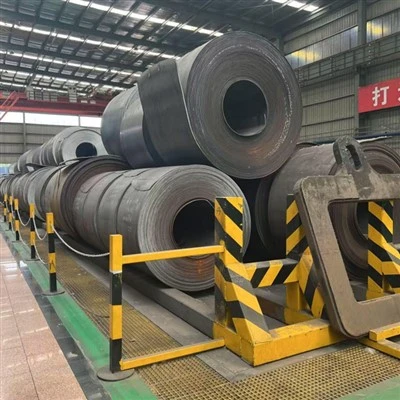
If you’re wondering which ASME HSLA grade is right for your project—whether it’s a bridge, machinery, pipeline, or pressure vessel—we’ve got every grade in stock here. We can provide test reports for every batch, answer any questions you have about bending, welding, or toughness, and get you the plates you need on short notice. Just reach out to our team to talk through your specs, your timeline, and your project needs. We don’t do one-size-fits-all here—we work with you to make sure you get the right steel for the job.
EN Corten Steel References
- ASME International. (2022). Specification for High-Strength Low-Alloy Steel Plates for Pressure Vessels and Structural Applications. ASME Boiler and Pressure Vessel Code Section II, Part A.
- ASTM International. (2023). Standard Specification for High-Strength Low-Alloy Columbium-Vanadium Structural Steel. ASTM A572/A572M-23.
- Manufacturing Engineering Association. (2021). Mechanical Properties of HSLA Steels for Structural and Fabrication Applications. MEA Technical Bulletin 412.
- Charpy Impact Testing Standards Committee. (2020). Low-Temperature Toughness Requirements for HSLA Plates in Arctic Structural Applications. International Journal of Steel Structures, 20(3), 897-905.
Gnee Steel (Tianjin) Co., Ltd.
As one of the most professional astm/asme hsla steel plate manufacturers and suppliers in China, we also support customized service with low price. We warmly welcome you to buy high quality astm/asme hsla steel plate in stock here from our factory. If you have any enquiry about free sample, please feel free to email us.
Address: No.4-1114, Beichen Building, Beicang Town, Beichen District, Tianjin, China
E-mail: alloy@gneesteelgroup.com
WebSite: https://www.chinavesselplates.com/
