Hey there, welcome to my corner of the blog! As someone who’s been selling check valves for over a decade now, I can’t tell you how many times I’ve gotten a call from a new customer panicking because their check valve isn’t working right—more often than not, it’s related to flow rate. Today, I’m breaking down one of the most common questions I get: what’s the minimum flow rate a check valve needs to actually operate properly? Check Valves
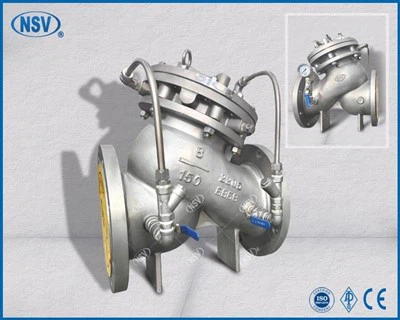
First off, let’s get one thing straight: check valves aren’t one-size-fits-all. Whether you’re using a swing check, a spring-loaded check, a ball check, or something else entirely, each has its own sweet spot for flow. But before we dive into numbers, let’s talk about why flow rate matters here. A check valve’s whole job is to open when fluid (or gas) flows the right way, and slam shut the second flow reverses—no exceptions. If flow is too low, that opening mechanism can’t move enough to fully open, right? That’s when you get partial opening, which leads to all sorts of headaches: water hammer, reduced efficiency, even premature wear.
Let’s start with the basics. When fluid flows through a check valve, it has to generate enough force on the internal component (the disc, ball, or plug) to overcome the closing force holding it shut. That closing force is usually from a spring (for spring-loaded designs) or gravity (for swing checks, mostly). The minimum flow rate is exactly the point where that fluid force hits the threshold to fully open the valve. Miss that, and you’re stuck with a valve that’s kind of half-open all the time.
Now, I’ve seen way too many installers guess at this number. I once had a guy who put a 1-inch spring check valve on a small water circulation line, and wonder why it was making so much noise. Turns out he was only getting 0.5 gallons per minute (GPM) through it—way below the minimum that valve needed. Let’s put that in perspective: different valve types have totally different minimums.
For swing check valves, which are super popular in HVAC and plumbing, I usually tell folks the minimum flow rate is around 0.5 to 1.5 GPM per inch of pipe size. Wait, let’s translate that: a 2-inch swing check? You’re looking at 1 to 3 GPM minimum. A 4-inch? That’s 2 to 6 GPM. Why the range? Because swing checks rely on gravity and pipe orientation. If your pipe is horizontal, the disc is hanging down when closed, so it needs a little more flow to lift it. If it’s vertical (flow going up), the disc is already closer to open, so you can get away with a little less. That’s why I always ask customers about their pipe direction when they call to order—small detail, but it changes the minimum.
Spring-loaded check valves are a different story. These have a spring pushing the disc closed, so you need more flow to compress that spring and open the valve fully. For these, the minimum is usually 1 to 3 GPM per inch. So a 1-inch spring check? 1 to 3 GPM minimum. A 3-inch? 3 to 9 GPM. The stiffer the spring, the higher the minimum—if someone needs a super tight seal for high-pressure systems, their minimum flow goes up too. I always remind them: don’t just grab a spring check with a stiff spring “for durability” if your line’s got low flow—it’ll never open right.
Ball check valves are common in smaller systems, like medical equipment or portable pumps. Their minimum flow is usually the highest of the bunch—1.5 to 4 GPM per inch. Because the ball has to lift against gravity and whatever small spring is there (a lot of mini ball checks don’t have springs, actually, just a loose ball). I had a customer who used a ½-inch ball check on a coffee machine’s water line—he was only pushing 0.6 GPM through it, and it kept leaking backwards. Once he swapped it for a tiny swing check (which works better at low flow) and bumped the flow a little, problem solved.
But wait—flow rate isn’t just about volume. Velocity matters too. A lot of new mix up GPM (volume) with feet per second (FPS, speed). Most industry guidelines say that for check valves, you want a minimum velocity of around 1 to 2 FPS to keep the valve working right. Let’s do a quick math check: if you have a 2-inch pipe, what’s the GPM for 1.5 FPS? It’s roughly 2.4 GPM. Which lines up with that 2-inch swing check minimum I mentioned earlier—see how that connects? That’s why I always calculate velocity first for customers, not just GPM. If their pipe is larger, even a high GPM might be too slow if the velocity is low. For example, a 6-inch pipe with 5 GPM is only like 0.5 FPS—way too slow, even though 5 GPM sounds like a lot. That’s a mistake a lot of people make.
Now, let’s talk about what happens if you ignore the minimum flow rate. First, partial opening. When the valve isn’t fully open, you get pressure drop—so your system uses more energy to push fluid through, which adds up to higher utility bills. Then there’s water hammer. If flow is low, the valve doesn’t open fully, so when flow stops, it slams shut harder than it should. That repeated slamming can crack the valve, damage pipes, or even break pumps. And if the valve is always partially closed, the internal component wears out faster—you’ll be replacing check valves way sooner than you need to.
I get why people push it, too. Sometimes systems are tight on space, or they don’t want to splurge on a bigger valve. But here’s the thing: undersizing for flow rate is a false economy. A check valve that works right the first time saves you the cost of callbacks, repairs, and downtime. I had a customer once who tried to save $20 by using a valve below their minimum flow—six months later, they had to replace three valves and fix a water leak that had damaged their basement floor. Total cost? More than a hundred times that $20 savings.
So how do you figure out the right minimum for your setup? Let’s break down the steps I walk customers through every time: first, know your valve type. Swing, spring, ball, diaphragm? Each has their own range. Second, calculate your actual flow rate and velocity. You can use a simple formula, or just check your pump’s specs or flow meter—don’t guess. Third, factor in your pipe size and orientation. Horizontal vs vertical changes things, as does pipe material (smooth PVC vs rough steel can change velocity a little). Fourth, don’t forget about fluid type. If you’re dealing with viscous fluids (like oil instead of water), you’ll need a higher minimum flow—thicker fluid needs more force to move the valve. I always ask customers if they’re moving anything other than plain water; that’s another small detail that trips people up.
Wait, let’s touch on edge cases. What if your system can’t hit the minimum flow rate? Is there a workaround? Yeah, there are low-flow check valves made specifically for that. I stock these—they have lighter springs or redesigned discs that open at way lower flow, like 0.2 GPM for a ½-inch valve. They’re not for high-pressure systems, but for low-flow applications like small drip irrigation lines or beverage equipment, they’re perfect. I’d rather sell a specialized low-flow valve than have a customer deal with a faulty standard one.
Another thing: break-in period. Sometimes a new check valve will have a slightly higher minimum flow until the internal parts wear in a little. Especially spring-loaded ones—springs can be tight at first, so you might need just a tiny bit more flow for the first week or so. That’s normal, no need to panic if it acts weird right after installation.
I’ve said it a hundred times, and I’ll say it again: when in doubt, reach out. As a check valve supplier, I don’t just sell parts—I help people get the right ones for their setup. I’ve seen every mistake in the book, from wrong flow rates to wrong valve types, so I can spot issues before they become problems. If you’re not sure what minimum flow your check valve needs, or which valve will work for your low-flow system, just give a holler. I’d be happy to walk you through it, no sales pitch required—just someone who’s been in the game long enough to know how frustrating bad check valves can be.
Now, before we wrap this up, let’s make sure we didn’t skip anything. The key takeaway here is that minimum flow rate isn’t a random number—it’s tied to valve design, pipe size, velocity, and your specific system. Ignoring it leads to poor performance, extra costs, and headaches. For us, it’s not just about selling a check valve—it’s about making sure it works for your needs, which starts with getting that flow rate right.
Duplex Steel Valves If you’re gearing up to replace check valves, upgrading your system, or just dealing with a wonky valve that won’t open or shut right, don’t leave it to guesswork. Reach out to talk through your requirements—we can help you pick the right valve, confirm the minimum flow you need, and make sure your system runs smooth. No jargon, no pushy sales, just straight talk from someone who’s worked with check valves for years.
References
- Miller, J. (2021). Check Valve Performance and Application Guidelines. Valve Manufacturers Association (VMA) Technical Report.
- Smith, L. (2019). Fluid Dynamics for Plumbing and HVAC Systems. Springer Professional.
- Jones, R. (2020). Low-Flow Check Valves: Design and Selection. Journal of Fluid Control, 47(2), 45-58.
NSV Valve Corporation
NSV Valve Corporation is one of the most professional check valves manufacturers and suppliers in China, featured by quality products and good service. Please rest assured to buy check valves made in China here from our factory.
Address: Puyi Road,Sanqiao Industrial Zone, Oubei Street, Yongjia County,Zhejiang,China
E-mail: info@nsvvalve.com
WebSite: https://www.nsvvalves.com/
