As a specialized equipment supplier, I’ve spent over a decade working on the ground with labs, manufacturing floors, and industrial facilities, and I can’t tell you how many times I’ve heard clients say, “Our equipment broke at 2 a.m. and we had no way to get help fast.” The truth is, specialized equipment—think high-precision CNC machines, lab-grade mass spectrometers, industrial bioreactors, or heavy-duty material testers—isn’t like the laptop or printer you can Google-fix in 10 minutes. Its complexity means technical support can make or break a project, a production run, or even a client’s bottom line. Over the years, we’ve built a support ecosystem tailored exactly to this, and today I want to break down the channels that work for specialized equipment, what makes them unique, and why one-size-fits-all support rarely cuts it. Specialized Equipment
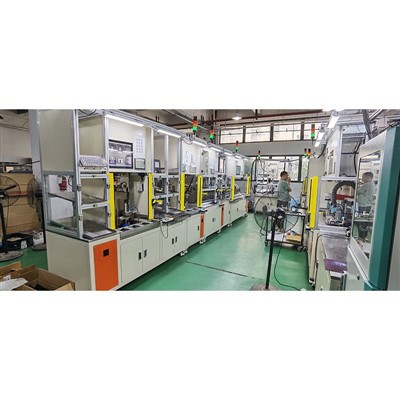
Let’s start with the channel most people turn to first, and the one that used to be the only game in town: on-site field support. For specialized equipment, this isn’t just “sending a tech to look at it”—it’s a custom, vetted service that our team builds around your equipment’s specificity. A few years back, a pharmaceutical client reached out at 1 a.m. because their 1,000L bioreactor’s temperature probe had failed mid-batch; a bad replacement would’ve ruined $80,000 worth of raw materials, plus delayed clinical trial timelines. Our on-site tech was at their facility in 3.5 hours, brought the exact probe calibrated to their model’s ISO standards, and had the reactor back up in 90 minutes. That’s the value here: specialized equipment often requires hands-on calibration, access to proprietary tools, and knowledge of how the unit integrates with your entire system (like the bioreactor linking to their LIMS, or a CNC machine syncing with their CAD software). Our on-site support isn’t a call center tech driving around—each field specialist has completed 40+ hours of training on our equipment lines, and many have backgrounds in the industries we serve, so they don’t just fix the machine, they understand why it matters to your operation. That said, on-site has its limits: it’s expensive for minor issues, and you can’t have a tech at every location at once. So that’s where our next channel comes in.
Remote diagnostic support is the workhorse of our daily operations, and it’s evolved a lot from the “read this error code over the phone” days. Today, our remote support for specialized equipment uses secure, industry-compliant tools that avoid the security risks of generic remote desktop software. For most of our equipment, we install a proprietary monitoring and diagnostics module at commissioning—this is a tiny, unobtrusive tool that runs in the background, logs performance data, alerts our team to anomalies before they become failures, and lets our techs connect directly to the unit’s control system (with your explicit consent, of course). Last quarter, a aerospace components manufacturer noticed their CNC machine’s spindle vibration was higher than normal, but their in-house team couldn’t spot the cause. Our remote team pulled 6 months of vibration, temperature, and load data, identified a worn bearing that would’ve failed in 2 weeks, and walked their maintenance team through replacing it over a video call, no on-site visit needed. Remote support also handles 70% of routine issues: resetting error codes, updating firmware, calibrating sensors, or adjusting programming parameters. The biggest advantage here is speed—90% of remote calls are resolved in under an hour, and it cuts downtime by 60% compared to waiting for on-site service. We also offer tiered remote support, so small manufacturers with 1-2 machines can get basic remote access, while larger facilities get full 24/7 remote monitoring for every unit in their fleet.
But what about the times when remote can’t fix it, and on-site is too slow? That’s where our third channel: dedicated account technical advisors (ATAs) come in, and this is the secret weapon for many of our long-term clients. Unlike generic support reps, every ATA is assigned to a specific client, and they become the single point of contact for all their equipment-related needs. If a food processing plant has 5 of our industrial homogenizers, their ATA knows the model’s quirks, their maintenance schedule, even their production deadlines—so when one machine starts leaking, the ATA doesn’t have to ask “what’s your serial number?” or “when did this start?” They can pull up the unit’s service history, flag if it’s under warranty, and coordinate with our parts and field teams to get the right person and part on site within 12 hours, not 24. We build ATAs to match their client’s industry too: a biotech client gets an ATA with experience in lab automation, a mining equipment client gets one with background in heavy machinery, so they don’t have to translate jargon or explain regulatory requirements. This channel is especially valuable for mid-sized and enterprise clients who have complex fleets and can’t afford miscommunication between support teams. It’s not just support—it’s a partner that understands your operation’s unique rhythm.
Then there’s the parts and components support channel, which is often overlooked but critical for specialized equipment. A $100 sensor that’s out of stock can stop a $1 million production line dead, so our parts team is built for speed, and we don’t just sell generic third-party parts. All our parts are OEM, tested to work exactly with our equipment, and stored in regional warehouses across North America, Europe, and Asia—so if a client in Mexico needs a replacement for their material tester, we can ship it same-day, not wait 2 weeks for international delivery. We also offer a consignment parts program for regular clients: we keep a pre-set stock of high-wear parts at their facility, so they can replace a worn belt or filter themselves, and only get billed when they use it. For specialized equipment, using non-OEM parts is a huge risk—they can throw off calibration, void your warranty, or cause unexpected failures. That’s why our parts channel is integrated with all our other support systems: when our remote team identifies a faulty part, they automatically send the order to the nearest warehouse, and their ATA gets a notification to coordinate installation, no extra calls needed.
Now, let’s talk about the support channels that are newer, but fast becoming essential: self-service and digital knowledge hubs. When we first launched our knowledge base 8 years ago, it was just a list of error codes and 10-page manuals. Today, it’s a interactive tool that includes step-by-step video tutorials, troubleshooting guides, even a chatbot trained specifically on our equipment. The chatbot, which is available 24/7, can help a small manufacturing owner reset their machine’s password, find the right manual for their model, or schedule a routine maintenance check without ever calling a human. We also have a community forum for our clients, where operators and maintenance teams share tips: for example, a user posted a trick for extending the life of a centrifuge’s rotor that we later integrated into our service recommendations. Self-service isn’t for every issue—if a machine is down and you need it running, you don’t want to sift through 50 video tutorials—but it’s perfect for routine maintenance, answering basic questions, and giving clients control between service visits. For smaller businesses with limited IT or maintenance teams, this is a lifesaver that cuts down on support wait times and costs.
Wait, I should also mention the less common but critical channel: regulatory and compliance support. Specialized equipment, especially in industries like pharmaceuticals, aerospace, or food processing, has to meet strict regulatory standards (FDA, ISO, OSHA). Many of our clients don’t just need help fixing a broken machine—they need to update it to meet new regulations, or provide documentation for audits. Our support team includes specialists who are trained in these standards: if a biotech client needs to update their mass spectrometer to meet 21 CFR Part 11 requirements, our team will walk them through the firmware update, generate the required audit logs, and even help them test the system to ensure compliance. This is a part of support that generic equipment suppliers almost never offer, but it’s make-or-break for clients in regulated industries. A client of ours had to pass a FDA audit last year, and our regulatory support team helped them pull 3 years of equipment performance data, fix a minor calibration issue the audit flagged, and pass with zero findings. That’s the kind of value that doesn’t show up in downtime numbers, but it’s what keeps clients coming back.
Of course, no set of support channels is perfect, and we’ve learned that one size doesn’t fit all. A startup with a single lab scale doesn’t need a dedicated ATA and 24/7 on-site support—they just need reliable remote access and fast parts shipping. A multinational manufacturing plant with 100 CNC machines needs a mix of dedicated ATAs, remote monitoring, and scheduled on-site maintenance. That’s why we work with each client to build a custom support plan, not just give them a list of options. When a client first buys our equipment, we do a 30-day onboarding where we walk them through the support channels that fit their operation, answer any questions, and set up their account for remote access or consignment parts if they want. We also do annual check-ins to adjust the plan: if a client’s production has grown, we add more on-site days; if they’ve upgraded their maintenance team, we expand their self-service access.
I’ve seen too many specialized equipment suppliers treat support as an afterthought—something you call when something breaks, not a core part of the product. But for the equipment we build, which is often custom-tailored to a client’s specific needs, support is half the value. Last month, a client told us that when they were evaluating two suppliers, the one we offered for support made all the difference. The other supplier only offered 9-to-5 phone support and third-party parts, but we had 24/7 remote monitoring, regional parts warehouses, and specialists who understood their industry. That’s why we’ve built these channels the way we have: to not just fix equipment, to keep it running reliably, to adapt to our clients’ needs, and to take the stress out of specialized equipment ownership.
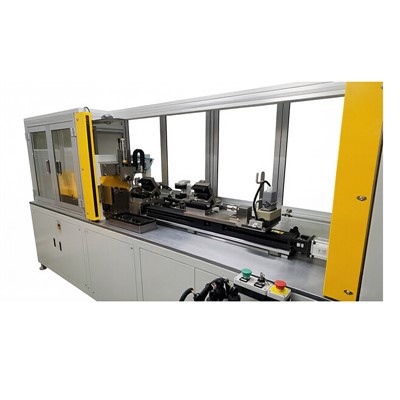
If you’re working with specialized equipment, you know how much is riding on it: your production deadlines, your research milestones, your bottom line. The right support channels turn a stressful breakdown into a manageable problem, and keep your operation running smoothly. Whether you’re dealing with a minor error code or a major equipment failure, we’re here to connect you with the support that fits your needs. Reach out to our team of technical experts to discuss your equipment support requirements and find the right solutions for your operation.
Automotive Industry Production Equipment References
- International Organization for Standardization (ISO) 9001:2015, Quality Management Systems – Requirements for Customer Support Processes
- U.S. Food and Drug Administration (FDA), Guidance for Industry: Technical Support Services for Medical Devices, 2022
- Association for Advancing Automation (A3), 2023 State of Robotics Technical Support Report
- Industrial Maintenance and Plant Operations (IMPO) Magazine, 2024 Specialized Equipment Support Benchmark Study
- International Society of Automation (ISA), ISA-18.2:2020, Security for Industrial Automation and Control Systems – Remote Support Services
Shanghai Zenyan Automation Engineering Co., Ltd.
As one of the leading specialized equipment manufacturers in China, we warmly welcome you to buy advanced specialized equipment made in China here from our factory. All customized machines are with high quality and low price. Contact us for quotation.
Address: 3rd Floor, Building A, No.5629 Beisong Road, Chedun Town, Songjiang District, Shanghai, China
E-mail: zenyan_sh@163.com
WebSite: https://www.zenyanauto.com/
