If you’re a hydraulic machinery owner, a mechanic, or someone who’s ever stared at a hydraulics setup and wondered “how the hell does this actually move that 10-ton press?” you’ve probably crossed paths with a bent axis hydraulic motor. I’ve been supplying hydraulic motor parts for over a decade, and one question I get asked all the time is, “What are the key parts of these motors, anyway?” I get it—when you’re diagnosing a leak, sourcing a replacement component, or just trying to wrap your head around why your motor acts up, you don’t need a textbook. You need the straight-up breakdown that actually matters for someone who works with these parts day in and day out. Hydraulic Motor Parts
Let’s start with the basics: a bent axis motor isn’t your standard gear or vane motor. It’s built for high torque, heavy loads, and the kind of constant use that chews through lesser designs. It’s called “bent axis” because the main rotating part (the shaft) sits at an angle—usually 10 to 30 degrees—relative to the motor’s main housing. That angle is non-negotiable; it’s what lets it convert pressurized hydraulic fluid into rotational motion efficiently. If you’ve ever watched a construction excavator’s arm swing, or a farm tractor’s hydraulic attachment lift, there’s a good chance a bent axis motor’s doing the heavy lifting behind the scenes.
Now, let’s jump into the parts, one by one, with the kind of context that comes from spending years replacing, troubleshooting, and sourcing these components.
First up: the main housing. This isn’t just a metal box to hold everything together. It’s the backbone. It’s cast from durable ductile iron (sometimes steel for super heavy-duty setups) because it has to withstand constant pressure—we’re talking up to 4,000 psi for most industrial models, and even higher for mobile applications like mining trucks. The housing has ports for the hydraulic hoses to hook up: a pressure inlet (where high-pressure fluid comes in) and a return outlet (where low-pressure fluid cycles back out to the reservoir). I’ve seen too many guys skip checking the housing’s port threads for wear—those threads get corroded or stripped over time, and that’s a top cause of messy, avoidable leaks. If your motor’s leaking around the hose connections, start here before you guess it’s a seal.
Next, the drive shaft. This is the part that connects the motor to whatever you’re powering—whether that’s a conveyor belt, a winch, or a hydraulic pump. Unlike a straight-axis motor’s shaft, this one’s set at that bent angle. It’s precision-machined, usually hardened steel, because it’s taking all the torque from the internal rotating parts. Pro tip: don’t overlook the shaft’s splines. Those are the teeth that lock into your equipment’s driven component, and if they’re chipped or worn, you’ll get slippage that makes your motor feel weak, even if all the other parts are fine. I get tons of orders for replacement drive shafts, mostly because guys run them until the splines are gone instead of catching wear early.
Then the star of the show: the cylinder block. This is where the magic of converting fluid pressure to motion happens. It’s a cylindrical piece, usually made of cast iron, with multiple evenly spaced bores (holes) cut into it—usually 5, 7, or 9, depending on the motor’s size. Each bore holds a piston. The cylinder block is mounted on that bent drive shaft, so when the drive shaft spins, it tilts the cylinder block along that 10-30 degree angle. That tilt is what makes the pistons move in and out of their bores as the shaft rotates. I love explaining this part to new techs: if the cylinder block was straight, the pistons wouldn’t move at all. The angle is everything.
Speaking of pistons: next up, the piston assembly. Each bore in the cylinder block has a piston inside it, and each piston is fitted with a sealing ring (usually a polyurethane or PTFE ring) to keep fluid from leaking between the piston and the bore wall. Most bent axis motors use barrel-type pistons—these have a rounded end that fits into a socket on the drive shaft. That rounded end is key; it lets the piston pivot as the drive shaft spins, so there’s no binding. If your motor’s making a grinding noise, it’s often a bad piston seal or a worn piston socket—those parts take a beating from constant movement, and replacement is way cheaper than a whole new motor.
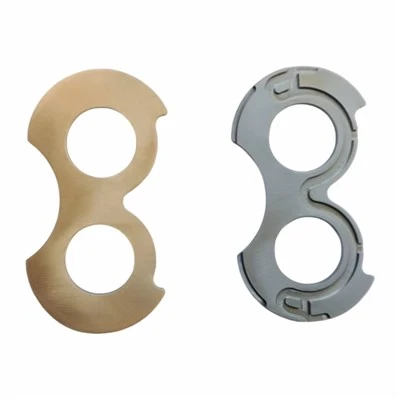
Wait, let’s not forget the valve plate. This is a flat, circular plate that sits between the cylinder block and the housing, acting as a sort of “traffic cop” for the hydraulic fluid. It has two curved ports: one that lines up with the pressure inlet (feeding high-pressure fluid into the cylinder bores) and one that lines up with the return outlet (letting low-pressure fluid out). As the cylinder block spins, each bore passes over these two ports at the right time—high-pressure fluid pushes the piston outward, which pushes against the drive shaft, creating torque, and the low-pressure fluid is pushed out on the other side of the cycle. The valve plate has to be perfectly machined; if there’s even a tiny imperfection on its surface, you’ll get internal leakage that kills the motor’s efficiency. I’ve had customers come to me with motors that were “running slow” and it turned out a $20 valve plate replacement fixed it, no other parts needed.
Then there’s the trunnion or yoke assembly. Wait, some people call this the “swash plate,” but for bent axis motors, it’s usually a yoke (or trunnion) that holds the pistons’ rounded ends. Unlike axial piston pumps with a fixed swash plate, the bent axis motor’s yoke is sometimes adjustable—this lets you change the angle of the drive shaft, which changes the motor’s displacement (how much fluid it moves per rotation). That’s why you can have a single motor that’s good for both high speed, low torque applications and low speed, high torque jobs—just adjust the yoke angle. Adjustable yokes are super common in mobile hydraulics, like on farm tractors, because they let operators fine-tune performance on the fly. If your motor’s not responding when you adjust the speed, check the yoke’s pivot pin—those pins can seize up, and that’s a quick fix if you catch it early.
Seals and bearings, let’s group these together because they’re the unsung heroes of any hydraulic motor. You’ve got shaft seals at the drive shaft end, to keep hydraulic fluid from leaking out and dirt from getting in. You’ve also got o-rings between the valve plate and the housing, and between the cylinder block and the drive shaft. Then there are bearings: rod bearings where the pistons meet the drive shaft, and main bearings that hold the drive shaft in place in the housing. Bearings take a ton of load, especially in heavy-duty motors, so they need to be lubricated constantly—usually by the hydraulic fluid itself. If your motor’s operating with old, dirty fluid, the bearings will wear out fast, leading to that dreaded “loose” feeling in the drive shaft. I always recommend changing fluid and filters every 1,000 hours, not whenever something breaks—saves you a fortune in parts later.
Wait, did I miss anything? Oh, maybe the pressure relief valve. It’s not a main rotating part, but it’s a safety component that’s crucial. It’s built into the housing, and it opens if the pressure inside the motor gets too high (way above its rated psi). That prevents the motor from bursting, which would be a total disaster for your equipment. A lot of people forget about the relief valve, but if you’re running heavy loads, it’s worth checking periodically to make sure it’s calibrated correctly. I’ve seen more than one motor blow a seal because the relief valve was stuck closed, and that’s a preventable issue.
Now, let’s put this all together in simple terms, so it sticks. High-pressure fluid comes into the housing, hits the valve plate’s pressure port, and flows into the cylinder bores. That fluid pushes the pistons outward. The pistons push on the drive shaft, which is angled, so that linear push turns into rotational motion. The low-pressure fluid left after that cycle flows out the return port. All the while, seals keep fluid where it’s supposed to, bearings keep everything moving smoothly, and the yoke’s angle determines how much torque or speed you get.
I’ve seen a lot of guys try to cut corners on hydraulic motor parts, especially when it comes to the smaller components like seals or valve plates. But here’s the thing: bent axis motors are built for precision, and every part depends on the others. A worn piston will mess up the cylinder block, a bad valve plate will leak pressure, and if your relief valve is bad, you’re just asking for a breakdown on the job.
If you’re a gearhead like me, you already know that knowing your parts makes all the difference. If you’re a fleet manager or a equipment owner, understanding these components helps you spot issues before they turn into costly replacements. I’ve been supplying hydraulic motor parts for years, and I’ve worked with everyone from small farm operations to heavy industrial plants. Whether you need a replacement drive shaft, a piston seal, a full cylinder block, or even a whole motor rebuild kit, I’ve got you covered.

Don’t wait until your motor seizes up mid-job—being proactive about your parts is the best way to keep your equipment running. If you’ve got questions about a specific part, need a quote, or just want to troubleshoot a weird noise or slow performance, reach out. No jargon, no hidden fees, just straight answers and quality parts that actually fit.
Bimetal Strips & Sheets References:
- Hydraulic Machinery Association. (2022). Bent Axis Hydraulic Motors: Design, Operation, and Maintenance. HMA Technical Manual Series.
- Nelson, T. (2019). Hydraulic Component Parts Identification: A Field Guide for Technicians. Industrial Hydraulics Press.
- Mobile Hydraulic Society. (2021). Adjustment and Calibration of Bent Axis Motor Components. MHS Best Practices Guide.
- Ductile Iron Society. (2020). Material Selection for Hydraulic Motor Housings and Rotating Parts. Technical Paper #DI-20-04.
- Hydraulic Seal Manufacturers Association. (2022). Seal and Bearing Wear in Bent Axis Hydraulic Motors: Common Causes and Prevention. HSMA Maintenance Bulletin.
Qingzhou Baiyun Anti-friction Products Co., Ltd.
With abundant experience, we are one of the most professional hydraulic motor parts manufacturers and suppliers in China. Please rest assured to wholesale customized hydraulic motor parts at competitive price from our factory. Welcome to contact us for quotation.
Address: Linglongshan North Road (south of the railway bridge), Economic Development Zone, Qingzhou City, Weifang City, Shandong Province
E-mail: byantifriction@gmail.com
WebSite: https://www.baiyunbimetal.com/
