Hey everyone, it’s Jake here—from the Fruit Tree Saw crew, the people who make those handy, tree-shaking tools you’ve probably seen us geeking out over at orchard shows lately. If you’re anything like us, you hate wasting time and energy climbing ladders just to harvest fruit, or even worse, struggling to reach high branches to prune properly. That’s why our pole saw blades (wait, no—our purpose-built saw blades for pole fruit tree work) are game-changers, but I get it. If you’re new to attaching a saw blade to a pole for fruit tree stuff, it can feel a little wonky at first. I’ve seen folks mess this up at demo days so many times: they over-tighten the bolt and strip the pole’s threads, or under-tighten and have the blade go flying mid-job (scary, right? Never fun). Today, I’m breaking down exactly how we teach our orchard regulars, hobbyists, and even the small-scale farm folks to do this right—no fancy tools needed, just some common sense and a quick run-through. Let’s dive in. Fruit Tree Saw
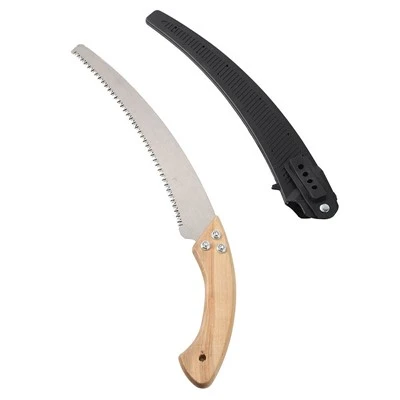
First off, let’s talk about why this matters specifically for fruit trees. You might be thinking, “Wait, can’t I just use any old metal pole and a circular saw blade? No way.” Fruit tree work has unique needs. You need a pole that’s light enough to hold above your head for 10 minutes while you prune, but sturdy enough not to bend when you pull gently to shake off overripe fruit or cut a thick branch. Our saw blades are made with tempered steel that’s not too sharp (so you don’t nick the tree bark accidentally) but sharp enough to glide through 2-inch branches without struggling. But the blade-pole connection? That’s where most people go wrong. Skip the random hardware store hacks—stick to this method, and you’ll save yourself a headache (and maybe a trip to the ER) down the line.
Let’s start with the tools and parts you actually need. No fancy stuff here, I promise. First, your purpose-built Fruit Tree Saw blade (we’ve got three sizes for different branches: 6-inch for thin, new growth, 8-inch for medium branches, 10-inch for the thick stuff—match this to your pole, obviously). Then, a pole. We recommend a fiberglass pole, not aluminum—fiberglass doesn’t conduct electricity if you accidentally get close to a power line (huge safety thing) and it’s lighter. If you’re using an existing pole, make sure it’s got a female thread at the top (1/2-inch or 5/8-inch, that’s standard for our blades). Wait, if your pole doesn’t have threads? No sweat, just grab a metal pole adapter from us or any hardware store—we sell these too, they’re made to fit our blades perfectly. Next, tools: a Phillips-head screwdriver (we use #2, it’s the right size), a 10mm or 13mm wrench (depending on the bolt that comes with your blade—we label each bolt size on the packaging so you don’t guess), and a rag to wipe off any dirt from the blade’s mounting holes. That’s it. No power tools, no weird stuff.
Now, step-by-step. Let’s walk through this like I’m standing next to you at your shed, okay? First, prep both parts. Grab your saw blade and flip it over so the flat, metal back (the part that’s not the sharp cutting edge) is facing up. Wipe the two mounting holes on the back—sometimes when blades are in the box, there’s a little coating of oil or dust, and if you don’t wipe that off, the bolt won’t tighten all the way. Small detail, but it makes a big difference. Now, your pole. If it’s a new fiberglass pole, the top thread might have a little factory lubricant—wipe that too, just to make sure the bolt threads smoothly. If you’re using a metal adapter on a pole without threads, screw the adapter onto the pole first until it’s tight. Don’t over-tighten that either—you don’t want to strip the pole’s plastic threads (if you’re using a plastic adapter, which is fine for hobbyist use) or metal.
Next, align the blade. Hold the blade so the cutting edge is pointing away from the pole. Wait, that’s a key point—everyone I know at demo days has this backwards. If you attach the blade with the cutting edge toward the pole, you’re gonna be pushing it into the tree bark, not cutting branches. That’s a quick mistake to fix, easy enough. Line up the two mounting holes on the blade with the two holes (or the single bolt hole, if you’ve got our compact 6-inch blade—we make different ones for different pole sizes) on the top of your pole/adapter. Make sure it’s straight, not tilted—if it’s at an angle, when you go to cut, it’ll twist the pole and you’ll have a bad time.
Now, insert the bolt. Grab the bolt that comes with your blade (again, we put this in the blade’s packaging, don’t use a random bolt from your junk drawer—those are usually too long or too short). Stick it through one of the blade’s mounting holes, then thread it into the pole’s top. Don’t screw it all the way yet—leave it a half-turn loose, then insert the second bolt. Wait, if you’ve got the 6-inch blade, it’s a single bolt, so just leave that a quarter-turn loose for alignment. Why? Because now you can adjust the blade to be perfectly straight before you tighten everything down. If you tighten both bolts all the way at once, the blade might be twisted, and it’ll wobble when you use it (that’s called “blade runout” in the tool world—annoying, and it makes cutting take twice as long).
This next step is the most important one, and we drill this into every new customer at Fruit Tree Saw: tighten the bolts in a crisscross pattern. So first, take the left bolt (if you’re holding the pole like a steering wheel) and tighten it a quarter-turn with your wrench. Then the right bolt, another quarter-turn. Repeat that, going back and forth, until both are snug. Don’t go all the way tight yet—wait, no, actually, once they’re both aligned straight, you can crank them down, but not so hard that you hear the fiberglass pole start to creak. I see people using pipe wrenches on these bolts, and that’s a surefire way to strip the threads or crack the pole. The rule of thumb: tighten until the blade doesn’t wiggle when you tug it gently by the edge. If it moves at all, go a little more, but stop before you can’t turn the bolt with your wrench anymore. For the single bolt models, same idea: tighten it until there’s no play, but don’t overdo it.
Wait, quick safety check before you take this outside. Grab the rag again and wipe off any metal shavings from the bolts, and also make sure the sharp edge of the blade is covered by the plastic guard we include with every blade. You’d be surprised how many people leave that guard off when they’re setting up, and then nick their hand when they grab the pole. We’ve all been there—one second you’re focused on tightening a bolt, the next you’re staring at a tiny cut on your finger. Don’t be that person. Another thing: if you’re using an extension pole (a lot of our customers add 2 or 3 foot extensions to reach super tall trees), make sure you tighten the extension’s lock collar before attaching the blade. If you attach the blade first, then extend the pole, the weight of the blade can make the extension slip when you’re holding it up. That’s another common mistake.
Now, test it out. Take the pole outside, find a small branch (like ½-inch thick) on your fruit tree, hold the pole at a 45-degree angle to the branch, and gently pull the pole toward you. Let the blade do the work—don’t force it. If it cuts smoothly, you did it right. If it wobbles or doesn’t cut straight, go back and check the alignment: loosen the bolts a little, adjust the blade, and retighten them in the crisscross pattern. If the blade is tilted, it’ll pull to one side, so that alignment step is non-negotiable.
Wait, what if you’re using a different type of pole? Like, if you’re a hobbyist who has an old fishing pole that’s lightweight? No, don’t do that. Fishing poles aren’t sturdy enough to hold a saw blade, and if you put enough pressure on them, they’ll snap. We’re all about repurposing, but not for this. Stick to fiberglass poles made for garden tools—they’re cheap, light, and safe. Another question I get all the time: can I use a regular hacksaw blade? No way. Hacksaw blades are too thin, and they’ll bend when you’re cutting a branch. Our saw blades are made for exactly this job, so they’re built to handle the pressure.
Let’s talk about common mistakes we see over and over, so you can avoid them. First, backwards blade. We had a customer last spring attach a blade upside down, and he spent 20 minutes trying to cut a branch before he realized why nothing was happening. Easy to fix, just flip it. Second, over-tightening bolts. We’ve had folks crack fiberglass poles because they cranked the bolts too hard—those poles are expensive, so don’t ruin yours. Third, not checking the blade’s tightness mid-job. If you’re working on a big orchard, after 10 minutes of cutting, the bolts can loosen a little from vibration. Just give them a quick tighten every now and then—takes 10 seconds, saves you from dropping a blade on a bush (or worse, on a person). Fourth, forgetting the guard. Like I said, we’ve all nicked ourselves, but if you keep that plastic guard on when you’re not cutting, you’ll avoid that.
So, why trust this from us? We make these blades for fruit tree work, so we know exactly what works. We’ve tested this attachment method with hundreds of customers, from people with 2 apple trees in their backyard to commercial orchards with 500+ trees. It’s simple, it’s safe, and it works. Attaching a saw blade to a pole doesn’t have to be rocket science, but it does need to be done right to avoid accidents and get the job done fast.
If you’re in the market for a purpose-built saw blade (instead of fumbling with random tools), we’ve got you. We make sizes for every job, we include all the hardware you need, and we even have a 90-day warranty if anything breaks (we don’t expect you to misuse it, but we stand behind our stuff). Our poles and adapters are also designed to work seamlessly with our blades, so no more guessing if the parts will fit.
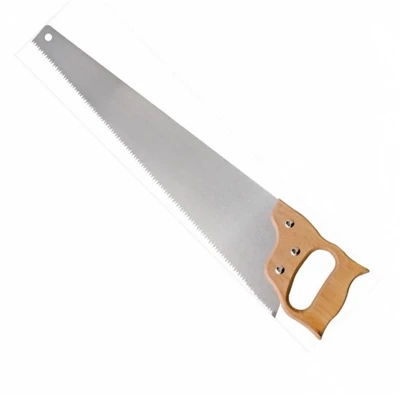
Ready to stop struggling with ladders and start harvesting (or pruning) like a pro? Hit us up to chat about what size blade you need, what pole works best for your trees, or any other questions you have. We’re not the big box store sales guys who just want to push a product—we’re people who love fruit trees too, so we’ll give you straight answers, not a sales pitch.
Fruit Tree Saw References:
- University of California Agriculture and Natural Resources. (2021). "Pruning Tools and Safety for Orchards and Backyard Trees." Publication 8351.
- American Society of Agricultural and Biological Engineers. (2019). "Standards for Portable Pole-Mounted Cutting Tools for Horticultural Use." ASABE S582.
- Fruit Tree Saw Inc. Internal Quality Control Manual for Blade-Pole Assembly. (2023).
Shandong Siri-Tools Co., Ltd.
As one of the most professional fruit tree saw manufacturers in China, we also support customized service. We warmly welcome you to buy high quality fruit tree saw for sale here from our factory. If you have any enquiry about cooperation, please feel free to email us.
Address: Hedong Distric, Linyi City, Shandong Province
E-mail: cathysiri@siri-tools.com
WebSite: https://www.siri-tools.com/
