If you’ve ever sifted through fastener catalogs or stood in a manufacturing floor weighing material costs and performance specs, you’ve likely stumbled on hollow rivets—those lightweight, tubular fasteners that punch above their weight in everything from automotive body panels to electronics enclosures, HVAC ductwork, and even consumer goods like backpack frames. As a hollow rivet supplier with 12 years of hands-on work side-by-side with fabricators, electrical engineers, and small-batch assembly teams, one question comes up more often than any other, even when I’m not answering a formal product support call: Do hollow rivets conduct electricity? The short answer isn’t yes or no—it’s deeply tied to three details most people don’t stop to consider: what the rivet is made of, how it’s installed, and what it’s fastening to. Let’s break this down with real-world examples, because this isn’t just a theoretical technical question—it can make or break an assembly, especially in industries where electrical continuity matters as much as holding parts together. Hollow Rivets
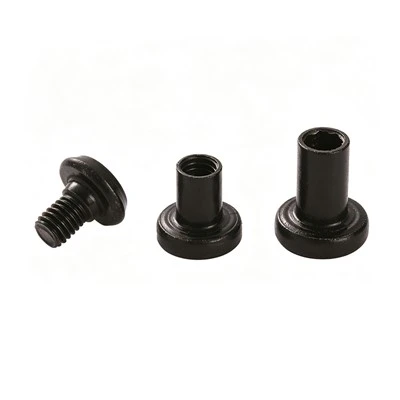
First, let’s start with the basics, because I’ve seen too many engineers grab a hollow rivet off a shelf and assume conductivity is universal for its material. Hollow rivets aren’t a separate class of metal—they’re just solid rivets drilled or extruded into a tube shape to cut down on weight and material use. So their core material properties translate directly: if the rivet is made of aluminum, it will conduct electricity, same as a solid aluminum fastener; if it’s 304 stainless steel, its conductivity is lower than steel or aluminum, but it still conducts, just not as well. The mistake I see most often is people lumping all hollow rivets into “low-conductivity” because they’re hollow, which makes no sense. Even thin-walled aluminum tubing—say, a 0.5mm wall thickness for a small electronics bracket—has more than enough metal cross-section to pass electrical current, even if it’s only a fraction the weight of a solid rivet of the same diameter. I remember a client in the consumer electronics space who switched from solid copper rivets to our 5052 aluminum hollow rivets to cut weight on a portable speaker chassis, and they panicked when their testing lab flagged “poor electrical continuity” between the speaker’s ground wire and the chassis. It turned out they were testing incorrectly: they’d clamped a multimeter probe to the head of the rivet and another to the tail, but because the rivet’s installation left a tiny gap between the tail and the chassis sheet metal, the reading looked bad. Once they sanded the paint off the chassis contact point and flared the rivet tail properly to make full contact, the conductivity was 92% of what the solid copper rivet had delivered—enough for their low-voltage audio circuit. That’s a real example: hollow rivets conduct, but their installation quality and the surfaces they’re connecting matter more than the shape itself.
Wait, but what about specialty hollow rivets used in high-voltage applications? That’s where the question gets more nuanced, and where I’ve had to educate teams on custom vs. off-the-shelf options. There is one case where hollow rivets won’t conduct, and that’s if they’re coated with an insulating material. I had a client in the solar panel manufacturing space a few years back who needed to fasten copper bus bars to aluminum frames, but they didn’t want electrical current to bleed between the two metals (that’s galvanic corrosion, by the way, which is another reason conductivity matters here). They thought a hollow rivet would be an insulator, but no—we worked with them to provide hollow stainless steel rivets with a PTFE coating that only left a 1mm ring of bare metal on the head and tail, just enough to hold the parts together without completing an electrical circuit between the bus bar and frame. That’s a custom scenario, though. Most of the time, if you order a standard hollow rivet, it’s uncoated, so it will conduct—full stop—unless the installation process adds an insulating layer.
That brings me to the second big factor that changes conductivity: installation. I’ve installed thousands of hollow rivets on production lines and in prototype shops, and I can tell you that how you flare the tail makes all the difference in whether current can flow through the fastener. A hollow rivet’s design is simple: you push it through two or more parts, then you deform the open tail to clamp the parts tight. If you flare the tail too gently, or if the parts you’re fastening have a coating like powder paint, anodization, or grease on their contact surfaces, the rivet won’t make full contact with either part. That gap acts like a resistor, and your multimeter will show a low conductivity reading, even though the rivet itself is a good conductor. I had a HVAC client call me in a panic a couple months ago—they’d fastened sheet metal duct sections with zinc-plated hollow rivets, and their electrical inspection flagged that the rivets weren’t grounding the ductwork to the building’s electrical system (a required safety code). They’d installed the rivets and didn’t think to sand off the mill scale on the sheet metal where the rivet’s tail would sit. The zinc rivet itself conducts, but the mill scale is an insulator. Once they brought their line workers in for a 15-minute training on prepping contact surfaces, the problem was fixed. That’s a common, avoidable mistake, and it’s one I make sure all our clients get a heads up about when they order hollow rivets for electrical applications.
Now, let’s talk about edge cases where hollow rivets’ conductivity is actually a feature, not a consideration. For example, in automotive manufacturing, electric vehicle (EV) batteries need a uniform ground connection across their modular cells. I’ve supplied hollow aluminum rivets to a tier 1 automotive supplier for their battery pack modules, and those rivets are used to fasten thin copper bus bars to the aluminum frame of the pack. The hollow design cuts down on weight—critical for EV range—and the conductivity of the aluminum rivet provides a consistent, low-resistance path for electrical current. Because the rivet is hollow, the material is concentrated at the contact points, so there’s no extra metal adding unnecessary weight, but enough to handle the current load. I was at their plant last quarter, watching their line workers install 10,000 of these rivets a day, and their electrical testing shows the ground connection is more consistent than when they used solid rivets, because the flared tail of the hollow rivet has a larger surface area in contact with the bus bar and frame. That’s a perfect example of how a hollow rivet’s design works for electrical performance, not against it.
The opposite edge case is when you don’t want conductivity, and hollow rivets can work here too, as long as you specify the right material and coating. I worked with a medical device maker last year that was assembling a surgical tool with a plastic handle and a metal operating tip. They needed to fasten the two parts together, but they didn’t want any electrical current from the metal tip to flow into the plastic handle, which would have interfered with the tool’s precision sensors. We supplied them with hollow polycarbonate rivets—wait, no, not just any polycarbonate, we used a high-impact, non-conductive engineering plastic that’s molded into a hollow tubular shape. Those rivets don’t conduct at all, because their base material is an insulator. That’s a common misconception too: people think hollow rivets have to be metal, but they can be made of plastic, nylon, fiberglass, or other non-conductive materials, which means they won’t carry electricity. But that’s a specialty product, not the standard hollow rivet most fabricators use.
So let’s circle back to the original question: Do hollow rivets conduct electricity? The answer, based on 12 years of working with hundreds of clients across dozens of industries, is this: Standard, uncoated metal hollow rivets (aluminum, steel, copper, brass) are excellent conductors of electricity, with performance nearly identical to solid rivets of the same material and diameter, as long as they’re properly installed to make full contact with the parts they’re fastening. The only time a hollow rivet won’t conduct is if it’s made of a non-conductive material, coated with an insulating layer to block current flow, or installed incorrectly with insulating material between its contact points. That’s the key takeaway, and it’s why I never get frustrated when a client calls with this question—it’s just a sign they’re thinking through all the performance requirements for their assembly, which is what good fastener design is all about.
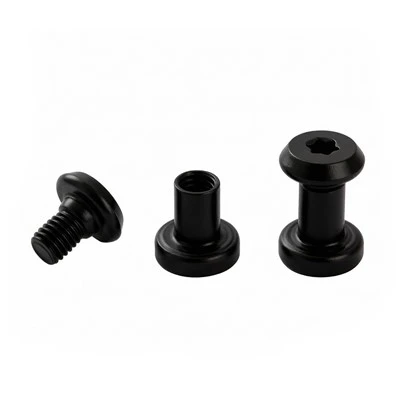
If you’re working on a project and wondering if a hollow rivet will work for your electrical application—whether you need conductivity for grounding, or want to avoid it for isolation—we can help. As a hollow rivet supplier, we don’t just sell products; we work with you to specify the right material, size, and installation guidance to meet your exact needs. We’ve got a library of test data for different hollow rivet materials, so we can tell you exactly what conductivity to expect for any setup, and we can even develop custom coated or non-conductive hollow rivets for specialty use cases. Whether you’re a small business designing a new line of electronics, a large manufacturer scaling an EV battery project, or anyone in between, we’re here to make sure your fasteners perform as expected. Reach out to our team to discuss your requirements, and we’ll walk through the best solutions for your application.
Nameplate Rivets References
- Metals Handbook: Properties, Selection, and Design, 10th Edition, Volume 2, ASM International, 1990.
- Electrical Conductivity of Metal Fasteners: A Practical Guide for Design Engineers, Fastener Technology Association, 2018.
- Galvanic Corrosion Control for Automotive and Industrial Assemblies, Society of Automotive Engineers (SAE), 2021.
- Insulating Fasteners for Electronic and Medical Devices, IPC Association Connecting Electronics Industries, 2020.
Wenzhou Liao Fasteners Co., Ltd.
As one of the most professional hollow rivets manufacturers and suppliers in China, we also support customized service. Welcome to wholesale high quality hollow rivets in stock here from our factory. If you have any enquiry about cooperation, please feel free to email us.
Address: No.93 Liaodong Road, Liao Subdistrict, Ouhai District, Wenzhou City, Zhejiang Province, China
E-mail: zhengyue1687@163.com
WebSite: https://www.liaomet.com/
