Hey there! I’m a supplier of Scraper Feeder Chains, and today I wanna talk about the quality inspection methods for these chains. Quality is super crucial in our business. After all, a high – quality Scraper Feeder Chain means smooth operation, less downtime, and more satisfaction for our customers. Scraper Feeder Chain

Visual Inspection
Let’s start with the most basic but also very important method: visual inspection. When a batch of Scraper Feeder Chains comes off the production line or arrives at our inspection area, the first thing we do is take a good look at them.
We check for any obvious defects on the surface. This includes cracks, scratches, and dents. Cracks are a big no – no. They can weaken the structure of the chain and lead to breakage during operation. Even a small crack can grow over time due to the stress and strain the chain faces in a Scraper Feeder. Scratches, while they might seem minor, can also expose the metal to corrosion, especially in environments where there’s moisture or chemicals.
Dents can affect the chain’s movement. If a link has a dent, it might not fit properly with other parts of the feeder, causing uneven movement or even jams. We also look at the overall finish of the chain. A smooth and consistent finish usually indicates a well – made product.
We also check the alignment of the chain links. The links should be straight and properly connected. If the alignment is off, the chain might not run smoothly in the feeder, and it could cause excessive wear and tear on both the chain and the feeder itself.
Dimensional Inspection
The next step is dimensional inspection. The dimensions of a Scraper Feeder Chain have to meet the exact specifications. We use precision measuring tools like calipers and micrometers to measure different parts of the chain.
For example, we measure the pitch of the chain. The pitch is the distance between the centers of two consecutive pins. If the pitch is off, the chain won’t mesh correctly with the sprockets on the feeder. This can lead to problems like slipping, uneven power transmission, and premature wear of the chain and sprockets.
We also measure the thickness of the plates in the chain links. If the plates are too thin, they might not be strong enough to handle the load. On the other hand, if they’re too thick, the chain could be heavier than necessary, which can increase energy consumption and put more stress on the feeder’s motor.
Another important dimension is the diameter of the pins and bushings. The pins and bushings need to have a proper fit. If the diameter of the pin is too large or too small compared to the bushing, it can cause excessive friction or play in the joints. This can lead to a noisy operation and ultimately a shorter lifespan for the chain.
Material Analysis
Material analysis is a key part of quality inspection. The quality of the material used in the Scraper Feeder Chain directly affects its performance and durability.
We use several techniques for material analysis. One common method is spectrometry. This technique can identify the chemical composition of the metal used in the chain. We need to make sure that the metal has the right amounts of elements like carbon, manganese, chromium, etc. For example, carbon can increase the hardness of the metal, but too much carbon can make the chain brittle.
We also check the material’s hardness. We use a hardness tester to measure the hardness at different points on the chain. A chain with consistent hardness throughout is more likely to perform well. If the hardness varies too much, some parts of the chain might wear out faster than others, leading to an uneven wear pattern and eventual failure.
In addition, we perform a macro – and micro – structure analysis of the material. Under a microscope, we can examine the grain structure of the metal. A fine – grained structure usually indicates better mechanical properties, such as higher strength and toughness.
Load Testing
Load testing is all about seeing how the Scraper Feeder Chain performs under real – world conditions. We set up a test rig that simulates the actual operating conditions of a Scraper Feeder.
We apply a specific load to the chain and run it for a certain period. This allows us to observe how the chain behaves under stress. We check for any signs of deformation, elongation, or breakage. If the chain starts to show excessive elongation during the load test, it means that it might not be able to handle the load in a long – term operation.
We also monitor the power consumption during the load test. A well – designed chain should operate with relatively low power consumption. If the power consumption is higher than expected, it could indicate problems like excessive friction or misalignment.
Fatigue Testing
Fatigue is a major concern for Scraper Feeder Chains. These chains are constantly subjected to cyclic loading, which can cause fatigue failure over time.
To test for fatigue resistance, we use a fatigue testing machine. This machine applies a repeated load to the chain for a large number of cycles. We set the number of cycles based on the expected lifespan of the chain in a real – world application.
During the fatigue test, we closely monitor the chain for any signs of cracking or failure. If the chain can withstand the specified number of cycles without significant damage, it passes the fatigue test. This gives us confidence that the chain will be able to handle the cyclic loading in a Scraper Feeder for an extended period.
Corrosion Resistance Testing
In many industrial environments, Scraper Feeder Chains are exposed to corrosive substances like moisture, chemicals, and salt. So, corrosion resistance is a vital quality factor.
We conduct corrosion resistance tests by exposing the chain to a corrosive environment. This could be a salt – spray chamber, where the chain is sprayed with a salt solution for a certain period. We then check the chain for signs of corrosion, such as rust or pitting.
A high – quality Scraper Feeder Chain should have a good protective coating or be made from a corrosion – resistant material. If the chain shows only minimal signs of corrosion after the test, it means that it will be able to withstand the corrosive environment in a real – world application.
Final Thoughts
As a Scraper Feeder Chain supplier, we take quality inspection very seriously. These methods that I’ve talked about today are just the tip of the iceberg. There are many other factors and tests that we consider to ensure that our chains meet the highest standards.
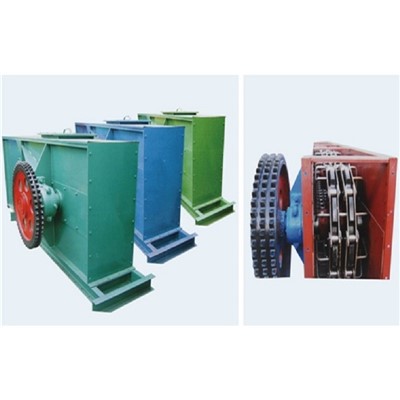
If you’re in the market for Scraper Feeder Chains, quality should be your top priority. A well – inspected and high – quality chain will save you a lot of headaches in the long run, including less maintenance, fewer breakdowns, and more efficient operation.
Conveyor Sprocket If you’re interested in purchasing Scraper Feeder Chains and want to know more about our products and quality control, don’t hesitate to reach out to us for a purchase negotiation. We’re more than happy to discuss your specific needs and how our chains can meet them.
References
- Callister, W. D., & Rethwisch, D. G. (2013). Materials Science and Engineering: An Introduction. Wiley.
- Shigley, J. E., Mischke, C. R., & Budynas, R. G. (2004). Mechanical Engineering Design. McGraw – Hill.
Zhejiang Hangte Chain Transmission Co., Ltd.
We are one of the most experienced scraper feeder chain manufacturers and suppliers in China since 1999. Please rest assured to buy high quality scraper feeder chain made in China here from our factory. If you have any enquiry about cooperation, please feel free to email us.
Address: No. 195 Qinglin East Street, Qingshan Lake Subdistrict, Lin’an District, Hangzhou City, Zhejiang Province
E-mail: hangtechain@gmail.com
WebSite: https://www.chinahtchain.com/
