Cable harnesses, also known as wire harnesses, cable assemblies, or wiring looms, are essential components in the power industry. As a cable harness supplier, I have witnessed firsthand the diverse and critical applications of these products in power – related systems. In this blog, I will delve into the various applications of cable harnesses in the power industry, highlighting their importance and the value they bring to different power – sector operations. Cable Harness

Power Generation
Fossil Fuel Power Plants
In fossil fuel power plants, cable harnesses play a vital role in connecting various components within the power generation process. These plants rely on complex systems to convert fossil fuels such as coal, oil, and natural gas into electricity. Cable harnesses are used to connect sensors, control systems, and actuators throughout the plant.
For example, in the boiler area, cable harnesses connect temperature sensors that monitor the temperature of the steam. This data is crucial for maintaining the proper operating conditions of the boiler. If the temperature gets too high or too low, the control system can adjust the fuel supply and air intake accordingly. Cable harnesses also connect the control valves and pumps, allowing for precise control of the water flow and steam generation.
In the turbine area, cable harnesses are used to connect the generator to the control system. They transmit electrical signals and power between different parts of the turbine, ensuring efficient power generation. The harnesses are designed to withstand high temperatures, vibrations, and electromagnetic interference, which are common in power plant environments.
Nuclear Power Plants
Nuclear power plants have even more stringent requirements for cable harnesses. These plants operate in highly radioactive and high – pressure environments, and the cable harnesses must be able to function reliably under these extreme conditions.
Cable harnesses in nuclear power plants are used for a variety of purposes, including connecting instrumentation and control systems. They are responsible for transmitting data from radiation sensors, temperature sensors, and pressure sensors to the control room. This data is used to monitor the safety and performance of the nuclear reactor. Additionally, cable harnesses are used to connect the electrical systems that power the pumps, valves, and other equipment within the plant.
The materials used in cable harnesses for nuclear power plants are carefully selected to be radiation – resistant and fire – retardant. They are also designed to have a long service life to minimize the need for frequent replacements, which can be costly and time – consuming in a nuclear power plant.
Renewable Energy Power Plants
Renewable energy sources such as solar and wind are becoming increasingly important in the power industry. Cable harnesses are essential components in these renewable energy power plants.
In solar power plants, cable harnesses are used to connect solar panels to the inverters and the electrical grid. They collect the direct current (DC) generated by the solar panels and transmit it to the inverters, where it is converted into alternating current (AC). The cable harnesses must be able to withstand exposure to sunlight, extreme temperatures, and environmental factors such as moisture and dust.
In wind power plants, cable harnesses are used to connect the wind turbines to the control systems and the electrical grid. They transmit power from the generators in the wind turbines to the substation. Cable harnesses in wind turbines also connect sensors that monitor the wind speed, direction, and turbine performance. These sensors provide data that is used to optimize the operation of the wind turbines and ensure their safety.
Power Transmission and Distribution
Substations
Substations are key nodes in the power transmission and distribution network. Cable harnesses are used extensively in substations to connect transformers, circuit breakers, relays, and other equipment.
In a high – voltage substation, cable harnesses are used to connect the bushings of the transformers to the switchgear. They transmit high – voltage electrical power and are designed to withstand high electrical stresses. The harnesses also connect the control systems of the transformers and switchgear, allowing for remote operation and monitoring.
Cable harnesses in substations are also used to connect the protection relays. These relays are responsible for detecting faults in the power system, such as short – circuits and overloads, and sending signals to the circuit breakers to isolate the faulty section. The cable harnesses ensure reliable communication between the relays and the circuit breakers, which is crucial for the safety and stability of the power grid.
Power Lines
Although power lines are the main means of power transmission, cable harnesses also have a role to play. In some cases, cable harnesses are used to connect the power lines to the substations or to other equipment. For example, at the connection points between the overhead power lines and the underground cables, cable harnesses are used to ensure a secure and reliable electrical connection.
Cable harnesses can also be used in the monitoring and control systems of power lines. They connect sensors that measure parameters such as current, voltage, and temperature. This data is used to detect potential problems in the power lines, such as overheating or insulation degradation, and take preventive measures.
Distribution Networks
In the power distribution network, cable harnesses are used in distribution panels and cabinets. They connect the incoming power supply to the various circuits and loads, such as lighting, motors, and household appliances. Cable harnesses in distribution networks are designed to be compact and easy to install, as they are often used in confined spaces.
They also play an important role in ensuring the safety of the distribution network. By using cable harnesses, the risk of short – circuits and electrical fires can be reduced, as the harnesses provide proper insulation and organization of the electrical wires.
Industrial Power Systems
Manufacturing Plants
Manufacturing plants rely on a large amount of electrical equipment to operate their production lines. Cable harnesses are used to connect motors, sensors, controllers, and other components in these plants.
For example, in an automotive manufacturing plant, cable harnesses are used to connect the robots on the production line. They transmit power and control signals to the robots, allowing them to perform tasks such as welding, painting, and assembly. Cable harnesses in manufacturing plants are designed to be flexible and durable, as they may need to move with the equipment.
In the food and beverage industry, cable harnesses are used in processing equipment. They connect temperature sensors, flow meters, and other instruments to the control systems, ensuring the proper operation of the production process. The cable harnesses in this industry are often required to meet strict hygiene standards, as they are used in food – processing environments.
Mining Industry
The mining industry has harsh operating conditions, including high levels of dust, moisture, and vibrations. Cable harnesses in the mining industry are used to connect electrical equipment such as crushers, conveyors, and pumps.
In underground mines, cable harnesses are used to connect the lighting systems, communication systems, and control systems. They must be able to withstand the rough handling and the challenging environmental conditions. The cable harnesses in mines are also designed to be flame – resistant to prevent the spread of fire in case of an electrical fault.
Conclusion
As a cable harness supplier, I understand the critical role that cable harnesses play in the power industry. From power generation to power transmission, distribution, and industrial applications, cable harnesses are the backbone of many electrical systems.
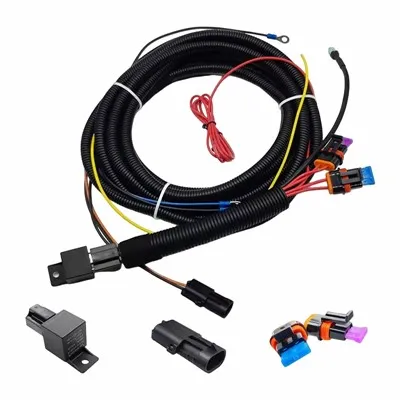
Our company specializes in producing high – quality cable harnesses that are designed to meet the specific requirements of the power industry. We use advanced manufacturing techniques and high – quality materials to ensure the reliability and durability of our products. Whether it is for a large – scale power plant, a substation, or an industrial facility, we can provide customized cable harness solutions.
Cable Harness If you are in the power industry and are looking for a reliable cable harness supplier, we would be more than happy to discuss your needs. Our team of experts can work with you to understand your requirements and provide you with the best cable harness solutions. Contact us for a consultation and let’s start a productive conversation about how our cable harnesses can meet your power – related needs.
References
- Electrical Power Systems Technology by Terry L. Floyd
- Power System Analysis and Design by J. Duncan Glover, Mulukutla S. Sarma, Thomas J. Overbye
- Handbook of Electric Power Calculations by Hadi Saadat
Huaswin Electronics Technology Co., Ltd.
With abundant experience, we are one of the most professional cable harness manufacturers and suppliers in China. Welcome to wholesale customized cable harness at competitive price from our factory. If you have any enquiry about pricelist, please feel free to email us.
Address: Building A2, Hao Hai Hong Industrial Park, No.3 Yu He Road, Gong He, Sha Jing, Bao An, Shenzhen
E-mail: sales@huaswin.com
WebSite: https://www.huaswin-pcba.com/
