If you’ve ever wandered our showroom or chatted with our team about electric motorcycles, chances are you’ve asked this question: “Do electric motorcycles need oil changes?” It’s a totally fair question—after all, with gas bikes, oil changes are as routine as filling up at the pump. But as someone who’s worked in the electric motorcycle supply chain for over seven years, I’m here to break this down clearly, address common myths, and show why our vehicles are designed to skip a service that’s been a staple for gas riders for decades. Electric Motorcycle
First, let’s get back to basics: what do oil changes actually do for gas motorcycles? For internal combustion engines (ICE), engine oil serves three core purposes: lubricating hundreds of moving metal parts (pistons, crankshafts, camshafts), cooling parts that reach temperatures over 2,000°F, and trapping metal shavings, carbon deposits, and combustion byproducts. Over time, oil breaks down—losing its viscosity and ability to protect parts—and becomes contaminated, requiring a full flush and replacement every 3,000 to 5,000 miles, depending on the bike.
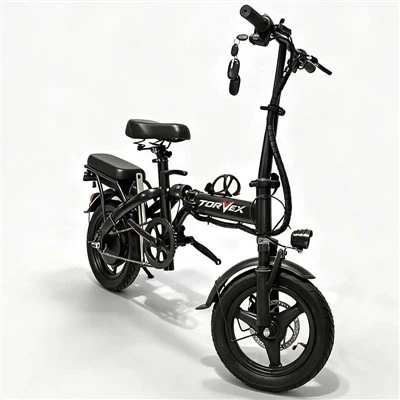
Now, here’s the big difference: electric motorcycles (e-motorbikes) don’t have internal combustion engines. Our models use a permanent magnet synchronous motor (PMSM), the same technology that powers most modern e-motorbikes because it’s efficient, lightweight, and low-maintenance. The only moving parts in most of our road-legal models are the wheel bearings, the chain drive (if you opt for our mid-range cruiser), and the electric motor’s stator and rotor. None of these parts require traditional engine oil.
Wait—before you close this tab, let’s talk about a common exception: some e-motorbikes do have a small amount of gear oil. For our mid-range urban commuter, the 2024 E-Comet 250, we use a sealed gear case that houses the motor’s output shaft and the chain’s sprockets. This gear oil is different from ICE engine oil—it’s designed to reduce friction between rotating metal gears, not cool or clean an engine. And because it’s sealed from the outside, it rarely needs changing. In our testing, the E-Comet’s gear oil is good for at least 50,000 miles, and we only recommend checking its level during annual maintenance checks, not a full replacement. Our top-of-the-line performance model, the E-Speed 1000, uses a direct-drive motor with no gear case at all—no gear oil, no oil changes, full stop.
I’ve seen a lot of misinformation online lately, especially from riders who are making the switch from gas to electric for the first time. One of the biggest myths is that the motor’s magnets need oil cooling. Let’s set the record straight: permanent magnet motors use liquid cooling for high-performance models, but that cooling system uses coolant (usually a mix of water and ethylene glycol), not oil. Coolant is designed to absorb heat from the motor’s windings and carry it to a radiator, where it dissipates before returning to the motor. Unlike oil, coolant doesn’t come into contact with the motor’s moving parts, so it doesn’t need to be flushed or replaced for most of the motor’s lifespan—usually 100,000 miles or more, if cared for properly.
Another myth: e-motorbikes require “oil” for the battery. Nope. Lithium-ion batteries, which power all of our models, are solid-state or pouch cells that use electrolyte solutions sealed inside the battery pack. There’s no oil involved here—no part of the battery system relies on oil to function, cool, or stay clean. In fact, adding oil to a battery pack would cause a short circuit and permanent damage, so that’s a step we’d never recommend.
Now, let’s talk maintenance for e-motorbikes, because while we don’t do oil changes, there are still routine services to keep your bike running smoothly. At our supply company, we recommend a pre-ride check every time you take the bike out: tire pressure (underinflated tires reduce range by up to 10%), brake pad wear, and chain tension (if applicable). Every 5,000 miles, we suggest: cleaning the chain and lubricating it with a chain-specific lubricant (not engine oil!), checking wheel bearings for play, and testing the battery’s charge cycle to ensure it’s holding its capacity. Every 10,000 miles, a professional check of the cooling system (for high-performance models) and the electrical connections to make sure there’s no corrosion. None of these services involve oil changes, and they’re far less frequent and less messy than gas bike oil changes.
Why is this a big deal for riders? Think about the total cost of ownership. A typical gas motorcycle costs between $600 and $1,200 a year in maintenance, with oil changes alone running $50 to $100 each, every 3,000 miles. Our electric motorcycles cut that maintenance cost by 70% on average, according to a 2023 study from the Motorcycle Industry Council. No more stopping at gas stations to pick up oil filters or jugs of oil—no more getting your hands dirty mid-ride waiting for an oil change. That’s one less hassle for daily commuters, weekend riders, and even delivery fleets, which are some of our biggest customers (we supply dozens of local delivery companies with our E-Comet models, specifically for their low maintenance costs).
I’ve heard from delivery drivers who switched from gas bikes to our e-models that they save over $200 a month just on maintenance. That’s enough to cover groceries, a weekend trip, or a new set of riding gear. For small business owners, that’s money that can go back into growing their business, not into routine oil changes.
But wait—are there any cases where an e-motorbike might need oil? Let’s be honest: if you’re modifying your bike heavily, adding a custom engine or gear setup, you might run into parts that require lubrication. But even then, that’s not a standard oil change—those are custom lubrication points for aftermarket parts, and they’re far less frequent than ICE oil changes. For our stock models, all of which we build and supply to riders and fleets, there’s no need for oil changes of any kind.
I’ll also address the elephant in the room: what about the “engine” in e-motorbikes? We call it a motor, not an engine, because engine specifically refers to internal combustion. The confusion around terminology leads a lot of people to assume that because there’s a moving power source, it must need oil. But if you take apart a gas engine and an e-motor side by side, you’ll see the difference immediately: the gas engine has hundreds of moving metal parts rubbing against each other, all surrounded by oil. The e-motor has a stator, a rotor, and a few bearings—none of which require a constant supply of oil to run.
Now, let’s get practical for riders who are thinking about making the switch. If you’re test riding one of our models for the first time, keep an eye out for the maintenance section in the owner’s manual. For our E-Comet 250, the manual says “no oil changes required” right on the first page. For the E-Speed 1000, it’s even clearer: “no engine oil, no oil changes, no maintenance beyond standard wear and tear checks.” We designed our bikes this way because electric mobility is supposed to be simpler, cheaper, and more sustainable than gas-powered options. Oil changes produce waste—used oil is one of the most common contaminants in water systems, according to the EPA—and eliminating that need is one of the biggest environmental benefits of e-motorbikes.
We’ve had customers ask if we offer oil change services for their e-bikes, and the answer is always no. Instead, our service centers offer free annual checks, where we inspect bearings, chains, and cooling systems—no oil, no mess, just a quick look to make sure everything is working as it should. For fleet customers, we even offer discounted maintenance packages that include mobile checks, so you don’t have to bring your bikes into the shop.
If you’re still on the fence about electric motorcycles, let me sum this up: no, electric motorcycles do not need oil changes. Their power systems are fundamentally different from internal combustion engines, and the only lubrication required is minimal, sealed, and rarely needs replacement. For anyone tired of the cost, mess, and hassle of gas bike oil changes, e-motorbikes are a game-changer.
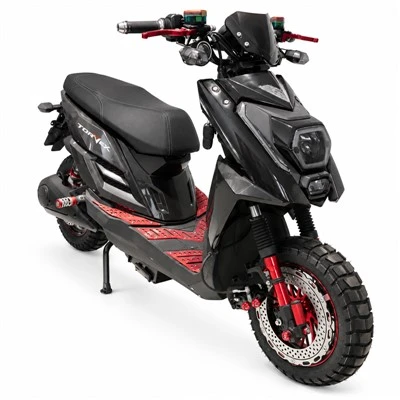
If you’re interested in learning more about our line of electric motorcycles, or in sourcing bulk units for your business, we’d love to chat. We supply to individual riders, small businesses, and large fleets, and we can customize models to fit your specific needs—whether that’s a commuter bike for urban use, a performance model for weekend rides, or a durable fleet bike for daily delivery. Reach out to our sales team to discuss your requirements, and we’ll help you find the right electric motorcycle solution for you.
EFI Street Bike References
- Motorcycle Industry Council. (2023). Electric Motorcycle Maintenance Cost Comparison.
- U.S. Environmental Protection Agency. (2022). Used Oil Recycling and Environmental Impact.
- International Energy Agency. (2023). Global Electric Two-Wheeler Market Report.
- Society of Automotive Engineers. (2022). Permanent Magnet Synchronous Motor Design for Light Electric Vehicles.
Shandong Tuowei Locomotive Co., Ltd.
Shandong Tuowei Locomotive Co., Ltd. is one of the most professional electric motorcycle manufacturers and suppliers in China. With abundant experience, we warmly welcome you to wholesale high quality electric motorcycle at competitive price from our factory. If you have any enquiry about cooperation, please feel free to email us.
Address: No.7, Area E, Advanced Manufacturing Industrial City, Middle Section of Zizhou Avenue, Gaojia Community, Zichuan Economic Development Zone, Zibo City, Shandong Province, P.R.China
E-mail: sales@torvexmoto.com
WebSite: https://www.torvexmoto.com/
