As a long-time supplier of YUNNEI pistons, I get this question at least a dozen times a week—usually from engine rebuilders, spare parts distributors, or even small repair shops that just want to make sure they’re getting the right fit for their fleet. It’s not a simple answer, though. YUNNEI, a Chinese engine manufacturer that’s been around since 1951, doesn’t make a single piston; they make pistons for a range of diesel engines used in light trucks, agricultural equipment, and industrial generators. That means their piston sizes vary based on the engine model, the application, and even whether we’re talking about a standard stock piston or an oversize piston for reboring. YUNNEI Piston

Let’s start with the core: what a piston’s size actually means. When we talk about piston size, we’re almost always referring to the outer diameter of the piston skirt, the lower cylindrical part that moves up and down inside the engine’s cylinder. That’s the dimension that has to match the cylinder bore exactly to maintain compression, prevent oil leaks, and handle the extreme heat and pressure of diesel combustion. For most YUNNEI engine models, the stock piston bore ranges from 87 mm up to 102 mm. Wait, that’s a big range, right? So let’s break it down by the most common models I supply, because that’s where most of our customers need clarity.
Take the YUNNEI 4100 series, for example. That’s one of their workhorses, used in light trucks and small agricultural tractors. The stock piston for the 4100 engine has a skirt diameter of 100 mm. A lot of our customers in the farm equipment space run their engines hard, so we also supply oversize pistons here—0.5 mm, 1.0 mm, and even 1.5 mm over—for when a cylinder has worn down and needs reboring to extend the engine’s life. Those oversize versions have corresponding larger diameters: 100.5 mm, 101 mm, 101.5 mm. For this model, we also mention the piston’s overall length, which is around 115 mm, but the size people care most about is the bore because that’s the fit dimension.
Another top seller is the YUNNEI 4102, a slightly larger engine used in medium-duty trucks and small construction equipment. The stock piston here measures 102 mm in skirt diameter. Similar to the 4100, we offer oversize options up to 1.5 mm, so 103.5 mm, for rebuild jobs. What’s tricky here is that some customers mix up piston diameter with pin diameter. The piston pin, the steel rod that connects the piston to the connecting rod, is a smaller internal dimension: for the 4102, it’s 32 mm. That’s important for replacement parts too, but when someone asks “size,” they almost always mean the outer bore.
Wait, I should mention the smaller models too, because not everyone runs big trucks. The YUNNEI 490 is a compact 4-cylinder engine used in mini-trucks and small generators. Its stock piston is 87 mm in diameter, with oversize options at 0.5 mm and 1.0 mm over. For these smaller engines, the tight fit is even more critical because they operate at higher RPMs, so a piston that’s too loose will make knocking noises, and one that’s too tight will seize up during warm-up.
Now, a common mistake I see first-time buyers make: assuming all YUNNEI pistons are interchangeable. Let me tell you a story about a customer last year. He runs a small trucking fleet in Jiangsu, and he needed to replace a piston in one of his 4100-powered trucks. He ordered a 102 mm piston because that’s what he remembered for an older truck, and it didn’t fit. Turned out his newer model 4100 had a revised bore—YUNNEI updated the engine’s cylinder liner to improve fuel efficiency a few years back, so the piston diameter stayed 100 mm, but the ring groove dimensions changed, too. That’s why size isn’t just the skirt diameter; it’s also the ring groove widths, the compression height (the distance from the piston’s pin center to the top of the piston), and even the weight of the piston. For the 4100, the compression height is 45.5 mm, and we make sure every piston we supply matches that spec to maintain engine balance.
So why does this size variation matter for someone who’s not a mechanic? If you’re running an older engine, buying a non-YUNNEI piston that’s too small will mean lost compression, reduced power, and higher fuel consumption. Too big, and it won’t seat properly in the cylinder, leading to oil blow-by and potential engine damage. As a supplier, we test every piston we stock to ensure it meets YUNNEI’s original specifications, so we don’t have that problem. We also keep detailed records of every engine model we carry pistons for, so if someone can’t remember the exact model number, we can match it to their truck’s VIN or their old piston’s part number.
Another point: oversize vs. custom pistons. When an engine’s cylinder is worn beyond repair with a standard stock piston, technicians will rebor the cylinder to a larger size, which means they need an oversize piston. YUNNEI doesn’t manufacture oversize pistons themselves, so that’s a big part of what we do as a supplier. We offer oversize options for almost every common YUNNEI engine model, up to 1.5 mm over bore, which is the standard limit for most diesel engine rebuilds. We also make custom pistons for rare or older YUNNEI engines that are no longer in production, which might have sizes that fall outside the standard range—sometimes as small as 85 mm or as large as 105 mm, depending on the engine.
I should also clear up a common misconception: some people think “size” refers to the number of cylinders in the engine, but that’s not right. A 4-cylinder YUNNEI engine’s piston size is about the individual piston’s diameter, not the total engine displacement. For example, the 4100 has a displacement of 4.0 liters, which comes from the 100 mm bore and a 105 mm stroke—stroke is the distance the piston travels inside the cylinder, another dimension that’s separate from the piston’s diameter.
As someone who’s been in this business for 12 years, I’ve learned that the best way to get the right YUNNEI piston is to provide a few key details. If you’re ordering, have your engine model number (it’s usually stamped on the engine block, near the oil filter housing), or if you’re replacing an old piston, bring the old one to measure. Our team will check the skirt diameter, ring grooves, and compression height to make sure it’s an exact match. We also supply piston rings, pins, and linings to go with every piston, so you don’t have to source multiple parts from different places.
It’s worth noting that YUNNEI regularly updates their engine designs, so piston sizes can change slightly over time. For example, the 2018 version of the 4100 engine had a piston with a 100 mm bore, but the pin diameter was updated from 32 mm to 33 mm to handle higher torque. That’s why we don’t just stock generic sizes—we track every model’s revisions, so we only sell pistons that fit the exact engine they’re made for.
If you’re a fleet manager, a mechanic, or someone rebuilding their own engine, you don’t want to waste time and money on the wrong piston. I’ve seen too many customers come back to us with a piston that didn’t fit, because they ordered based on a general size instead of their specific engine. That’s why we make it a priority to walk customers through the details, whether it’s answering questions about size, confirming part numbers, or advising on oversize options if their cylinders are worn.
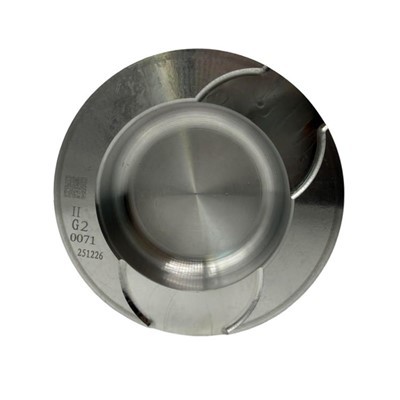
At the end of the day, the size of a YUNNEI piston isn’t a single number—it’s a set of dimensions tailored to the engine it’s made for. But for the most common models, you can expect stock piston diameters between 87 mm and 102 mm, with oversize options up to 1.5 mm beyond that. If you’re unsure about which size you need, reach out to our team for help matching your engine to the right piston. We’re here to make sure your engine runs smoothly, with parts that meet YUNNEI’s original standards.
Cummins Piston References
- YUNNEI Power Engine Product Catalog, 2022
- Diesel Engine Piston Installation and Maintenance Guide, Automotive Parts Manufacturers Association, 2021
- Common Diesel Engine Rebuild Practices for Light Commercial Vehicles, Asian Agricultural Equipment Association, 2020
Hebei Yuwei Piston Co., Ltd.
As one of the most professional yunnei piston manufacturers and suppliers in China, we’re featured by quality products and good service. Please rest assured to buy customized yunnei piston made in China here from our factory. Also, quotation is available.
Address: Beizhujiacun Village, Sujiuzhuang Town, Ningjin County, Xingtai City, Hebei Province
E-mail: Andy@ywpiston.com
WebSite: https://www.ywpiston.com/
