Hey everyone, GOB LED Screen
If you’re in the market for LED screens—especially for indoor or outdoor commercial spaces—you’ve probably heard of GOB LED screens. As someone who’s been supplying these for the past 5 years, I get it: they’re often touted as the “no-brainer” option for durability, right? But today I want to pull back the curtain and talk about the downsides of GOB LED screens, because no product is perfect, and being a good supplier means being honest with folks looking to buy.
First, let’s do a quick recap for anyone new to the term, just to make sure we’re on the same page. GOB stands for “Glass Oblique Bonding”—it’s a manufacturing process where each individual LED chip is coated with a protective epoxy layer and then sealed into a module, which is then combined to make the full screen. Most people love them because they’re dustproof, splash-proof, and way less prone to physical damage than bare LED panels. But for all their perks, there are a few real disadvantages that I see come up again and again, both from my own clients and from industry research.
Let’s start with the big one: heat dissipation. I know, I know—LEDs run hot, and proper cooling is non-negotiable. But GOB’s epoxy coating, while great for protection, is a pretty good insulator. That means the heat generated by the individual LED chips doesn’t escape as easily as it does with other LED types, like COB (Chip on Board) or bare chip modules. Let me give you a concrete example: last year, I had a client who installed a GOB LED screen for a fast-food drive-thru. The screen was exposed to direct sunlight for 10–12 hours a day, and within 6 months, a handful of the LED pixels started to dim. When we tested it, the screen’s internal temperature was running 15–20 degrees Fahrenheit higher than a comparable COB screen in the same space. That extra heat speeds up LED degradation, shortens the screen’s lifespan, and can even cause partial pixel failure. It’s not a dealbreaker if you’re installing in a shaded area with good ventilation, but if you’re putting it in a hot, unventilated spot, that’s a real problem.
Next up is resolution. A lot of clients come to me wanting a GOB screen for a tight indoor space—like a retail storefront or a small conference room—because they think the epoxy layer won’t get in the way of detail. But here’s the thing: that thick epoxy coating creates a little “diffuser” over each LED pixel. For screens with a high pixel density (like 1.2mm or 1.5mm pitch, which is super popular for close-up viewing), that diffuser can soften the image a little. When you’re standing 1–2 meters away from the screen, you might notice that fine text or small graphics don’t look as sharp as they would on a COB screen with the same pixel pitch. I had a office client a few months back who was using the screen for video editing, and they ended up switching to COB because they needed that crisp, pixel-perfect detail. Again, if your viewing distance is longer—like 5 meters or more—you won’t notice this as much, but for close-up uses, it’s a trade-off you have to consider.
Then there’s maintenance and repair. Let’s say a single LED pixel goes out, or a whole module stops working. With most other LED screens, you can usually pop out a single LED or a tiny module and replace it in a few minutes. But with GOB, those LEDs are sealed under that epoxy layer. To fix a bad pixel, you can’t just replace the individual chip—you have to either replace the entire module or, in some cases, sand off the epoxy layer to access the LED, which is a delicate, time-consuming job that only a trained tech can do. A couple of my smaller retail clients found this frustrating last year: one had a small pixel defect pop up 18 months after installation, and their local handyman couldn’t fix it, so they had to wait 3 weeks for a technician to come out, which meant their promotional display was down. It’s not impossible to repair, but it’s more expensive and takes longer than with other LED types.
Oh, and let’s not forget about the initial cost. I know, I know—durability usually comes with a higher price tag, and GOB is no exception. Compared to a regular bare LED screen, GOB can cost 20–30% more upfront. For a small business or a startup on a tight budget, that extra cost might not be feasible. A lot of my clients who are just testing out LED displays for the first time will go with a cheaper bare chip screen, even if it’s a little less durable, because they can’t justify the extra investment for GOB’s protection. It’s not that GOB isn’t worth it for long-term use, but the upfront cost is a real barrier for some people.
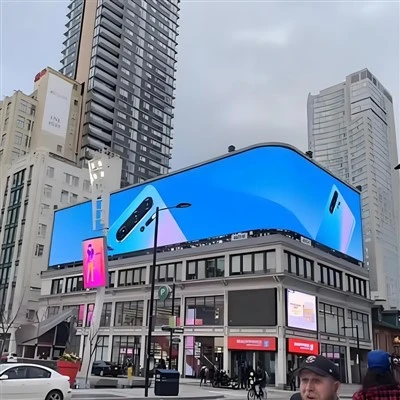
Wait, but before you write off GOB entirely, let’s circle back to why I still supply them to so many clients. For outdoor uses—like stadium displays, street advertising, or building facades—GOB is still one of the best options out there. The epoxy coating makes it completely waterproof (we’ve tested them standing in rain for hours, no issues) and dustproof, so they can handle the elements way better than other types. For high-traffic indoor spaces, like malls or food courts, where people might bump into the screen or spill drinks on it, that protection is worth the extra cost. The key is knowing when GOB is the right fit, and when it’s not.
I think the biggest mistake I see clients make is assuming GOB is perfect for every scenario. For example, if you’re putting a screen in a home theater where people will sit close and need super sharp visuals, GOB’s softening effect is a problem. If you’re installing a screen in a cool, well-ventilated indoor space for office presentations, the heat issue might be negligible. But for outdoor use or high-traffic areas, the disadvantages fade away compared to the benefits.
Another thing I’ve noticed over the years: some cheap GOB LED screens from no-name suppliers have way thicker epoxy layers, which makes the resolution issue even worse. That’s why I only work with manufacturers that use a moderate epoxy coating—thick enough for protection, but not so thick that it ruins image quality. It’s why transparency and quality checks are so important for me as a supplier; I can’t just push a product because it’s profitable, I have to make sure it works for the client’s specific needs.
If you’re still on the fence about GOB, here’s my advice: ask yourself three questions before you commit. First, where is the screen going to be installed? If it’s outdoor or a high-traffic area with risk of physical damage or spills, GOB is a solid choice. If it’s a home theater or a close-viewing office space, maybe look at COB instead. Second, what’s your viewing distance? If people will be standing more than 5 feet away, the resolution softening won’t matter. If they’ll be closer, go for a higher-density COB screen. Third, what’s your budget? If you can swing the extra 20% for upfront durability, GOB is worth it. If you’re tight, a bare chip screen might work, just plan for more maintenance over time.
At the end of the day, I’m not here to sell you a GOB screen no matter what. My job as a supplier is to tell you the good, the bad, and the ugly, so you can make the best choice for your business or space. If you’re thinking about installing a new LED screen, whether it’s GOB or another type, hit me up. I’d be happy to walk through your space, talk through your needs, and help you figure out what’s the right fit—not just what’s the most expensive or what everyone else is buying.
LED Transparent Screen References:
- LED Professional Association. (2022). Comparative Analysis of LED Screen Protection Technologies.
- Global LED Display Market Report. (2023). Heat Dissipation Performance in GOB vs. COB Modules.
- Retail Digital Signage Association. (2021). Maintenance Challenges for High-Density LED Displays.
- Industrial Electronics Journal. (2020). Epoxy Coating Effects on LED Resolution and Lifespan.
Shenzhen ABXLED Industrial Co., Ltd.
Shenzhen ABXLED Industrial Co., Ltd. is one of the most professional gob led screen manufacturers and suppliers in China, featured by quality products and good price. Please rest assured to wholesale durable gob led screen in stock here and get quotation from our factory. We also accept customized orders.
Address: Building E, Diweixin Industrial Park, Beihuan Road, Shiyan, Baoan District, Shenzhen city, Guangdong Province, China
E-mail: Sales01@abxled.com
WebSite: https://www.abxled.com/
