If you’re someone who deals with storing large amounts of stuff—think office files, library books, archive documents, or even retail inventory—you’ve probably come across compact shelving at some point. And if you’re in the market for new shelving, you’ve definitely wondered: manual or motorized? As a compact shelving supplier who’s been around this block for a minute, I’ve talked to so many customers who’re stuck between these two options. Some swear by the old-school, no-power-needed vibe, others rave about the fancy motorized tech. Let’s break this down like we’re chatting over coffee, no jargon, just real talk about which might actually work for you. Compact Shelving
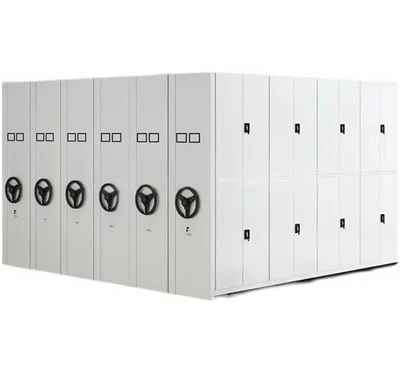
First, let’s get the basics out of the way because not everyone’s deep in the shelving world. Compact shelving is basically a system of shelves that mount on tracks, so instead of having fixed rows with empty space between every single one, you move the rows side to side to access only the ones you need. That means you use like 30-50% less space than traditional static shelving. It’s a game-changer for small warehouses, tight offices, or libraries outgrowing their current storage. Now, the two types: manual is where you turn a big crank or push a handle to slide the rows open, motorized has an electric motor you control with a button, remote, or even a app (yeah, fancy).
Let’s start with the thing almost everyone cares about first: cost. I get it, upfront price is a huge factor for most people. Manual shelving is way cheaper to buy and install. No motor, no wiring, no fancy control panels. If you’re on a tight budget, this is a no-brainer. But wait, don’t just look at the initial cost—think about long-term too. Motorized might cost 20-40% more upfront, but over years and years, is that worth it? Let’s not forget power bills, though they’re tiny, right? A motor runs on regular electricity, and if there’s an outage, most motorized units have a backup hand crank anyway, so you’re not totally stuck. Also, maintenance: manual has like one moving part basically— the tracks and the crank. Motorized has motors, wiring, control boards, so there’s more that can break, which means occasional service calls. I’ve seen customers go with manual just because they didn’t want to deal with the headache of repairs, especially if their storage space is in a remote area where a tech might take a day to show up.
Next up, space and capacity. Both systems do the same thing when it comes to saving space, but let’s talk about real-world use. Manual works great if you’re accessing rows a few times a day. For example, a small law firm that needs to pull files 5-10 times a day—turning a crank is no big deal, takes like 10 seconds, no problem. But what if you’re a library where patrons or staff are opening rows all day? Or a warehouse with dozens of employees grabbing inventory every hour? That pushing or cranking adds up fast. Motorized is way faster here. One tap of a button, the row slides open, done. No tiring your staff out or slowing down work. Also, weight capacity? Wait a second—can both handle the same amount of stuff? Generally, yes, but motorized units are built a bit heavier because of the motor, so if you’re storing super heavy items, like metal archives or big retail boxes, motorized might hold a little more, but most good manual units can match that too, as long as they’re built right.
Safety is another big one, especially if you’ve got people around the shelving. Let’s be real: manual shelving—people get in a hurry, yank the crank too hard, or don’t make sure the row is fully closed before walking past. I’ve seen little oops moments, like a finger caught in the gap, or a box falling off because someone didn’t align the row right. Motorized has built-in safety features now—most have sensors that stop the row if something (or someone) is in the gap between rows. That’s a big plus for offices with new staff, libraries with kids, or busy warehouses where accidents can happen. Also, weight safety: when you’re opening a manual row, if it’s loaded with heavy stuff, it might swing a little, which can be dangerous. Motorized rows move smoothly at a slow, controlled speed, so less risk of that tipping or swinging. That’s something a lot of first-time buyers don’t think about until something small goes wrong.
Durability and reliability. Let’s face it—no one wants their shelving breaking when they need it most. Manual shelving is super simple. If it’s built with good steel, solid tracks, and a crank that doesn’t wobble, it’ll last for decades. I’ve installed manual units that are 30 years old and still work like a charm, just need a little lubrication every few years. Motorized, on the other hand, has those electrical parts, so dust, humidity, or even just wear and tear can mess with the motor over time. If you’re in a place with extreme temperatures, like a cold storage warehouse, that can affect the motor too. But here’s the thing: modern motorized units are way more reliable than they were 10 or 15 years ago. The ones we sell have sealed motors that don’t get dusty easily, and they come with 5-10 year warranties, which is more than enough time to cover any issues. Also, if you’re a small operation, maybe manual is better because you don’t have to worry about fixing electronics. If you’re a big company with a maintenance team, they can handle small motor issues no problem.
User experience, and let’s be honest, convenience. How easy is it to use day to day? Manual is straightforward—if you can turn a wrench, you can use it. No training needed. But for people with mobility issues? Wait, that’s a key point. If one of your staff has bad wrists, arthritis, or mobility issues, turning a heavy crank on a manual row is really hard. Motorized is way more accessible—push a button, no physical effort needed. That’s something I always bring up with customers who have diverse teams. Also, storage tracking: a lot of motorized systems have little apps or software that let you log where items are, so you don’t have to walk around looking for a row. Manual doesn’t have that, unless you add a separate tracking system, which costs more. So if you’re trying to organize a big archive, that extra feature might push you toward motorized.
Wait, let’s talk about environmental impact too, because more and more companies care about that these days. Manual shelving uses zero electricity, which is a win if you’re super focused on cutting energy use. Motorized uses a tiny amount, but modern units are super efficient—like, the motor only runs for 5 seconds each time you open a row, so the total energy use per year is less than a single LED bulb. And if you’re someone who repurposes stuff, manual units are easier to modify—you can take them apart, move them, no complicated wiring to disconnect. Motorized is a bit harder to move because of the motor and controls, so if you might rearrange your space often, manual is more flexible.
Let’s wrap this up with real examples, because that’s what helps. A small local museum with 10,000 artifacts, a tight storage closet, and a budget under $5,000: manual is perfect. They don’t open rows that often, two people can crank a row open in 15 seconds, and they don’t need extra safety stuff for just them working there. A mid-sized retail warehouse with 50 employees, 100,000 inventory items, and 15-20 open/close operations a day: motorized is better. No one wants to crank a row 10 times a day, that’s going to slow down order picking and frustrate staff. A university library where staff and patrons are accessing shelves 50+ times a day: motorized, because speed and safety matter there.
Now, I know this is a lot, and every situation is different. The best way to figure it out? If you’re still on the fence, the fastest way is to chat with someone who knows these systems inside and out—like, you know, someone who’s been installing them for years, not just a salesperson pushing the most expensive option. We’ve helped tons of customers go through this exact question, walk them through their space, their budget, how they use the storage, and help pick the right one. Don’t make this call without talking it through. If you’re ready to look at options, or just have questions, reach out to us for a no-obligation consultation. We’ll even come take a look at your space if you want, no pressure.
Flat-pack Cabinets Now, here are the sources I used to make sure this info is accurate, not just my opinion:
- "Compact Shelving: Space Efficiency and Operational Performance" from the American Society of Storage and Handling
- "Workplace Safety in High-Density Storage Systems" from the National Institute for Occupational Safety and Health (NIOSH)
- "Long-Term Cost Analysis of Manual vs. Motorized High-Density Shelving" from the Storage Equipment Manufacturers Association
- "Accessibility Considerations for Industrial Storage Systems" from the International Storage Organization
Hebei Xinrui Intelligent Technology Development Group Co., Ltd.
With abundant experience, we are one of the most professional compact shelving manufacturers and suppliers in China. We warmly welcome you to buy high quality compact shelving at competitive price from our factory. If you have any enquiry about customized service, please feel free to email us.
Address: No.1, Building B, Intelligent Security Industry Park, Economic Development Zone, Wuyi County, Hengshui City, Hebei Province
E-mail: shinraysafe@163.com
WebSite: https://www.shinraysafe.com/
