Hey there, if you’ve ever had a pipe emergency (and let’s be real, most plumbing or pipeline pros have), you know a straight repair clamp is often the first thing you grab. But here’s the question I get at least once a week—probably more: “How well does this thing actually hold up against corrosion?” As a supplier who’s been knee-deep in straight repair clamps for going on 12 years, I’m not just here to regurgitate textbook jargon. I’ve seen these clamps work through mud, saltwater, freezing temps, and that random chemical spill no one warned you about. Let’s break it down like we’re geeking out over our favorite tools (because, let’s be honest, this stuff matters way more than people think when a pipe fails mid-project). Straight Repair Clamp
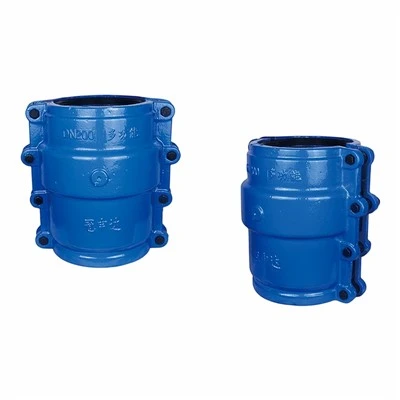
First off, let’s cut the crap: corrosion resistance isn’t a one-size-fits-all thing with straight repair clamps. I’ve had a new guy on our sales team get grilled by a customer last month who swore his last clamp “rusted through in two months” and demanded we prove ours are different. Turns out, he grabbed the cheapest uncoated carbon steel clamp for a job at a coastal marina—total rookie move. That’s the thing about these clamps: their corrosion performance hinges on three big parts, none of which are random. Let’s start with the base material, because that’s where everything begins.
Most straight repair clamps we supply are either ductile iron, carbon steel, or stainless steel. Wait, no—let’s be specific, because not all stainless is created equal. For harsh environments, we go with 304 or 316 stainless, not that thin 201 garbage you’ll find on Amazon. Ductile iron is super strong, great for regular water lines, but it needs a good coating to fight rust. Carbon steel is sturdy too, but it’ll corrode fast if it doesn’t have that protective layer. I’ve seen guys save a few bucks on a clamp that looked the same but used bare carbon steel, and then they’re back at square one with a leak 6 months later. That’s the real cost, right? The quick save vs. the one that actually works.
Speaking of coatings—this is the secret sauce that makes or breaks a clamp’s corrosion resistance. Let’s run through the ones we use and why. For ductile iron clamps, we use fusion-bonded epoxy (FBE). That’s not the chipped paint you get from a hardware store spray can, either. FBE is a powder that gets heated so it melts and bonds permanently to the metal—no gaps, no peeling, even when you crank the clamp down tight. I once saw a customer yank a clamp we installed 8 years ago out of a pipeline in a salt mine, and the FBE was still perfect. Not a single rust spot under it. For carbon steel, we use a dual-coat system: first a zinc primer (that’s the stuff that gives galvanized steel its dull gray look) then a top coat of polyurethane. That combo fends off both atmospheric corrosion and mild chemical exposure—great for industrial sites or urban plumbing lines where there’s a lot of road salt or runoff. And for stainless steel clamps, yeah, they’re pretty corrosion-resistant on their own, but we still sometimes do a passivation treatment to make the surface even tougher—removes any tiny imperfections that could turn into rust spots over time.
Wait, let’s talk about real-world scenarios because that’s where the rubber meets the road (literally, sometimes). A lot of customers test these clamps in lab conditions, but I care about how they perform when it’s pouring rain, there’s salt air blowing in from the beach, or a farmer’s field has runoff with that weird fertilizer mix that’s slightly acidic. Let’s use examples: last year, we sold 200 of our 316 stainless straight repair clamps to a coastal project in Florida—they were fixing water lines for a new subdivision near the Gulf. A year later, the project manager hit me up to say not a single clamp had rusted, even though they’re exposed to that salt air 24/7. Compare that to a job we did in the same area 5 years earlier with cheap uncoated clamps—those were trash in 3 months. Another example: we had a food processing plant reach out because their old clamps were corroding from fruit acid runoff. We swapped them for our 304 stainless clamps with passivation, and they haven’t had a leak since (that was 2 years ago, last I checked).
But hold up—corrosion resistance isn’t just about the metal and coating. What about the gasket? If the gasket fails, moisture gets under the clamp, and that’s where rust starts. We use EPDM gaskets for most standard jobs (they work great for hot and cold water, resist mild chemicals), and for harsher stuff like oil or chemical lines, we use nitrile (Buna-N) or even Viton gaskets. A bad gasket can ruin a good clamp, plain and simple. I’ve seen a clamp that looked perfect on the outside start rusting because someone used a generic rubber gasket that degraded in 6 months. That’s a rookie mistake—don’t skip the gasket detail.
Now, let’s address the elephant in the room: what about when a clamp does get exposed to harsh stuff it’s not made for? Like, say you grab a 304 stainless clamp for a job with high chlorine levels (like in a swimming pool pipe line). 304 is fine for most chlorine, but if the chlorine is really concentrated, it can cause pitting corrosion. So we always tell customers—don’t guess. Ask us, we’ll tell you what material and coating you need for your specific environment. It’s not rocket science, but it’s the difference between a clamp that lasts 5 years and one that lasts 20.
As a supplier, we don’t just sell clamps—we stand behind how they perform. I know too many companies that cut corners on materials to save a buck, and then they leave their customers holding the bag. That’s why we test every batch of clamps we sell: we do salt spray tests (that’s the thing where you spray salt water on them for hundreds of hours to simulate coastal exposure), we check the coating adhesion to make sure it doesn’t peel when the clamp is tightened, we even test them in simulated chemical environments. Last quarter, we rejected a whole shipment of ductile iron clamps because the FBE coating had tiny pinholes—would’ve been a disaster out in the field, so we sent it back no questions asked. I’d rather lose a little money on a bad shipment than lose a customer who trusts us to deliver a clamp that works when they need it most.
Let’s also talk about common myths. A lot of guys think stainless steel is indestructible. Nope—if you put 304 in an environment with high chloride and low oxygen, it’ll corrode. And ductile iron clamps aren’t “cheap garbage” if they have a good FBE coating—we sell millions of them for regular municipal water lines, and they last 15+ years no problem. Another myth: the bigger the clamp, the better the corrosion resistance. No way—size has nothing to do with it, it’s all about the material and coating. I’ve seen a tiny stainless steel clamp hold up better than a huge uncoated carbon steel one.
So, what does this mean for you, the person who needs a straight repair clamp? It means that corrosion resistance depends on picking the right combination of material, coating, and gasket for your specific job. It means not going for the cheapest option without checking what it’s made of. And it means working with a supplier who actually knows this stuff, not someone who just moves product from a warehouse.
At the end of the day, a straight repair clamp’s job is to stop a leak—ideally for as long as possible. Corrosion is the number one reason those clamps fail early, so paying attention to the details of how they’re built saves you time, money, and headaches down the line.
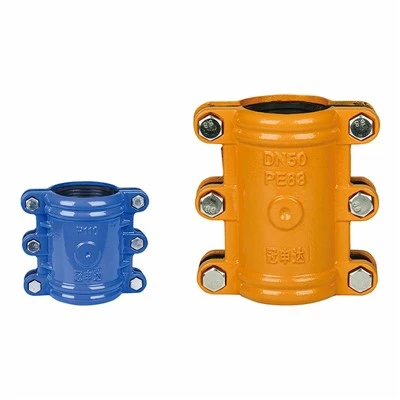
If you’re working on a project and wondering which straight repair clamp will hold up to your environment—whether that’s a coastal line, an industrial site, a municipal water line, whatever—hit us up. We can walk you through the options, answer any questions you have, and make sure you get a clamp that’s actually built to last. No sales gimmicks, no jargon, just straight talk and clamps that work.
Repair Clamp References
- NACE International. (2016). Corrosion Basics: An Introduction. NACE International.
- American Water Works Association. (2020). Pipe Repair and Rehabilitation Manual. AWWA.
- Stainless Steel World. (2019). “Choosing the Right Stainless Steel for Piping Applications.” Stainless Steel World.
- Polymer Science and Technology. (2018). “Fusion-Bonded Epoxy Coatings for Metal Corrosion Protection.” Journal of Applied Polymer Science.
Fujian Fufa Valve Manufacturing Co., Ltd.
As one of the most professional straight repair clamp manufacturers and suppliers in China, we’re featured by quality products and good price. Please rest assured to buy durable straight repair clamp made in China here from our factory. Welcome to view our website for more information.
Address: Meilin Xikou Industrial Zone, Nan’an City, Quanzhou City, Fujian Province
E-mail: hongwenjin@fufafamen.cn
WebSite: https://www.fufavalve.com/
