What is the Impact of Temperature Changes on WPC Grid?
As a WPC grid supplier who has worked with composite materials for over 12 years, I’ve seen firsthand how temperature fluctuations can make or break a project. When a customer first comes to me asking about WPC (Wood-Plastic Composite) grids, they often focus on durability, cost, and installation ease—rarely do they ask about temperature impacts. But anyone who’s dealt with outdoor structures—from playgrounds to civil engineering projects—knows that temperature isn’t just a number; it’s a force that tests every material used above ground. WPC Grid

Last spring, a local construction company contacted me in a panic. They’d installed WPC grids for a pedestrian bridge two years prior, and suddenly, the panels were cracking along the edges. It was an unseasonably cold winter, followed by a rapid spring warming. I knew immediately what had happened, but explaining it required more than just “our material doesn’t like temperature swings.” That experience taught me that understanding how WPC grids respond to temperature changes isn’t just about avoiding problems—it’s about designing solutions that work for the long haul.
Let’s start with the basics: what is WPC, and why does temperature affect it so differently than pure wood or pure plastic? WPC is a blend of wood fibers (usually 50-70% by weight) and thermoplastic polymers (like polyethylene or polypropylene). Wood is rigid and shrinks in cold, expands in heat. Plastic is flexible but has a much higher coefficient of thermal expansion—meaning it changes size more dramatically with temperature than wood. When you mix the two, you get a material that’s a compromise, but that compromise comes with tension. That tension is where temperature changes become critical.
Thermal Expansion and Contraction: The Hidden Stressor
The most direct impact of temperature changes on WPC grids is thermal expansion and contraction. Every material expands when heated and contracts when cooled, but WPC’s expansion rate is somewhere between pure wood and pure plastic. For context, pure polyethylene has a thermal expansion coefficient of about 100-150 x 10^-6 per °C. Pure wood is around 3-5 x 10^-6 per °C, and WPC typically falls between 20-60 x 10^-6 per °C—depending on the ratio of wood to plastic.
Let’s put that in real terms. Suppose you have a WPC grid panel that’s 1 meter long. If the temperature changes by 40°C (from -10°C in winter to 30°C in summer), a 50 x 10^-6 expansion rate means that panel will grow by 2 millimeters. That doesn’t sound like much—until you have a row of 50 panels end-to-end. Suddenly, you’re looking at 100 millimeters of total expansion. If you don’t leave enough gap between panels, they’ll push against each other, creating stress that can lead to warping, cracking, or even buckling.
The bridge project I mentioned earlier? They’d installed the WPC grids with only 1mm gaps between panels, assuming the expansion rate was closer to wood. When the temperature dropped to -12°C, the panels contracted, pulling away slightly, but then when it warmed up to 28°C, they expanded. Without enough space, that expansion created so much internal stress that the weakest points—usually along the edges where the grid structure is thinnest—started to crack. I had to work with their team to replace the panels with a different formulation and adjust the installation gaps to 6mm, which solved the problem.
Cold Temperature Effects: Brittleness and Impact Resistance
Cold temperatures are another big challenge for WPC grids. As the temperature drops, the plastic matrix in WPC becomes more rigid and brittle. Wood fibers, while still rigid, don’t change as much. The result is a material that’s less flexible and more prone to impact damage in cold weather.
I remember a customer in a northern state who used WPC grids for a parking lot drainage system. One winter, a delivery truck’s tire hit a WPC grid panel at 5°F (-15°C), and the panel shattered. That same panel, installed in the same spot during summer, would have flexed under the impact without breaking. The brittleness factor is especially important for applications where the grid might be exposed to heavy loads or impacts in cold conditions—like sidewalks, parking areas, or industrial flooring.
Not all WPC is the same when it comes to cold resistance. Some suppliers add impact modifiers to the plastic blend, which makes the material more flexible in low temperatures. As someone who tests every batch of WPC we sell, I can tell you that our cold-weather formulation uses a modified polyethylene that keeps the material flexible down to -20°C. That’s a difference that matters for projects in regions with harsh winters.
Another cold-related issue is freeze-thaw cycling. When moisture seeps into the gaps in the WPC structure, then freezes and expands, it can cause microcracks that grow over time. I’ve seen WPC grids in areas with frequent freeze-thaw cycles develop a “crumbly” texture on the surface, as the repeated expansion and contraction breaks down the material from the inside out. The key here is proper installation—making sure that the WPC grid is installed on a porous base that allows moisture to drain away, rather than trapping it beneath the panel.
Heat Temperature Effects: Softening and UV Degradation
On the flip side, high temperatures can cause WPC grids to soften. The plastic matrix becomes less rigid, so the grid may sag under heavy loads, or even deform if exposed to direct sunlight for long periods. In desert climates, I’ve heard stories of WPC playground equipment warping after just one summer. That’s not to say WPC can’t handle heat—our standard formulation is engineered to withstand temperatures up to 60°C—but prolonged exposure above that can weaken the material.
Heat also accelerates UV degradation. WPC is often used outdoors, where it’s exposed to sunlight. The UV rays break down the plastic in the material, which can cause fading, surface cracking, and loss of structural integrity. Temperature amplifies this effect—hotter temperatures speed up the chemical reactions that break down the material. A WPC grid that’s exposed to 30°C with full sunlight will degrade much faster than one at 20°C, even if the total UV exposure is the same.
I’ve worked with a customer in Arizona who installed WPC grids for a patio. Within three years, the surface had developed fine cracks, and the color had faded from dark brown to a light gray. When we tested a sample, we found that the UV degradation was concentrated in the top layer, where temperatures were highest. We recommended a topcoat of UV-stabilized coating for their replacement panels, which has kept them looking good for the last five years. That’s a small adjustment that makes a big difference in hot climates.
How WPC Formulation Mitigates Temperature Impacts
Here’s what I tell every customer who comes to me: not all WPC grids are created equal. The way a WPC grid is formulated directly impacts how it responds to temperature changes. Let’s break down the key factors:
- Wood-to-plastic ratio: Higher plastic content (70% or more) reduces brittleness in cold weather but increases thermal expansion. Higher wood content is more dimensionally stable but can be more brittle in cold. Our balance is 60% wood, 40% plastic, which gives the best of both worlds for most applications.
- Plastic type: Polyethylene (PE) is the most common, but polypropylene (PP) has a lower thermal expansion rate. We offer both—PE for flexibility, PP for dimensional stability in temperature extremes.
- Additives: Impact modifiers, UV stabilizers, and heat stabilizers are all added to improve temperature resistance. We include UV stabilizers in every outdoor WPC grid we sell, and impact modifiers in all cold-weather formulations.
- Grid design: The structure of the grid itself matters. Open-grid designs allow more air circulation, which helps regulate temperature, reducing the stress from expansion and contraction. Solid panels trap heat, making them more prone to softening and deformation.
Practical Installation Tips to Handle Temperature Changes
Even the best WPC formulation won’t perform well if it’s installed incorrectly. Over the years, I’ve developed a set of installation guidelines that help customers avoid temperature-related issues:
- Leave proper expansion gaps: As I mentioned earlier, gaps between panels are non-negotiable. For WPC grids, we recommend 4-6mm of gap for every 1 meter of panel length. For example, a 2-meter panel needs 8-12mm of gap. This allows the material to expand in hot weather without pushing against adjacent panels.
- Use flexible fasteners: Metal fasteners can expand and contract at a different rate than WPC, which can cause them to loosen or even pull through the material. We recommend using corrosion-resistant plastic or nylon fasteners, or adding rubber washers between the fastener and the grid panel to absorb movement.
- Avoid installing on uneven bases: If the base under the WPC grid is uneven, temperature-induced expansion can cause the panel to warp more easily. Make sure the base is compacted and level before installation, which helps distribute stress evenly.
- Provide shade where possible: For outdoor applications in hot climates, adding shade structures or planting trees nearby can reduce the amount of direct sunlight the WPC grid is exposed to, lowering surface temperatures and slowing UV degradation.
Real-World Success Stories: Applying Temperature Knowledge
Let me share two stories that show how understanding temperature impacts can make a difference. The first is a project in Minneapolis, where a city park used WPC grids for a new walkway. The installation crew initially tried to use only 2mm gaps between panels, but after I explained the thermal expansion, they adjusted to 6mm. That walkway has now been in place for seven years, with no cracking or warping. In contrast, a nearby park that used a different supplier’s WPC grids with smaller gaps had to replace half their panels within three years.
The second story is a coastal project in Florida. Coastal areas have high humidity, salt air, and extreme temperature swings—from 40°F (4°C) in winter to 95°F (35°C) in summer. The customer was initially worried about WPC’s heat resistance, so we recommended our heat-stabilized formulation with UV topcoat. We also suggested installing the grids on a raised base to improve air circulation. Three years later, those grids look as good as the day they were installed, with no fading or deformation.
Why This Matters for You as a Customer
If you’re considering WPC grids for your next project, understanding temperature impacts isn’t just about avoiding problems—it’s about getting a product that performs as expected for its entire lifespan. A WPC grid that fails prematurely because of temperature issues isn’t just a waste of money; it can also lead to project delays and safety concerns.
As a supplier, our job isn’t just to sell WPC grids—it’s to help you choose the right product for your specific climate and application. Whether you’re working in a cold northern region, a hot southern climate, or somewhere in between, we can tailor our WPC grid formulation and provide installation guidance to ensure long-term performance.
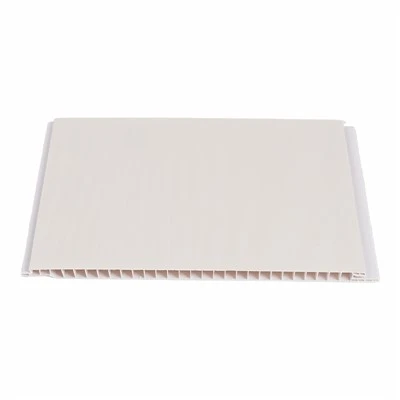
If you’re currently facing temperature-related issues with your WPC grids, or if you’re planning a new project and want to make sure you choose the right solution, I’m here to help. We work with construction companies, architects, park planners, and industrial facility managers to provide WPC grids that stand up to whatever temperature conditions they face.
WPC Door Don’t let temperature changes derail your project. Reach out to our team to discuss your needs, and we’ll help you find the perfect WPC grid solution that balances durability, cost, and temperature resistance.
References
- Ash, M. (2014). Wood-Plastic Composites: Properties and Applications. Wiley.
- National Research Council. (2008). Durability of Timber and Wood-Based Materials. National Academies Press.
- Kretschmann, D. E. (2010). Wood Handbook: Wood as an Engineering Material. USDA Forest Service.
- Tomić, M., et al. (2018). Thermal Expansion of Wood-Plastic Composites: Effects of Filler Content and Coupling Agent. Journal of Composite Materials, 52(15), 2085-2096.
- Zhang, Y., et al. (2020). UV Degradation of Wood-Plastic Composites: A Review. Polymer Degradation and Stability, 178, 109215.
Shandong Diman International Trade Co., Ltd.
As one of the most professional wpc grid manufacturers in China, we have world-leading production equipment and strong manufacturing capabilities. Please rest assured to buy high quality wpc grid made in China here from our factory. Customized orders are welcome.
Address: Lanshan District, Linyi City, Shandong Province, China.
E-mail: hkshangmao@gmail.com
WebSite: https://www.dimanwpc.com/
